
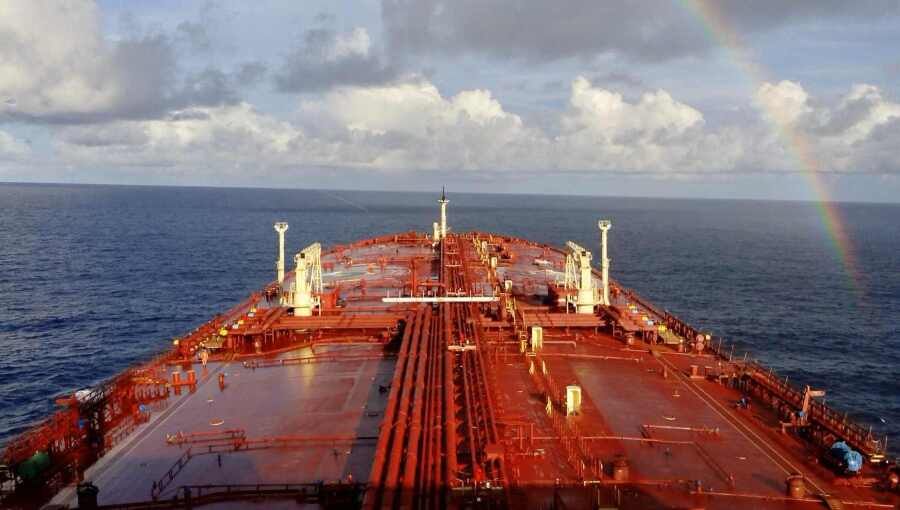
Analysts warn prolonged Strait disruption could trigger 1970s-style energy spike
MARKET INSIDER – Oil markets are on edge as escalating U.S.-Iran hostilities refocus attention on the Strait of Hormuz—one of the world’s most critical energy chokepoints. If flows through the narrow waterway are disrupted for more than a few days, analysts warn crude could surge into triple-digit territory, reviving fears of a 1970s-style energy shock.
Brent crude closed near $72.50 before the latest escalation, already up nearly 20% year-to-date. But traders now face a far bigger question than a short-term “knee-jerk” rally: could Gulf exports be materially interrupted?
Positioned between Iran and Oman, the Strait of Hormuz carries roughly 13 million barrels of oil per day—about 31% of global seaborne crude flows—linking major producers such as Saudi Arabia, Iraq, Iran, and the UAE to global markets. According to reports, commercial vessels have received radio warnings allegedly linked to Iran’s Revolutionary Guards cautioning ships against transiting the strait, though no formal closure has been confirmed.
Energy analysts say scenarios range from limited disruptions to Iranian exports—potentially removing up to 2 million barrels per day—to a broader blockade affecting regional infrastructure. Saul Kavonic of MST Marquee warned that if Tehran perceives an existential threat, attempts to block Hormuz cannot be ruled out, even if U.S. and allied forces would likely escort tankers to maintain shipping lanes.
Bob McNally of Rapidan Energy Group called the development “very serious,” noting that oil and LNG markets are acutely dependent on Gulf production and transit flows. The scale of any price spike will hinge on duration. A brief disruption could push Brent toward $80 per barrel; a sustained closure could propel prices beyond $100, potentially tripling the severity of supply shocks seen during the 1970s Arab oil embargo.
Such a move would reverberate globally. Triple-digit oil would intensify inflationary pressures just as central banks attempt to stabilize growth. LNG prices could revisit 2022 highs, straining European and Asian importers. Equity markets would likely see sectoral divergence—energy stocks rising while transport, manufacturing, and consumer sectors face margin pressure.
The worst-case scenario, according to some analysts, would involve attacks on Saudi infrastructure combined with a full Hormuz shutdown—an outcome estimated at roughly one-in-three probability if Iran feels cornered. Even without direct strikes on facilities, heightened military activity increases insurance costs, shipping rerouting, and precautionary stockpiling.
For global investors, the calculus is stark: energy markets are no longer pricing a distant geopolitical risk but an active conflict at a critical supply artery. Whether oil stabilizes below $80 or vaults above $100 will depend less on rhetoric—and more on whether tankers continue to pass safely through Hormuz in the days ahead.
