
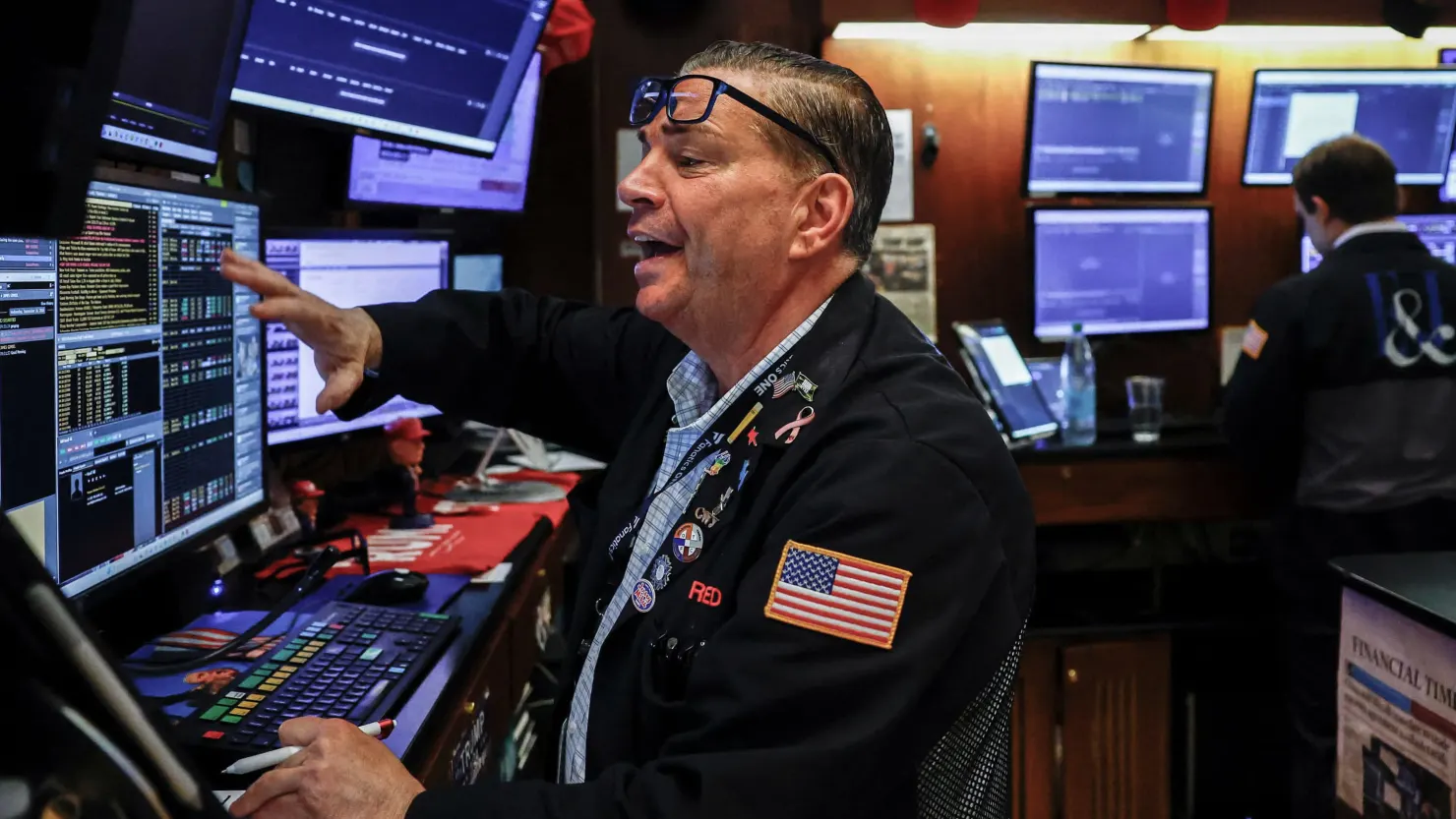
Wall Street recovered some ground Monday, but weaker Asian markets and CoreWeave’s fading rally suggest investors remain selective ahead of a busy earnings week.
MARKET INSIDER — U.S. stock futures were mixed early Tuesday after technology shares helped Wall Street recover from last week’s sell-off, with investors weighing renewed buying against concerns about the cost of financing artificial intelligence infrastructure.
S&P 500 futures were flat, Nasdaq-100 futures slipped 0.2%, and Dow Jones Industrial Average futures gained 94 points, or 0.18%.
Monday’s rebound showed investors were willing to return to major technology companies. But it offered limited evidence that worries about borrowing, valuations and investment returns had eased. Corporate earnings will now test whether businesses can support their spending plans with durable revenue and cash flow.
Key Highlights
- The S&P 500 gained 0.4% Monday and the Nasdaq Composite rose more than 1%, led by technology shares.
- CoreWeave surrendered early gains despite a Goldman Sachs upgrade, highlighting continued scrutiny of AI infrastructure financing.
- General Motors and United Airlines report Tuesday, while housing data will provide another check on economic demand.
Technology shares recover after a difficult week
Nvidia advanced 1.4% Monday, Tesla climbed 3.8%, and Alphabet gained approximately 1%, helping lift the broader market.
The recovery followed a sharp retreat in technology stocks as investors questioned whether increasingly ambitious AI investment programmes were relying too heavily on borrowing. Reuters also reported a rebound in chip and AI-related shares after the previous week’s sell-off.
Jose Torres, senior economist at Interactive Brokers, attributed part of Monday’s improvement to investors reducing protective hedges after the cost of volatility protection surged during Friday’s decline.
That interpretation suggests positioning contributed to the recovery. When investors unwind defensive trades, share prices can rise before there is a meaningful change in earnings expectations or financing conditions.
A sustained recovery would require more evidence that companies can meet the operating assumptions behind their valuations.
AI demand and financing are separate questions
The market’s concern extends beyond whether businesses will continue using more computing power.
Building AI infrastructure requires substantial spending before the associated revenue is fully realised. Data centres, processors, networking equipment and power connections must be financed while operators develop their customer base and bring capacity into service.
Debt can accelerate that expansion, but it also creates fixed payment obligations. If utilisation, pricing or project delivery falls short of expectations, cash available to service borrowing can become tighter.
The distinction matters across the AI investment chain. Equipment suppliers may receive revenue when hardware is delivered, while infrastructure operators must earn returns over a longer period.
Strong demand for chips can therefore coexist with financial pressure on some of the companies buying them.
For investors, the useful comparison is between operating cash generation, capital expenditure and financing commitments. Revenue growth alone does not show whether an expansion programme can fund itself.
CoreWeave illustrates the market’s caution
CoreWeave, which lost more than 25% last week, initially benefited from a Goldman Sachs upgrade to buy. The upgrade was among the developments supporting renewed interest in AI-related stocks Monday.
However, its early gains faded and the shares finished slightly lower.
One session cannot settle the investment case, but the reversal shows that a favourable brokerage assessment was insufficient to sustain buying throughout the day.
The questions investors will examine include how quickly committed business converts into revenue, when new capacity becomes operational, and how financing costs compare with the returns that capacity can generate.
Those questions also make broad labels such as “AI stocks” less useful. Companies selling chips, operating cloud infrastructure and developing software have different capital requirements and exposure to borrowing costs.
Asian markets fail to follow Wall Street higher
Asian equities declined in the supplied Tuesday trading snapshot, showing that Monday’s U.S. recovery had not translated into a broad regional rally.
Japan’s Nikkei 225 fell 0.79%, South Korea’s Kospi lost 2.31%, and Australia’s S&P/ASX 200 declined 0.6%. Hong Kong’s Hang Seng Index dropped 1.11%, while mainland China’s CSI 300 eased 0.58%.
The divergence does not establish a single cause for the regional losses. It does, however, underline the uneven nature of investor confidence.
For Asian suppliers exposed to technology investment, a key issue is whether concerns about financing eventually affect actual equipment orders or project schedules. A decline in U.S. technology valuations alone does not prove that customers are reducing purchases.
Investors assessing regional manufacturers and infrastructure businesses will need to distinguish share-price volatility from changes in contracts, shipments and capital-spending commitments.
Earnings broaden the focus beyond technology
Approximately 70 S&P 500 companies are scheduled to report this week, providing a wider assessment of demand, costs and profitability.
General Motors will release its third-quarter results before Tuesday’s U.S. market opening. United Airlines will publish its results and outlook after the close, followed by an earnings call Wednesday.
GM’s commentary can help investors assess vehicle demand, pricing and the effect of financing costs on buyers. United’s results will offer insight into travel spending and airlines’ ability to manage operating expenses.
Housing starts are also scheduled Tuesday, alongside pending home sales. The latter measure tracks signed contracts and can provide an early indication of future completed sales.
Together, these releases will help determine whether demand outside technology remains strong enough to support a broader earnings expansion.
For the next stage of the market recovery, management guidance will be particularly important: investors need to see how companies intend to convert investment into profits while meeting the cost of financing it.
