
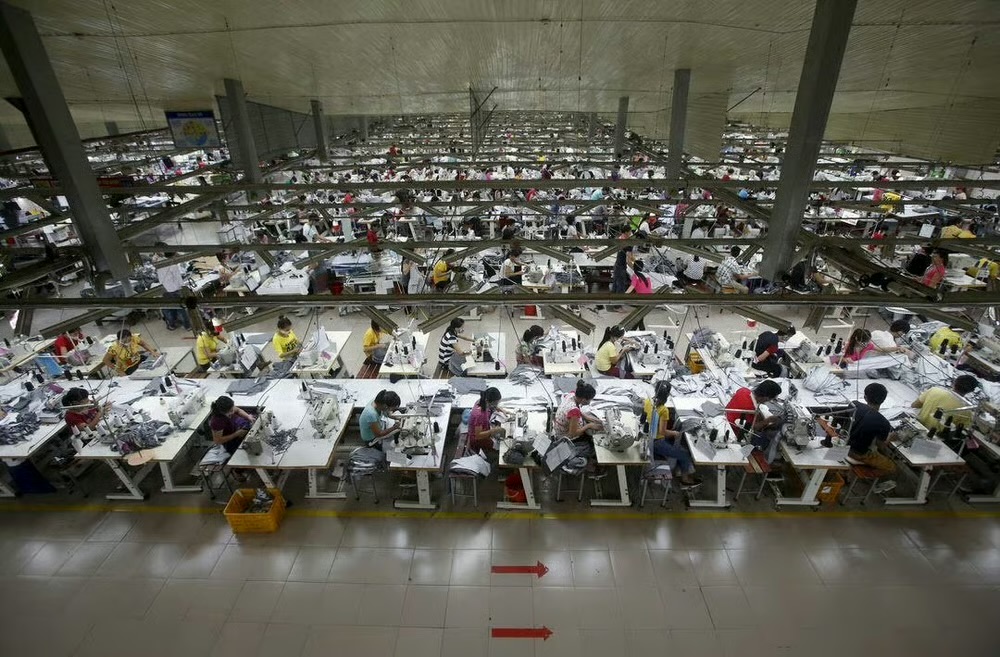
Latest PMI data show manufacturing slowdown across China, South Korea, and Taiwan — with only Vietnam and Indonesia showing resilience.
MARKET INSIDER – Asia’s manufacturing heartland is still reeling from the twin blows of weak U.S. demand and persistent trade tariffs imposed under President Donald Trump. Fresh data released on November 3 show that factory activity across major Asian economies slowed in October, raising fears that the region’s long-awaited industrial recovery could stall before year-end.
According to S&P Global’s Purchasing Managers’ Index (PMI), China’s private-sector manufacturing activity dipped to 50.6, barely above the expansion threshold and slower than September’s pace, while South Korea’s PMI fell to 49.4, signaling contraction. Export orders in both nations dropped sharply — China’s new export orders recorded their steepest decline in five months — as global trade uncertainty continued to weigh on foreign demand. Korean manufacturers also reported surging input costs at the start of the fourth quarter, compounding profit pressures.
The malaise extended across the region: Malaysia and Taiwan saw PMI declines in October, reflecting cooling global demand. In contrast, Vietnam and Indonesia emerged as bright spots, with their PMIs rising thanks to robust domestic consumption and continued investment inflows from manufacturers seeking to diversify away from China.
Trump’s recent Asia tour rekindled trade diplomacy with Beijing and Seoul, but optimism remains muted among exporters. While Washington and Beijing agreed to extend tariff reductions, suspend new port fees, and relax rare-earth controls, analysts said structural tensions remain unresolved. “The PMI data show China’s economy lost momentum in October — manufacturing and construction both slowed,” said Zichun Huang, China economist at Capital Economics. “Any short-term rebound will likely be modest, and the U.S.-China trade deal offers only limited relief.”
China’s official PMI — which tracks state-owned enterprises — fell for the seventh straight month, reinforcing evidence that the pre-tariff export surge has ended. Despite a better-than-expected uptick in overall exports in September, shipments to the U.S. plunged 27% year-on-year, as American buyers turned to alternative suppliers in Southeast Asia and Latin America.
South Korea, Asia’s fourth-largest economy, managed to secure reduced import tariffs in its new trade arrangement with Washington, but economists view the deal as a tactical compromise rather than a breakthrough. For now, Seoul’s exporters face the same reality as China’s: shrinking orders, rising costs, and the lingering drag of tariff uncertainty.
As Beijing eyes its 5% growth target for 2025, policymakers are watching closely to see whether the world’s factory floor can recover without further stimulus. For much of Asia, the message is clear — the post-pandemic rebound is faltering, and until the U.S. consumer revives or tariffs ease, the region’s manufacturing giants will remain caught in a fragile balance between resilience and recession.
If America sneezes, Asia’s factories still catch a cold — and this time, tariffs have made the fever harder to break.
