
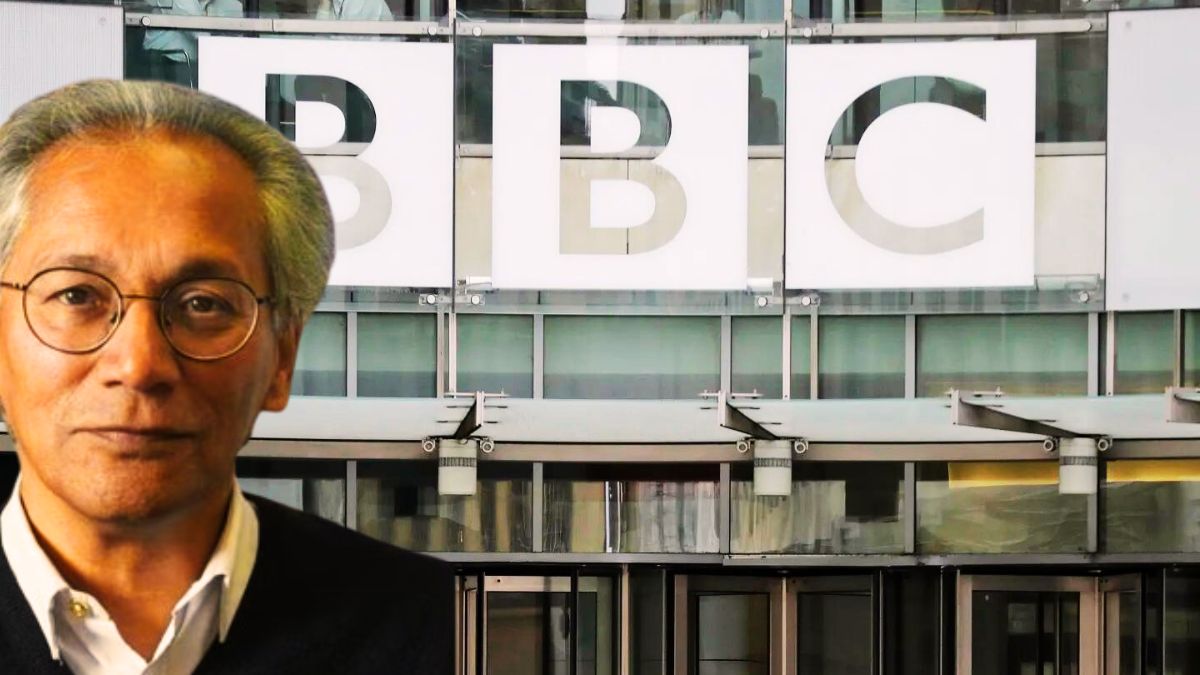
Top Executives Resign After Internal Review Confirms Doctored Donald Trump Footage Created a False ‘Call to Violence,’ Threatening Global Trust in UK Public Media.
LONDON (Market Insider) – The integrity of the British Broadcasting Corporation (BBC), a cornerstone of global journalism, is facing an unprecedented crisis following the admission that its flagship documentary series, Panorama, misleadingly edited a speech by former U.S. President Donald Trump. The chairman of the BBC, Samir Shah, has issued a formal apology for the “mistaken judgment” that presented Trump’s remarks as an explicit “call to violent action,” a scandal that has already triggered the resignation of its Director-General Tim Davie and News CEO Deborah Turness. This event reverberates internationally, as it directly strikes at the BBC’s bedrock principle of impartiality and raises uncomfortable questions about media bias in politically charged coverage, especially concerning U.S. politics.
The Scandal: Fabricating an Incitement Narrative
The controversy centers on footage related to the January 6th Capitol Hill riot. Internal documents, revealed by The Telegraph, showed BBC staff had deliberately juxtaposed clips to imply that President Trump was inciting protesters to “fight hard.” In reality, the unedited speech contained Trump stating they would proceed to Capitol Hill to “cheer on our senators and congressmen and women.” The difference—between encouraging supporters at a rally and urging them to engage in physical confrontation—is critical, transforming a political speech into what the BBC has now admitted appeared to be encouragement for violence.
The fallout was immediate and severe within the BBC hierarchy, forcing the immediate departure of two of its most senior leaders. This suggests the scale of the editing error was viewed internally as an existential threat to the broadcaster’s reputation for objectivity.
Political Fallout and Calls for Restoring Trust
The scandal drew swift condemnation from the U.S. former President, who blasted the BBC as “deceivers” attempting to interfere with the U.S. election process. Conversely, UK Prime Minister Keir Starmer publicly supported the BBC while stressing the necessity of swiftly correcting errors to retain public faith.
Chairman Shah’s apology was an acknowledgment that the editorial lapse broke the fundamental promise of objective reporting. The BBC has committed to a thorough review to ensure all journalistic output meets the highest standards of impartiality. For global media analysts, this crisis highlights the extreme scrutiny faced by powerful, publicly-funded broadcasters when covering deeply polarized international politics. The speed and severity of the executive resignations underscore the zero-tolerance policy required to maintain trust in an era of sophisticated, weaponized information narratives.
The core question now shifts from accountability to remediation: Can the BBC successfully rebuild confidence among global audiences and political stakeholders following such a significant breach of trust?
