
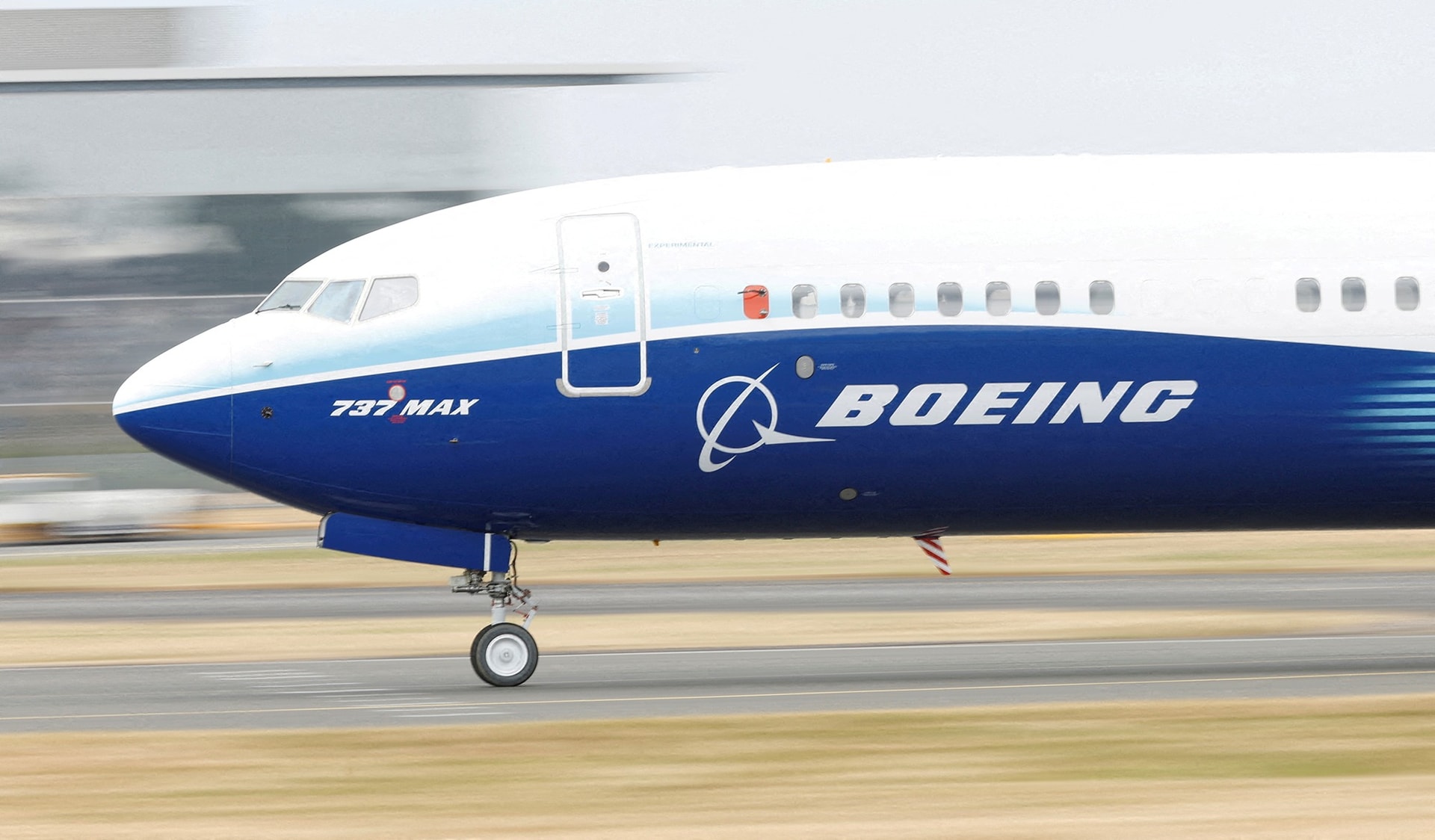
MARKET INSIDER – Despite reporting yet another massive quarterly core operating loss of $5 billion on Wednesday—bringing its total cumulative losses since 2019 to $47.2 billion—this could still be the most significant week for Boeing in over six years. The US plane-maker is reportedly on the verge of finally securing a massive order from Chinese airlines, a market that has been virtually frozen for the American giant for nearly a decade.
The potential deal, which could encompass as many as 500 new jet orders, is seen as a crucial diplomatic and economic component of ongoing trade talks between the US and China. Multiple outlets suggest an announcement could be imminent, perhaps aligning with the face-to-face meeting between President Donald Trump and Chinese leader Xi Jinping in South Korea. Historically, agreements of this scale, which require Beijing’s direct approval, have often been unveiled during high-level bilateral summits. US Ambassador to China David Purdue recently confirmed that negotiations for a “huge” order were near conclusion.
Unfreezing the World’s Biggest Aviation Market
The significance of this order for Boeing cannot be overstated. Passenger jet sales to mainland China have ground to a near halt since trade tensions escalated at the start of the first Trump administration. Since 2018, Boeing has sold a mere 49 jets to mainland China, compared to over 1,000 jets in the preceding ten years.
China is projected to be the world’s most vital market for commercial aircraft. Boeing’s own analysis estimates that the Chinese passenger fleet will double within the next 20 years, requiring the purchase of 9,000 new jets. Losing this market share to perpetual rival Airbus is simply a risk Boeing cannot afford to take, especially given its recent operational setbacks.
Boeing CEO Kelly Ortberg underscored the high stakes, stating that a positive outcome from the trade negotiations is “important to us.” He added, “We’re very hopeful that if we have positive trade negotiations, that will come with some more business with us.”
Politics, Not Safety: Why Boeing Was Frozen Out
While Boeing’s colossal losses are primarily due to internal missteps—most recently a $4.9 billion charge tied to another delay for the next-generation 777X widebody jet, which won’t be ready until 2027—analysts agree that the China sales drought is purely political.
“It’s 100% politics,” said Richard Aboulafia, managing director of AeroDynamic Advisory. Aerospace analyst Ron Epstein mirrored this view, arguing that Boeing was simply “caught in the crossfire” of the larger trade dispute. Experts affirm the issues in China do not stem from the safety concerns that grounded the 737 Max globally.
Analysts caution, however, that the announced figure of 500 jets may include some orders that were already quietly booked by Boeing over the last nine years but withheld from public announcement by the Chinese government as political leverage. Boeing’s backlog currently includes over 850 jets sold to “unidentified customers,” many of which are believed to be Chinese. Even accounting for these previously unannounced sales, experts believe well over half the announced deal would represent genuine new orders, providing an immediate and powerful boost to Boeing’s forward-looking portfolio and investor sentiment.
