
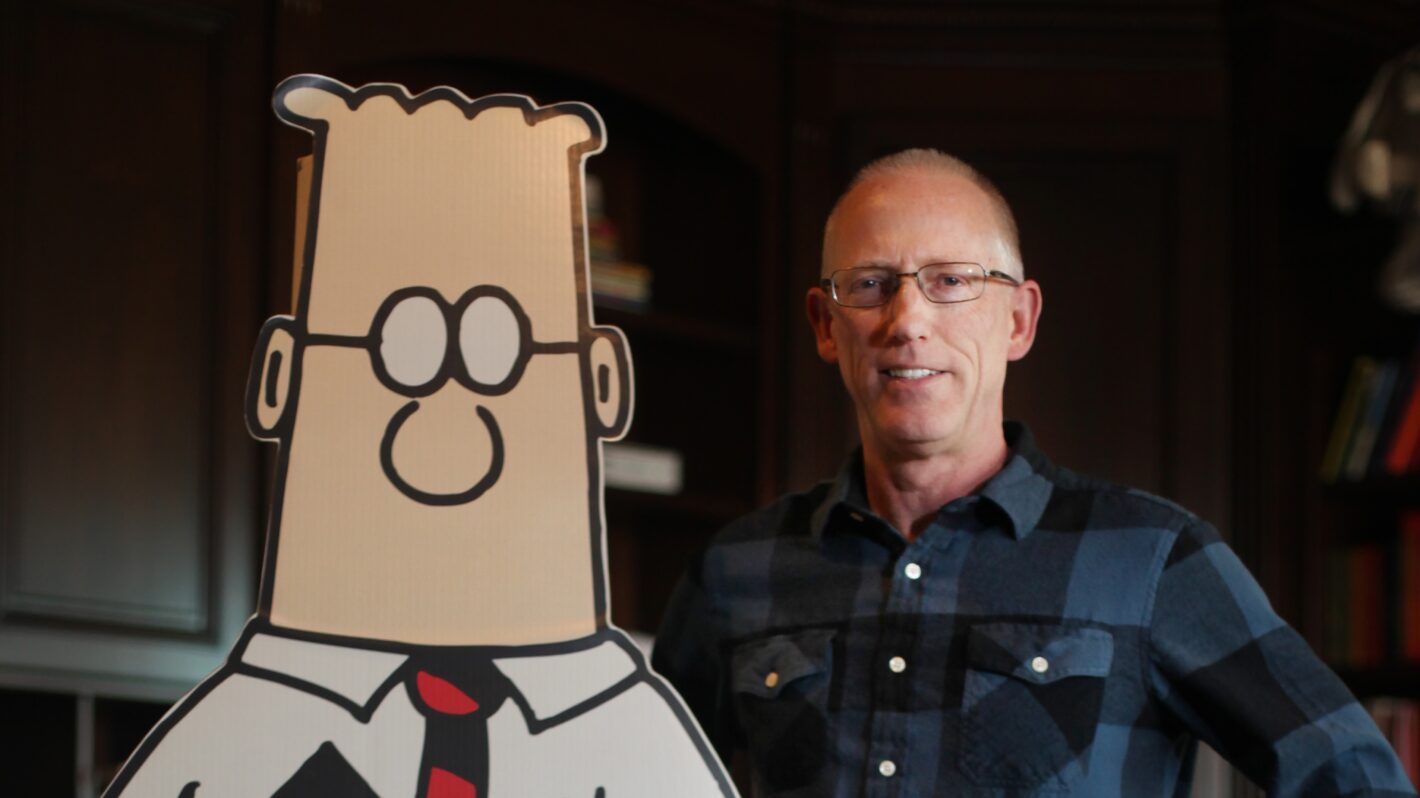
From global office satire to cultural flashpoint, Adams’ death closes a complicated chapter in media, free speech, and creator independence.
MARKET INSIDER – The death of Scott Adams at 68 marks more than the passing of a cartoonist—it signals the end of an era in workplace satire that once shaped how millions of people around the world laughed at corporate life. Adams died on January 13, 2026, after a prolonged battle with prostate cancer, leaving behind a final message that is already reigniting debate about art, controversy, and how public figures are ultimately remembered.
Best known as the creator of Dilbert, Adams transformed the mundane frustrations of cubicles, middle management, and corporate jargon into a global cultural language. Launched in 1989, Dilbert surged through the 1990s tech boom and, at its peak, ran in roughly 2,000 newspapers worldwide. For international readers—from Silicon Valley to Singapore—the strip captured a universal truth: modern office life was often absurd, dehumanizing, and quietly hilarious.
Yet Adams’ later years were defined as much by controversy as by creativity. In 2023, remarks made during a YouTube livestream triggered widespread backlash, prompting most newspapers to drop Dilbert and severing Adams’ relationships with major publishers. In response, he bypassed traditional media entirely, launching Dilbert Reborn as a direct-to-fan product hosted on his own website—a move that mirrored a broader global shift toward creator independence and platform disintermediation.
In May 2025, Adams disclosed that he had been diagnosed with prostate cancer. Weeks before his death, he prepared a final statement that was read aloud by his ex-wife, Shelley Miles, on the “Coffee with Scott Adams” podcast moments after he passed. In it, Adams emphasized that he was of sound mind, addressed questions surrounding his estate, and made a deeply personal declaration of Christian faith—describing it as a rational “risk/reward calculation” rather than a lifelong belief. The message also reflected on his marriage, family life, and his search for meaning beyond professional success.
Globally, Adams’ death raises uncomfortable but timely questions: Can creative influence be separated from personal ideology? Does cultural impact outweigh public missteps? And in an age where creators can speak directly to audiences without institutional filters, who ultimately decides what legacy endures? For investors, executives, and media leaders alike, Scott Adams’ story is a reminder that cultural capital can be built over decades—and tested in moments. How we judge that balance may say as much about our era as it does about the man who once taught the world to laugh at meetings.
