
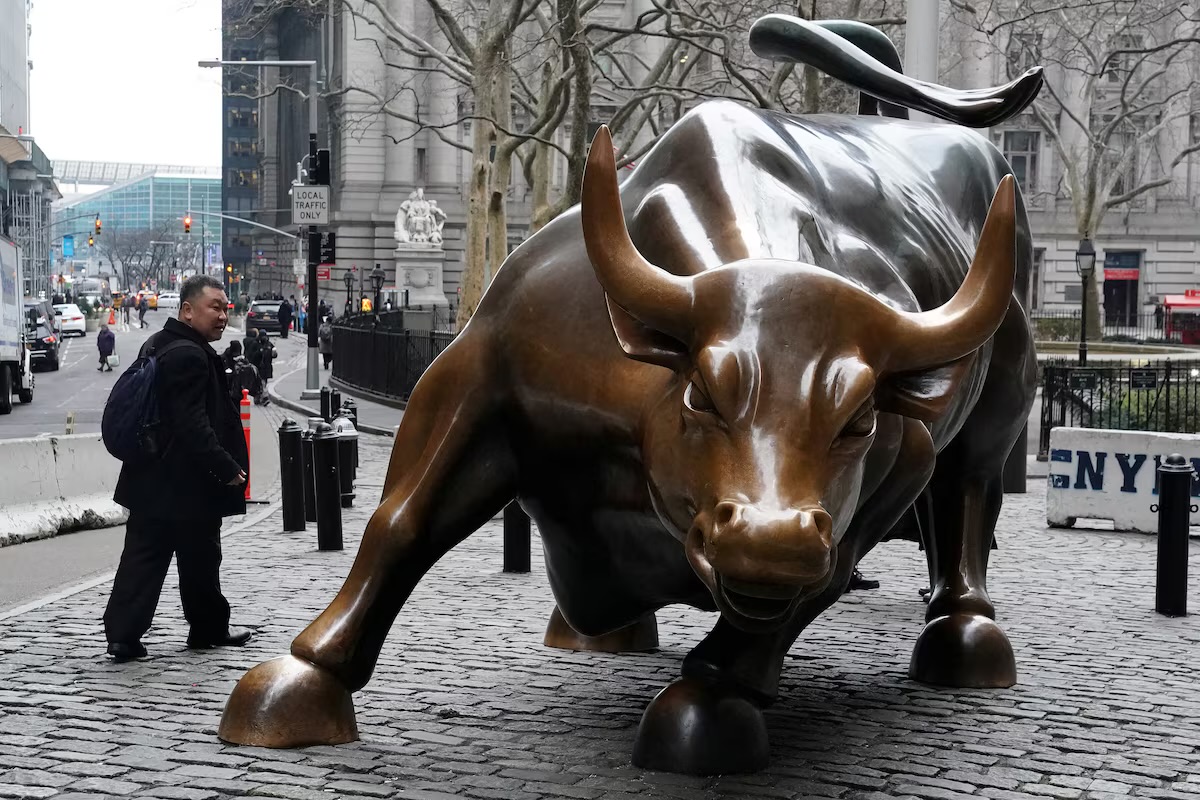
Markets rally on peace hopes, but oil spike and policy risks cloud outlook
MARKET INSIDER – A fragile sense of optimism returned to global markets Monday after U.S. President Donald Trump signaled “serious” negotiations to end military operations in Iran—triggering a sharp rebound on Dow Jones Industrial Average and offering investors a temporary reprieve from weeks of geopolitical anxiety.
The rally, however, underscores a deeper paradox shaping global markets: even as equities climb on hopes of de-escalation, surging oil prices and tightening policy constraints threaten to amplify inflation risks worldwide—raising the stakes far beyond Wall Street.
The Dow jumped more than 370 points, while the S&P 500 and Nasdaq Composite posted modest gains, reflecting cautious optimism rather than conviction. Trump’s statement that Washington is in talks with a “more reasonable regime” in Iran, coupled with reports that Tehran may accept key elements of a U.S. peace framework, fueled expectations that a critical geopolitical flashpoint could ease. Yet his simultaneous warning of potential strikes on Iran’s energy infrastructure if talks fail injected a layer of volatility that markets have not fully priced in.
Energy markets told a more sobering story. Brent crude surged above $115 per barrel, while West Texas Intermediate climbed past $102—levels that historically act as a drag on global growth. The potential disruption of the Strait of Hormuz, through which roughly one-fifth of global oil supply flows, remains a critical risk. Even with partial reopening signals, traders are bracing for supply shocks that could ripple across Asia and feed back into Western economies through higher import costs.
Prominent economist Mohamed El-Erian warned that markets may be underestimating the structural constraints now facing policymakers. With U.S. fiscal deficits already elevated and limited room for aggressive monetary easing, the traditional playbook for cushioning shocks is increasingly constrained. If energy-driven inflation persists, central banks may be forced to choose between stabilizing growth and controlling prices—an uncomfortable trade-off that could redefine market dynamics in the months ahead.
This rebound also comes against a fragile technical backdrop. Major U.S. indices had just logged five consecutive weeks of losses, with both the Dow and Nasdaq slipping into correction territory. The rally, therefore, appears less like a trend reversal and more like a relief bounce driven by headlines rather than fundamentals.
For global investors, the real question is no longer whether tensions in the Middle East will move markets—but whether markets are systematically underpricing the second-order effects: energy-driven inflation, constrained policy responses, and supply chain disruptions. If those risks materialize, today’s rally could look less like the start of a recovery—and more like a temporary pause before a deeper recalibration.
