
The U.S. central bank lowers borrowing costs for the second straight time, ending quantitative tightening — yet signals that the path ahead is far from certain.
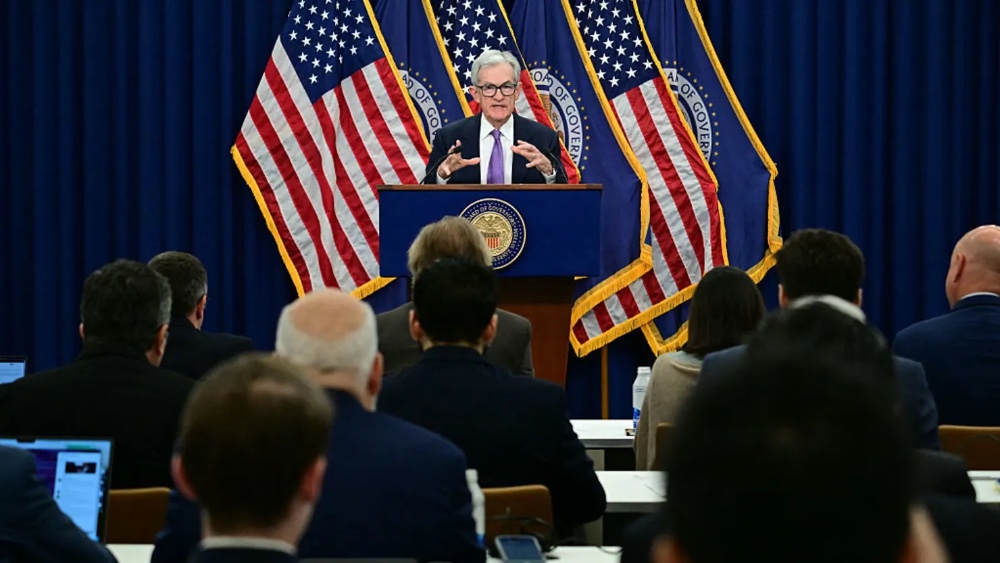
WASHINGTON (Market Insider) — The Federal Reserve cut interest rates for the second consecutive meeting on Wednesday, seeking to cushion the U.S. economy amid data blind spots and lingering inflation pressures. But markets quickly turned volatile after Chair Jerome Powell warned investors not to assume another cut is coming in December.
By a 10-2 vote, the Fed’s rate-setting committee lowered the federal funds rate to 3.75%–4%, marking its second 25-basis-point reduction this year. The central bank also announced it would end quantitative tightening (QT) — its balance sheet reduction program — effective December 1, signaling a more cautious stance toward liquidity withdrawal.
However, Powell’s tone was far from dovish.
“A further reduction in the policy rate at the December meeting is not a foregone conclusion. Far from it,” Powell told reporters, adding that “strongly differing views” emerged within the committee over how to proceed.
The remarks triggered an immediate reaction on Wall Street. Stocks, which had initially rallied on news of the rate cut, erased gains and closed mixed as traders recalibrated expectations. The CME FedWatch Tool showed odds for a December rate cut plunging to 67%, down from 90% the previous day.
Policy Divide at the Fed
The vote reflected deep divisions within the Federal Open Market Committee (FOMC).
- Governor Stephen Miran, a Trump appointee, dissented — pushing for a larger 50-basis-point cut to accelerate easing.
- Kansas City Fed President Jeffrey Schmid also dissented — but argued that no cut was warranted at all given still-elevated inflation.
This ideological split underscores the policy tightrope the Fed faces: trying to support slowing growth without reigniting price pressures.
Data Darkness Clouds Decisions
Complicating matters further, the Fed has been operating with limited economic data. A federal government shutdown has halted most macroeconomic reporting, including jobs, retail sales, and manufacturing data.
Only the Consumer Price Index (CPI) report — which showed annual inflation at 3% in September, boosted by energy costs and tariff-linked items — was available to policymakers.
In its statement, the FOMC acknowledged the uncertainty:
“Available indicators suggest economic activity has been expanding at a moderate pace. Job gains have slowed this year, and the unemployment rate has edged up but remained low,” it noted.
The Fed also warned that “downside risks to employment” have increased, hinting at rising concern over a cooling labor market.
End of Quantitative Tightening
In a significant policy shift, the Fed said it would stop shrinking its $6.6 trillion balance sheet on December 1, effectively ending QT two years after it began.
Since 2022, the Fed has allowed $2.3 trillion in Treasury and mortgage securities to roll off, tightening liquidity in financial markets. But recent signs of stress in short-term funding markets prompted officials to reconsider.
Going forward, proceeds from maturing mortgage-backed securities will be reinvested into shorter-term Treasury bills — a move designed to maintain flexibility.
During the pandemic, the Fed’s balance sheet ballooned from $4 trillion to nearly $9 trillion, as it bought assets to stabilize financial markets. Powell has previously said the Fed doesn’t plan to return to pre-pandemic levels, though analysts like Evercore ISI’s Krishna Guha suggest the central bank might resume bond purchases in 2026 for “organic growth purposes.”
Balancing Act Ahead
The rate cut and QT pause mark a subtle but meaningful policy pivot — one that could shape the 2025 outlook for global investors.
Historically, markets have tended to rally during mid-cycle rate cuts, especially when earnings and liquidity conditions remain strong. Yet, as Powell cautioned, easier money carries risks. If inflation reaccelerates, the Fed could once again be forced into rapid tightening, echoing the volatility of 2022.
For now, the message is clear: the Fed wants flexibility, not commitment. Investors hoping for a steady easing cycle may have to wait.
Market Impact Snapshot:
- Fed Funds Rate: Lowered to 3.75%–4%
- Next Meeting: December 10–11
- Odds of December Cut: 67% (CME FedWatch)
- S&P 500: Closed flat after intraday reversal
- U.S. 10-Year Yield: Down to 3.88%
- USD Index: Slightly higher amid policy uncertainty
The Fed is easing — but on edge. Powell’s message to markets: expect flexibility, not predictability.
