
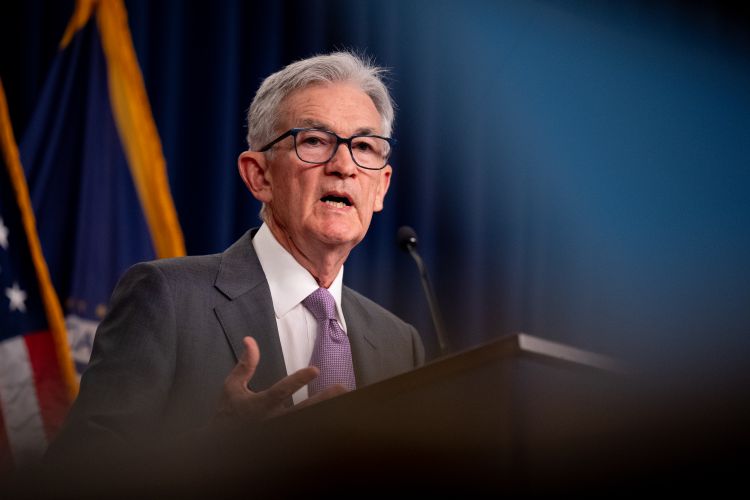
Most economists now see Powell’s third straight cut as inevitable—but warn inflation could complicate the path ahead
The U.S. Federal Reserve is widely expected to deliver another 25-basis-point rate cut in December, as a softening labor market and slowing economic growth add pressure on Chair Jerome Powell to sustain the expansion. According to a new Reuters poll, 80% of economists now expect the Fed to lower its benchmark rate to a range of 3.50%–3.75%—the third consecutive cut in as many meetings—despite deep divisions within the central bank over the need for further easing.
The move would come amid the longest government shutdown in U.S. history, which has delayed critical economic data and left policymakers navigating “in the dark.” Powell has cautioned that another reduction “is not a foregone conclusion,” but with job growth faltering and consumer demand cooling, most analysts believe the central bank has little choice but to act. “The labor market still looks relatively weak,” said Abigail Watt, U.S. economist at UBS. “The risk to December will be if data suddenly dispel that sense of weakness.”
The job market’s deterioration is visible beneath the surface: while the unemployment rate remains at 4.3%, private data show companies quietly trimming headcounts and reducing hiring plans. Economists expect unemployment to inch up to 4.5% next year as growth slows sharply—from 3.8% in the second quarter to just 1% this quarter. “The labor market is cooling, yes, but it’s not collapsing,” said Stephen Juneau of Bank of America Securities. “December may not be a done deal unless Powell sees more obvious downside risks.”
Still, inflation remains the Fed’s Achilles’ heel. The Personal Consumption Expenditures (PCE) index—the Fed’s preferred gauge—has hovered above the 2% target for more than four years, the longest stretch since 1995. Vanguard economist Josh Hirt warned that persistent inflation “could impact Fed credibility” and that markets may soon lose patience with viewing price pressures as “temporary.”
With inflation stubbornly high and growth losing steam, Powell faces one of the toughest balancing acts of his tenure. A December cut could help cushion the labor market—but also risk reigniting inflationary pressures just as the 2024 easing cycle gathers pace.
The question now dividing Wall Street and Washington alike: is the Fed preempting a slowdown—or sleepwalking into another inflation trap?
