
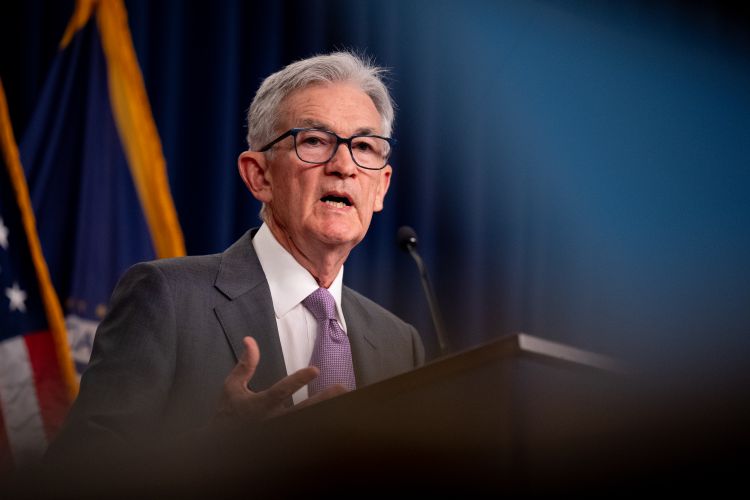
With inflation uncertainty, missing data from the shutdown, and Trump pressing for deeper cuts, the December decision could redefine the Fed’s credibility in 2026
MARKET INSIDER – The U.S. Federal Reserve is poised to deliver another quarter-point interest rate cut on Wednesday, yet policymakers may pair the move with a surprisingly hawkish message — a signal that the era of steady easing could be nearing a pause. The central bank faces a perfect storm of uncertainty: critical economic data delayed by a 43-day government shutdown, internal divisions over inflation and labor risks, and unprecedented political pressure from President Donald Trump, who is openly demanding sharper rate reductions.
The challenge for Fed Chair Jerome Powell is that even as the central bank moves its benchmark rate into the 3.50%–3.75% range, officials lack fresh inflation and jobs data beyond September. The missing November releases — due out within days — could dramatically alter the economic picture, forcing the Fed to hedge its outlook at precisely the moment markets expect clarity. Analysts warn that the December projections for 2026 may become outdated almost instantly, making the Fed’s forward guidance unusually fragile.
Policymakers remain deeply split. Some regional Fed presidents argue inflation is still too elevated to justify further cuts, while several board members believe delaying easing risks a sharp weakening in the labor market. The October meeting already produced rare dissents in opposite directions. Fed Governor Stephen Miran, currently on leave from his White House role, has pushed repeatedly for larger 50-basis-point cuts and may dissent again, while hawkish regional officials are likely to push back against easing altogether.
Investors currently expect two more cuts by the end of 2026, putting policy rates near 3.00%–3.25%. But the Fed’s own September projections were higher, and JP Morgan’s Michael Feroli cautions that hawkish sentiment inside the system may keep the rate path unchanged — with Powell likely to stress that additional easing will require a “material deterioration” in employment. That stance places the Fed on a collision course with the White House, where Trump is selecting Powell’s successor partly based on willingness to cut rates aggressively.
Economists warn that communication risks are mounting. Powell’s term expires in May, several FOMC members may turn over, and the political backdrop complicates every signal the Fed sends. Standard Chartered analysts note that markets could simply ignore the Fed’s guidance altogether, given uncertainty about who will actually be setting policy in the coming months.
The Fed’s December decision is less about the cut itself and more about what comes next. With inflation direction unclear, labor market signals lagging, and presidential pressure intensifying, the central bank enters 2026 facing its most credibility-testing moment since the global financial crisis. Whether markets trust the Fed’s message — or hedge against political interference — will shape global risk assets into the new year.
