
Profit shortfall dents sentiment despite booming demand from Europe’s rearmament drive
Shares of Hanwha Aerospace, South Korea’s largest defense contractor, fell more than 6% after the company posted fourth-quarter revenue and pre-tax profit below market expectations—reminding investors that even the world’s hottest defense stocks are not immune to execution risk.
The sell-off followed results showing fourth-quarter revenue of 8.33 trillion won, up more than 72% year on year but short of consensus forecasts. More troubling for markets, pre-tax profit plunged 72% to 602 billion won—roughly half what analysts had expected—while operating profit slipped 16%. Net profit provided a rare bright spot, coming in above estimates despite a sharp year-on-year decline.
The disappointment stood in contrast to Hanwha’s extraordinary growth story. For the full year, revenue surged 137% to 26.61 trillion won, narrowly missing projections, while operating profit climbed 75% to a record 3.03 trillion won—marking the company’s fourth consecutive year of record operating earnings. Still, pre-tax profit fell 19% for the year, reinforcing concerns over margin pressure as production scales rapidly.
The market reaction is notable given Hanwha’s stellar run. The stock is still up nearly 19% year to date, following a spectacular 193% rally in 2025 and a 154% surge in 2024. With a market capitalization of roughly $42 billion, Hanwha is now the 11th-largest company on South Korea’s KOSPI, making earnings execution increasingly critical.
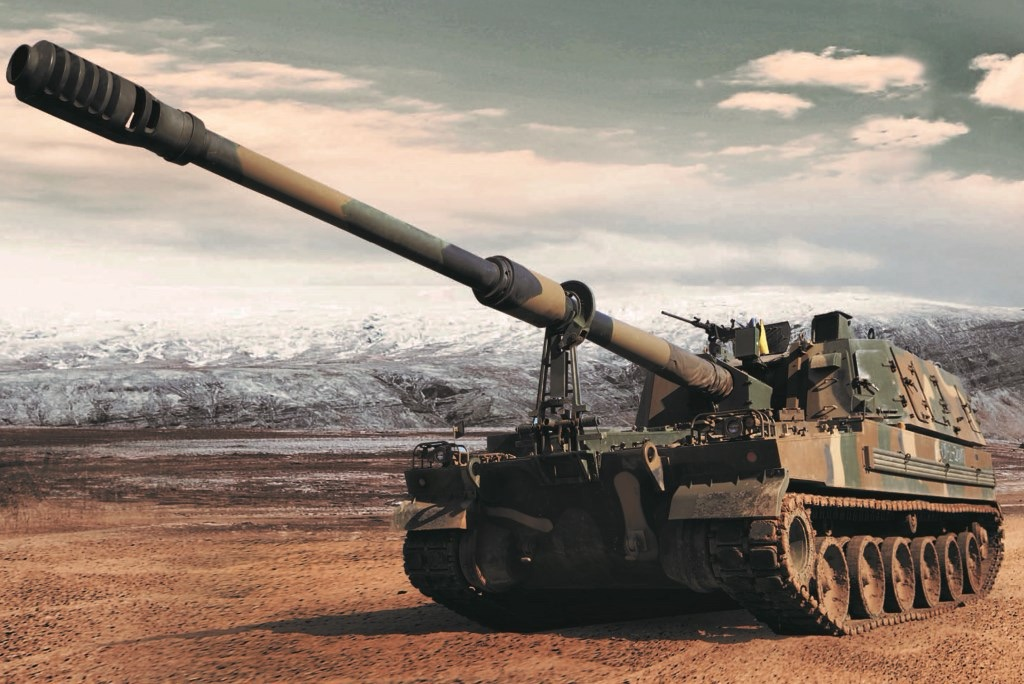
Strategically, the long-term demand backdrop remains powerful. Since the outbreak of the Russia–Ukraine war, European defense spending has surged, and Hanwha has emerged as a major beneficiary. The company has sold its K9 Thunder self-propelled howitzers to Poland, Estonia, Romania, and Norway, alongside Chunmoo multiple-launch rocket systems—cementing its role as a key supplier in Europe’s rearmament cycle.
For global investors, the message is nuanced. The defense supercycle is real, and Hanwha is deeply embedded in it. But after two years of explosive share price gains, markets are shifting from growth narratives to profit quality, margins, and delivery discipline. The stock’s pullback suggests that in 2026, defense names will still be rewarded—but only if operational performance keeps pace with geopolitical demand.
