
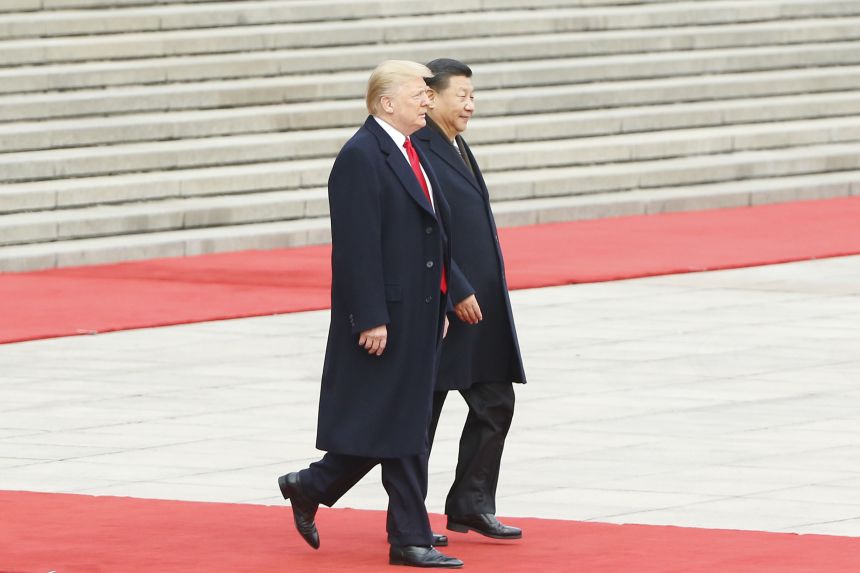
KUALA LUMPUR/SEOUL—Global markets are keenly watching a new, high-stakes round of trade negotiations between the U.S. and China this weekend in Malaysia. The talks, the fifth round this year, aim to de-escalate tensions and set a positive tone for the upcoming, highly anticipated summit between President Donald Trump and Chinese leader Xi Jinping next Thursday in South Korea.
The bilateral relationship, which had enjoyed a period of relative calm following a trade truce brokered in May and extended until November 10, has recently spiraled into renewed tit-for-tat escalations.
Earlier this month, Beijing ramped up restrictions on rare earths—critical minerals essential for global supply chains in electronics and semiconductors, a market China controls about 90% of—in response to Washington’s expanded export curbs on U.S. technology.
The New Trade Flashpoint: Rare Earths and Export Controls
The escalating measures have rattled investors and businesses relying on stable global supply chains. President Trump reacted swiftly to China’s rare earth move, threatening to impose an additional 100% tariffs on Chinese goods and place export controls on “any and all critical software” starting next month, even briefly threatening to cancel the meeting with Xi.
China’s Leverage: The restrictions on rare earths serve as a powerful bargaining chip, impacting everything from electric vehicles to defense technology.
US Countermeasures: The Trump administration is reportedly considering a wide array of new software export restrictions, spanning laptops to jet engines. Treasury Secretary Scott Bessent warned that “everything is on the table,” adding that any further curbs would likely be in coordination with G7 allies.
Negotiators Seek a ‘Positive Note’
The current round of talks is being led by U.S. Treasury Secretary Scott Bessent, Trade Representative Jamieson Greer, and China’s Vice Premier He Lifeng.
Despite the recent turbulence—which included a personal flare-up where Secretary Bessent publicly accused a Chinese counterpart, Vice Minister Li Chenggang, of being “very disrespectful” and “slightly unhinged”—Bessent expressed guarded optimism.
“I’m hoping that we can get this ironed out this weekend so that the leaders can enter their talks on a more positive note,” Bessent told Market Insider before his departure.
He stressed, however, that he would not rule out further escalatory measures if a pause or relief on Beijing’s rare earths regime cannot be negotiated. China’s Commerce Minister Wang Wentao reiterated Beijing’s opposition to decoupling, urging further dialogue to “identify the right way to coexist.”
The Leaders’ Agenda: Beyond Trade
The bilateral talks in Malaysia and the subsequent Trump-Xi summit on the sidelines of the APEC meeting in South Korea have a crowded agenda that extends past tariffs and tech:
Trade Concessions: President Trump has stated he expects a deal on rare earths and a resumption of Chinese purchases of soybeans, a product China paused buying as bilateral frictions intensified in May.
Geopolitical Issues: Trump also indicated a desire to discuss Russia’s war in Ukraine with Xi, saying, “What I’ll really be talking to him about is, how do we end the war with Russia and Ukraine… And I think he’s going to be very receptive.”
Investor Outlook: Brace for Volatility
The approaching November 10 deadline for the trade truce, coupled with the threat of new, massive tariffs and export controls, is introducing significant uncertainty into the global economic outlook.12
For investors, the coming week is critical:
- Risk-On Sentiment: A successful de-escalation in Malaysia, followed by a constructive Trump-Xi meeting, could spark a significant rally in global equities, particularly in sectors dependent on U.S.-China supply chains like technology and industrials.
- Volatile Commodities: The rare earth dispute highlights the fragility of critical material supply.13Investors in commodity and specialized technology sectors should be prepared for heightened volatility based on negotiation outcomes.
- Soybean Markets: Any announcement of resumed large-scale Chinese soybean purchases would immediately impact agricultural commodity markets.
The outcome of the weekend meetings in Malaysia will be the clearest indicator of whether the world’s two largest economies are on a path toward a sustainable deal or an accelerated trade conflict that risks disrupting global recovery.
