
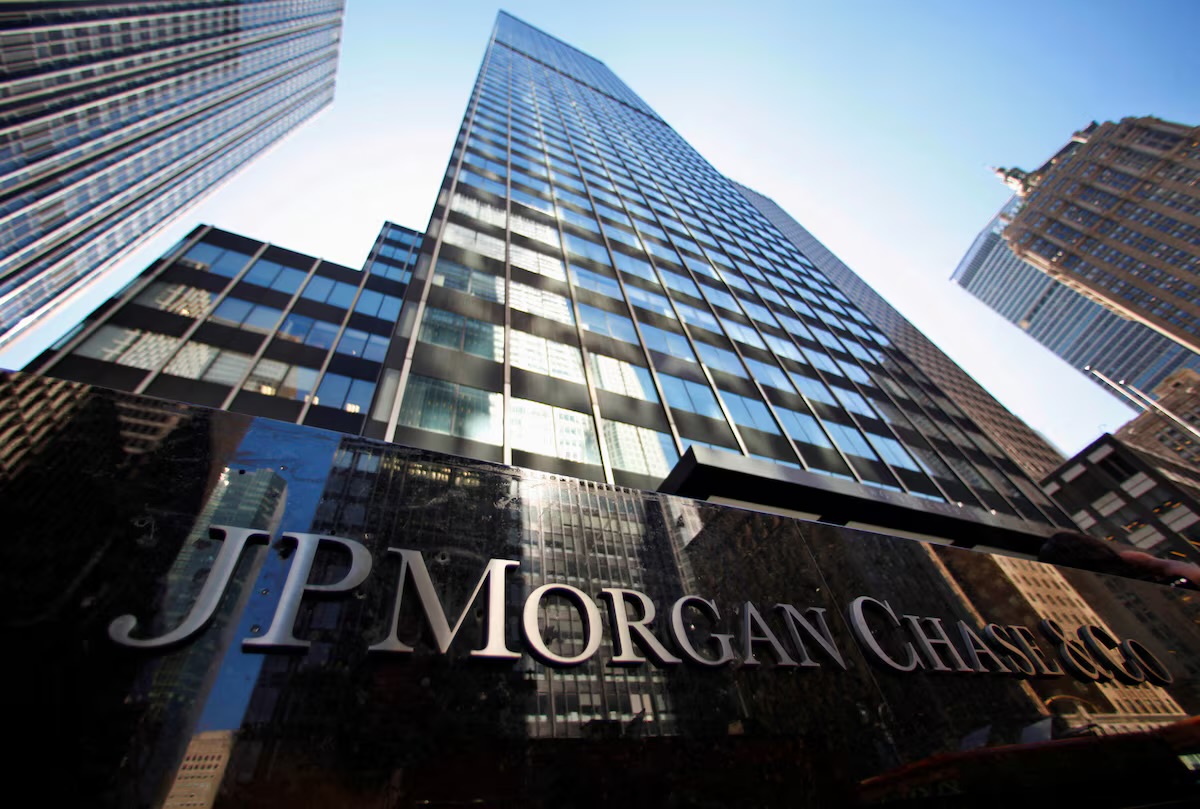
Wall Street’s Global Pivot: The $5 Trillion Battle for the Middle East’s Untapped Midsize Market
FRANKFURT – The global race for yield just went mid-market. JPMorgan Chase (JPM.N), the largest U.S. bank, is quietly launching a sweeping offensive to capture the wealth of the world’s fast-growing, medium-sized companies, starting with a significant expansion in Dubai. This strategic, unreported move signals a tectonic shift in banking focus, as megabanks like JPMorgan seek new, high-margin revenue streams away from the saturated “blue-chip” firms they traditionally dominate. This isn’t just about regional growth; it’s a direct, global challenge to rivals like Citigroup (C.N), and an acknowledgement that the $5 trillion-plus Middle Eastern market is essential for global growth.
JPMorgan has initiated its push by relocating veteran banker Tushar Arora from London to Dubai to build a new team focused specifically on smaller, venture capital-backed firms. This makes the United Arab Emirates (UAE) the nerve center for the bank’s broader midcap strategy across the vast Europe, Middle East, and Africa (EMEA) region. As Stefan Povaly, London-based co-head of corporate banking for EMEA, noted, “There’s a global focus on doing more in the midcap space,” confirming the bank’s pivot away from purely chasing the biggest institutional clients. This push follows similar, recent coverage expansions in high-growth European economies like Austria and Poland, where JPMorgan hired talent from competitors like Santander to service the local business base.
The strategic importance of the UAE cannot be overstated. Global financial powerhouses are flocking to cities like Dubai and Abu Dhabi to capitalize on vast, growing oil wealth and increasingly sophisticated non-oil sectors. This increased competition is already making incumbents nervous. Alex Stiris, head of Citi’s commercial banking in EMEA, acknowledged the pressure, stating that while Citi sees the UAE as a huge opportunity, the rising number of competitors means they “can’t rest on our laurels.” JPMorgan’s decision to base its midcap effort here highlights the UAE’s function as the primary gateway for investment into high-potential markets across the region.
The expansion is a strategic diversification play. While midcaps may not offer the immediate fees of mega-deals, they provide a more resilient, geographically diverse revenue stream, bolstering the bank’s top line against volatility in traditional markets. Furthermore, the bank is actively assessing further expansion into key emerging markets, including being in the “early stages of evaluating a move to increase covering midcaps in Turkey,” according to Povaly, underscoring a commitment to aggressively hunt for high-growth potential outside the established Western financial hubs.
Wall Street’s aggressive turn toward midcaps in Dubai and Warsaw is a critical signal for investors. It suggests that the highest growth and greatest competitive alpha for global financial services is now found not in servicing the largest companies in the oldest markets, but in backing the newest economic champions in emergingfinancial hubs.
This geographical pivot could also be viewed as a risk hedge, offering a crucial counterbalance to the compliance challenges JPM has faced in larger, more regulated zones—including a recent record fine in Germany. The real question is: If JPMorgan is going all-in on midcaps, is it time for investors to do the same?
