
Investors eye oil windfall as geopolitics jolts global markets into a new regime
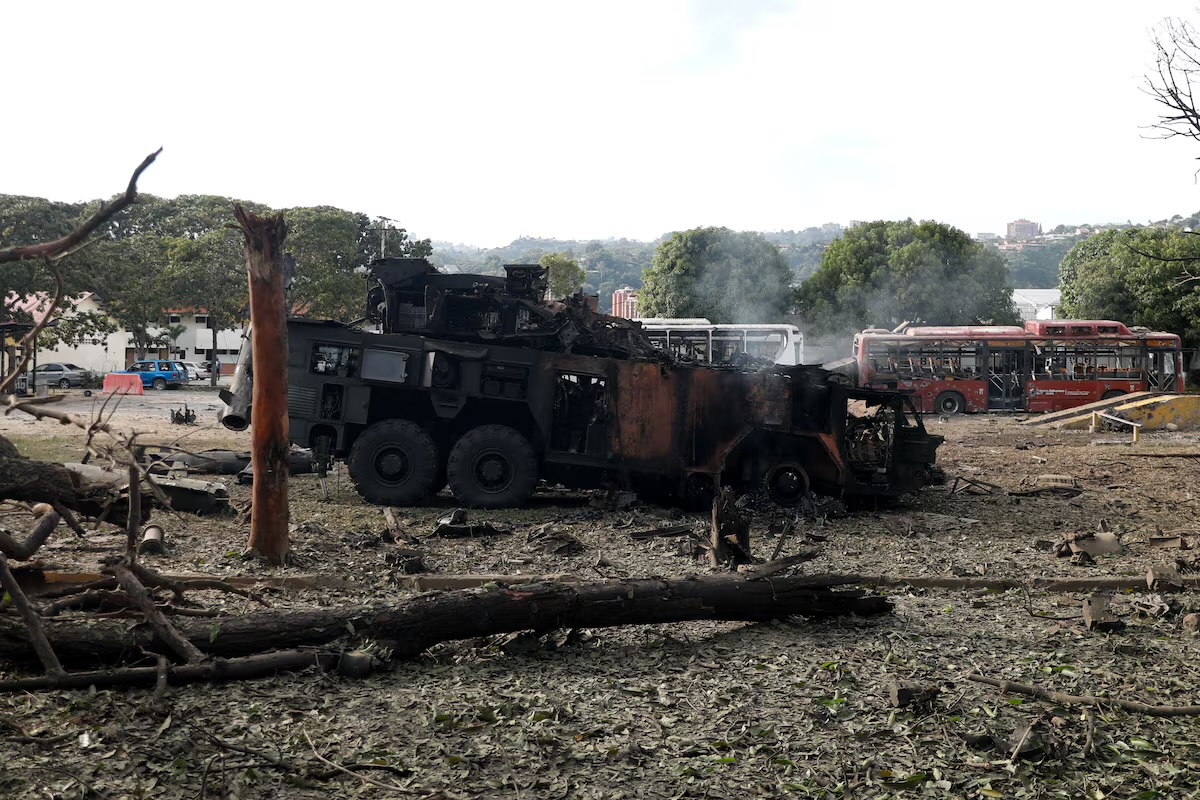
Global markets are recalibrating after the United States confirmed it struck Venezuela and captured President Nicolás Maduro—an intervention not seen in Latin America since the 1989 removal of Panama’s Manuel Noriega. The move, announced by Donald Trump, has instantly reframed risk across energy, emerging markets, and geopolitics, with investors debating whether the shock marks the start of a volatile transition—or a catalyst for long-suppressed value.
In a statement posted Saturday, Trump said the US carried out a “large-scale strike” and that Nicolás Maduro and his wife were captured and flown out of the country. The escalation follows months of accusations by Washington that Maduro clung to power illegitimately and enabled drug trafficking. Reuters noted the action coincided with Trump’s warnings to intervene elsewhere, including threats to support protesters in Iran—signaling a broader, more assertive posture.
Market reaction has been swift in tone, if measured in price. Brian Jacobsen of Annex Wealth Management framed the event as “a matter of when, not if,” arguing that a post-Maduro scenario could unlock Venezuela’s vast oil reserves over time. He cautioned that markets often flip from risk-off to risk-on once conflict begins, with oil likely the first—and possibly only—asset class to react decisively. If supply constraints ease, he added, the episode could even reinforce forecasts of a global oil glut.
Economists warn that headline risk, not fundamentals, will dominate near-term trading. Marchel Alexandrovich of Saltmarsh Economics said markets are now contending with an unusually dense stack of geopolitical flashpoints—from US tariffs and Ukraine to Iran, Taiwan, and Venezuela—creating a backdrop far noisier than investors grew accustomed to under previous administrations.
Strategists urge caution against premature optimism. Tina Fordham of Fordham Global Foresight said talk of a “bonanza” in a post-Maduro Venezuela overlooks the messy reality of post-authoritarian transitions and America’s uneven record in the Southern Hemisphere. Still, she acknowledged that the prospect of political change in Venezuela—and potentially Iran—could unleash “animal spirits” when markets reopen, reopening energy-producing consumer markets long closed to international capital.
The immediate question for investors is not just what happens next in Caracas, but how far Washington is willing to go—and where. If the intervention proves decisive, energy markets may price in long-term supply expansion. If it spirals, risk premiums could surge across emerging markets. Either way, the capture of Maduro has reset the global risk narrative, forcing investors to confront a new reality: geopolitics is no longer a tail risk—it is the trade.
