
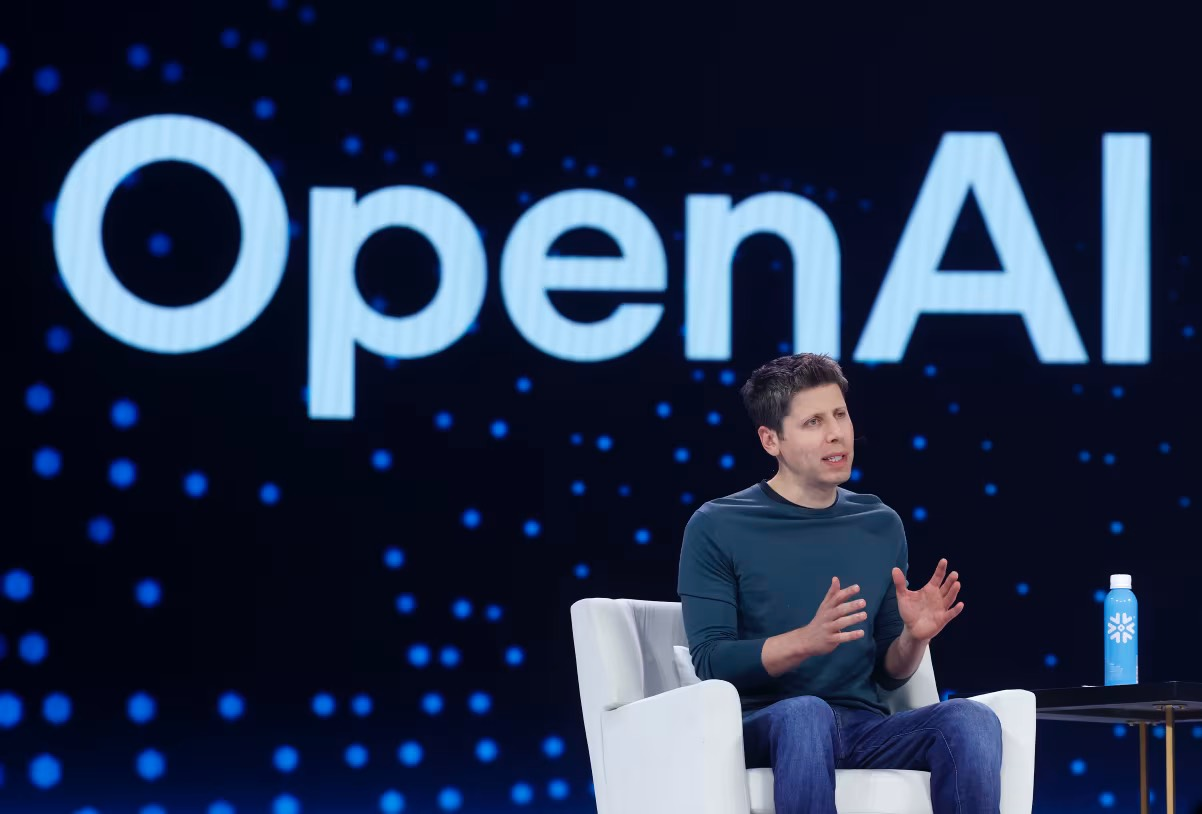
NEW YORK — The rapidly growing network of artificial intelligence (AI) partnerships, centered around OpenAI, has become increasingly complex, leading analysts and investors to fret over potential echoes of the late-1990s dot-com bubble.
The latest entanglement involves OpenAI, reportedly the biggest private company on the planet with a half-trillion-dollar valuation, striking a deal with chip designer AMD. This came less than a week after Nvidia, the world’s most valuable company, announced a $100 billion investment in the same AI giant.
The picture is further muddied by Oracle, which last month reportedly struck a $300 billion deal with OpenAI, leading to the company’s sudden AI stardom. When factoring in OpenAI’s deep financial connections to tech behemoths Microsoft and Google (the second and fourth most valuable publicly traded companies, respectively), the entire AI financing machine appears to be a “small handful of large companies sort of just trading money and services back and forth.”
The Return of Vendor Financing
The AMD deal, which sent the chip designer’s shares up 23%, is a prime example of this financial circularity. As investor Paul Kedrosky noted, AMD is effectively subsidizing demand by issuing OpenAI warrants for up to 160 million shares. This structure makes OpenAI a 10% shareholder—”part customer, part financier—a risk transfer from cash to stock,” and potentially the largest, controlling AMD shareholder.
This intertwined setup, often referred to as “vendor financing,” is making it difficult for investors to determine how much demand for AI is genuine customer hunger and how much is merely capital being recycled to keep up the appearance of progress.
Analysts are pointing to vendor financing—along with the doubling and tripling of company valuations—as an unflattering parallel to the dot-com era. Back then, telecom equipment giants like Cisco, Nortel, and Lucent extended heavy financing to customers, essentially ensuring sustained demand for their equipment. This led to inflated orders and a market glut that contributed to the 2001 collapse, leaving equipment makers with bad debt and many startups bust.
“The lessons of the dot-com bubble are all but forgotten, but they echo in eternity,” wrote Mike O’Rourke, chief market strategist at JonesTrading. He noted that vendor financing was “key” to the demise of Lucent, which was once billed—as Nvidia is now—as a “picks and shovels” play in the emerging tech economy.
Are LLMs the Emperor with No Clothes?
While Morgan Stanley analysts caution that no two market cycles are exactly alike—noting that today’s Big Tech companies are in a much stronger financial position than many over-inflated dot-com stocks—many are questioning the product at the core of all this spending: generative AI powered by large language models (LLMs).
Despite the hype that LLMs will “change the world,” their use cases have so far fallen short of “superintelligence.” Many investors, analysts, and academics are now “screaming that the emperor has no clothes.”
Skeptical data points abound: An MIT survey of 300 companies found that 95% “are getting zero return” on their AI investment, a result that briefly rattled investors last year. Furthermore, “workslop”—the nonsensical, unusable presentations and output generated by AI—has become a persistent headache across white-collar industries.
The Most Dangerous Bubble Ever
In the most pessimistic assessment, Julien Garran of MacroStrategy Partnership recently wrote that he believes the current situation is the “biggest and most dangerous bubble the world has ever seen.”
Garran estimates that a “misallocation of capital in the US” led by AI is a staggering 17 times larger than the dot-com bubble and four times larger than the 2008 real estate bubble. He concludes that the “majority of the LLM AI ecosystem” is currently losing money and that it is only an “explosion in round-tripping”—the buying and selling of an asset to create the illusion of demand, distinct from vendor financing—”from Nvidia that is keeping the bubble inflated.”
