
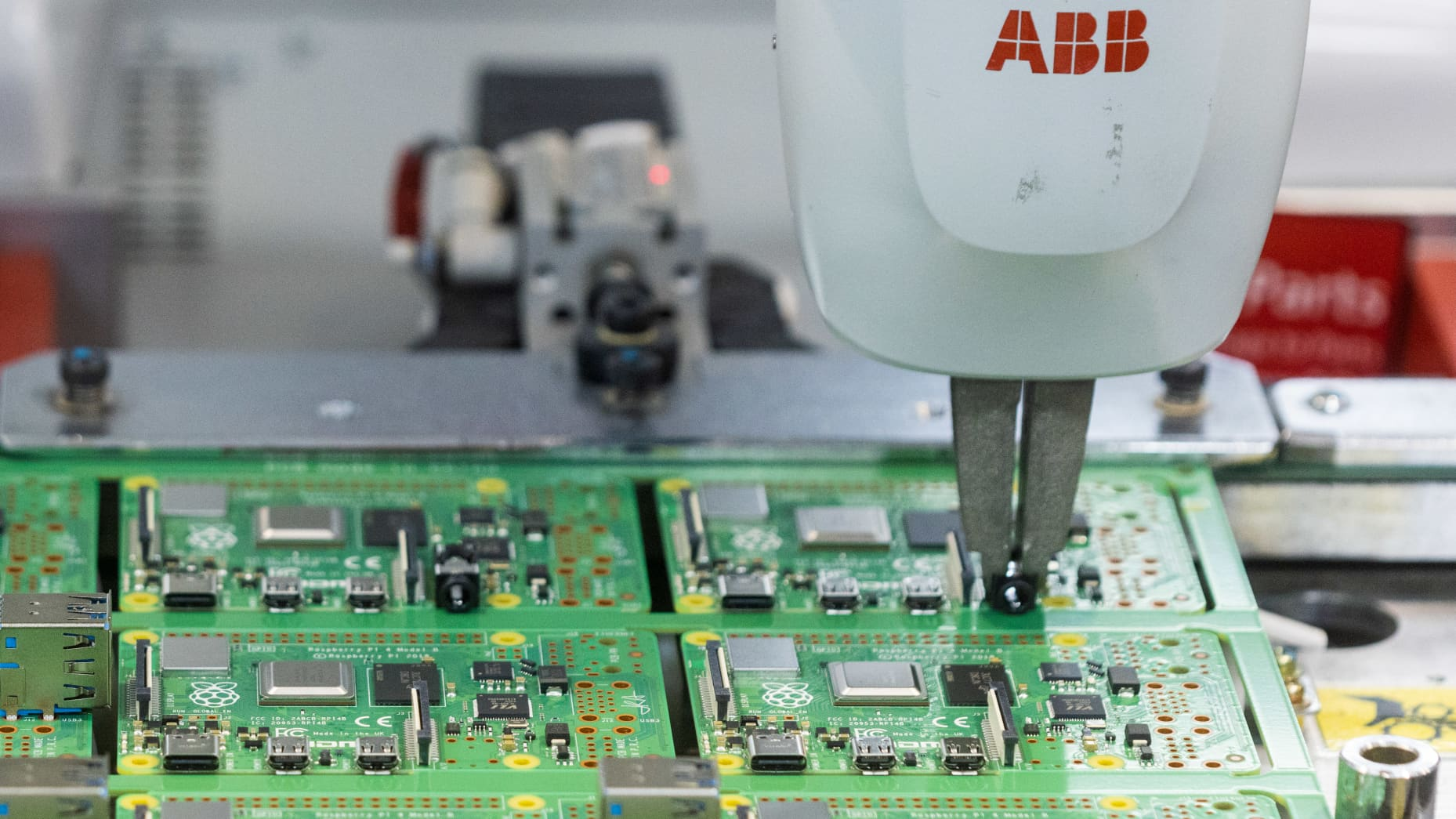
MARKET INSIDER – SoftBank Group has once again signaled its aggressive push into the artificial intelligence sector with a definitive agreement to acquire the robotics division of Swiss engineering giant ABB for $5.4 billion. The all-cash deal puts a halt to ABB’s previously announced plans to spin off the unit and provides a significant return to its shareholders, while underscoring SoftBank’s ambitious vision for a future driven by “Physical AI.”
The acquisition, which is pending global regulatory approvals, is a strategic move by SoftBank founder Masayoshi Son to solidify his company’s position at the forefront of the AI revolution. “SoftBank’s next frontier is Physical AI,” Son declared in a statement. “Together with ABB Robotics, we will unite world-class technology and talent under our shared vision to fuse Artificial Super Intelligence and robotics — driving a groundbreaking evolution that will propel humanity forward.”
This vision of “Artificial Super Intelligence” (ASI), an AI purported to be 10,000 times more intelligent than humans, is the cornerstone of Son’s recent investment strategy. SoftBank has been strategically accumulating assets across the AI landscape, including its ownership of chip designer Arm and a significant stake in OpenAI. The addition of ABB’s robotics unit, a global leader in industrial automation, provides a crucial physical component to SoftBank’s AI ecosystem, which already includes investments in robot-related companies like AutoStore Holdings and Agile Robots.
For ABB, the deal represents an opportunity to unlock immediate value for its investors. The company expects to receive approximately $5.3 billion in cash proceeds from the sale, with an estimated $200 million in separation costs. ABB has stated that the proceeds will be allocated according to its “well-established capital allocation principles,” suggesting potential for share buybacks, dividends, or reinvestment in its core businesses. The move, championed by CEO Morten Wierod, who took the helm in August 2024, allows ABB to streamline its operations and focus on its other strategic priorities.
This is not SoftBank’s first foray into robotics. The company’s previous venture with the humanoid robot Pepper, developed after acquiring a majority stake in French company Aldebaran in 2012, was a commercial failure. However, the landscape has changed dramatically since then, with advancements in AI and a growing demand for automation making robotics a much more viable and potentially lucrative market.
What this means for investors:
- For SoftBank investors: This acquisition represents a high-risk, high-reward bet on the future of AI and robotics. If Son’s vision of ASI and Physical AI materializes, SoftBank could be at the center of a technological revolution, leading to substantial returns. However, the high price tag and the company’s past struggles in the robotics space are causes for caution.
- For ABB investors: The sale provides a clear and immediate return of value. The influx of cash could lead to shareholder-friendly actions in the short term. In the long term, a more focused ABB could be a more efficient and profitable company.
- For the broader market: This deal is a strong indicator of the growing convergence of AI and robotics. It is likely to spur further investment and M&A activity in the sector as other tech giants and investment firms look to secure their positions in this emerging field. The “Physical AI” narrative is one that investors should watch closely in the coming years.
