
First price ceiling in 30 years reflects mounting pressure from Iran war and soaring energy costs
MARKET INSIDER – South Korea is preparing to impose a government cap on fuel prices for the first time in three decades as the Middle East conflict sends global oil markets into turmoil. The move highlights how rapidly the Iran war is spilling into the global economy, forcing energy-dependent nations to deploy emergency measures to shield consumers and stabilize financial markets.
President Lee Jae Myung said the government will swiftly introduce a maximum price system for petroleum products after crude prices surged sharply in global trading. The decision comes as benchmark Brent crude briefly jumped above $100 per barrel and U.S. West Texas Intermediate crude spiked as much as 30%—its largest one-day increase since the late 1980s—amid escalating hostilities involving Iran.
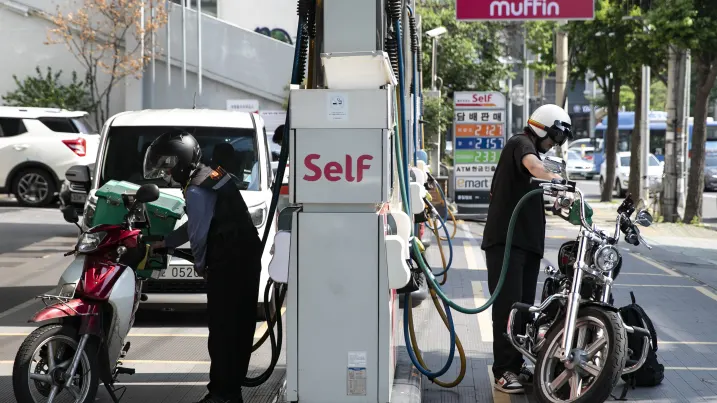
The surge has pushed domestic fuel costs sharply higher. Gasoline prices in Seoul have climbed above 1,900 won per liter for the first time in nearly four years, according to local media, prompting officials to intervene before rising transport and energy costs spread through the broader economy.
South Korea’s vulnerability stems from its heavy reliance on imported energy. Much of the country’s oil supply travels through the Strait of Hormuz, which has been disrupted by the ongoing conflict. Lee said Seoul will work with international partners to secure alternative supply routes that bypass the Gulf, underscoring the strategic urgency facing Asia’s energy-importing economies.
The crisis has already rattled financial markets. The benchmark KOSPI has experienced extreme volatility, including a record one-day drop of 12% followed by a rapid rebound, triggering multiple circuit breakers. Meanwhile, the South Korean won weakened to its lowest level against the U.S. dollar since the global financial crisis before partially recovering.
To contain the turbulence, the government is prepared to expand a 100 trillion won market stabilization program launched earlier this month. Officials stress the fund is designed to support liquidity and confidence rather than artificially prop up stock prices.
South Korea is not alone in scrambling to respond. Japan is reportedly preparing to release crude from strategic reserves, while Vietnam has moved to eliminate import taxes on fuel products to protect energy security. Analysts warn that Asian economies—many of which depend heavily on Middle Eastern oil—are particularly exposed to supply disruptions.
For policymakers across the region, the latest oil shock is a stark reminder that geopolitical conflicts can quickly evolve into economic crises. As energy prices surge and supply chains tighten, governments are racing to cushion the impact before inflation and financial volatility spread deeper into the global economy.
