
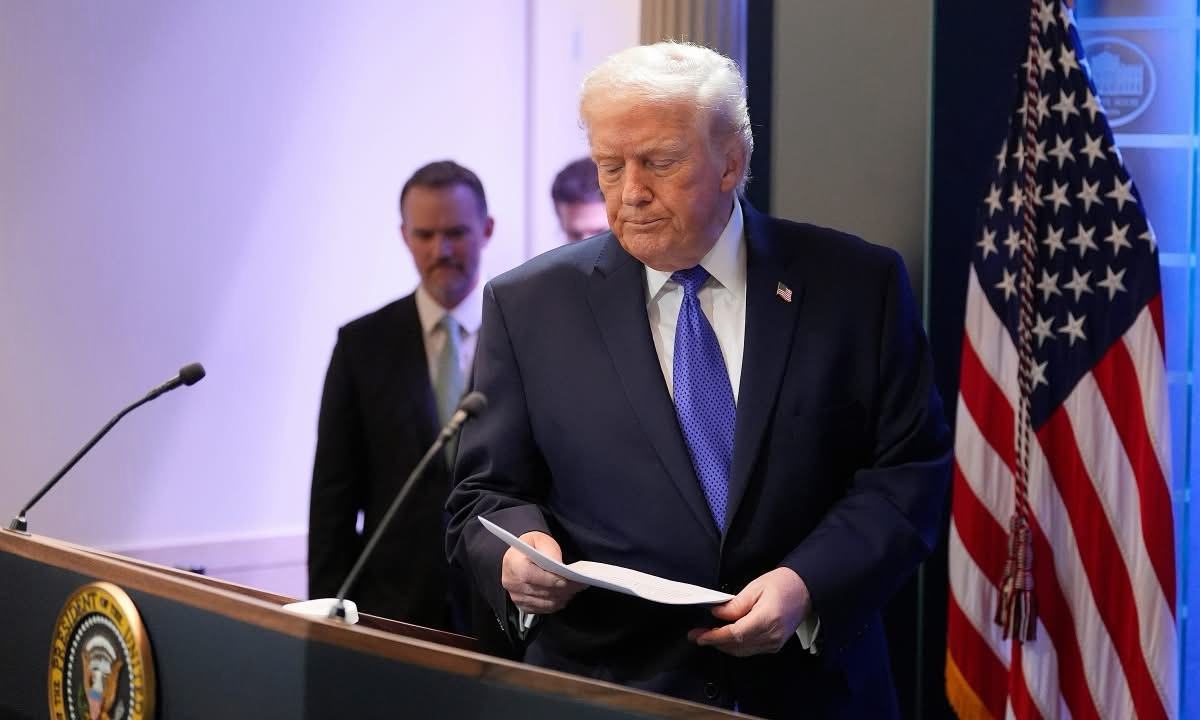
Ruling voids most emergency tariffs, yet Washington may double down under new legal paths
The U.S. Supreme Court has struck down most of President Donald Trump’s sweeping tariffs, ruling that his administration overstepped its authority under the International Emergency Economic Powers Act. The decision jolts global trade policy at a fragile moment—yet it may not mark the end of Washington’s tariff era.
The Court’s February 20 ruling invalidates tariffs imposed under the emergency powers framework, including broad country-specific levies such as the 15% duties on European Union goods. However, sector-specific measures—covering steel, aluminum, and automobiles—remain intact. In short, the trade architecture shifts, but it does not collapse.
The fiscal implications are immediate. According to projections from the U.S. Congressional Budget Office, Trump-era tariffs were expected to generate roughly $3 trillion in revenue over nine years. Analysts at Yale estimate that about half of that—around $1.5 trillion—may now be in question. With U.S. federal debt at historic highs, the loss of tariff revenue complicates Washington’s budget math. Trump, however, signaled he intends to pursue alternative legal routes, including a uniform 10% global tariff under Section 122 of the Trade Act of 1974 and new actions under Section 301 targeting unfair trade practices.
For American consumers, the picture is less straightforward. Tariffs have contributed to higher prices, though not to the catastrophic degree some economists predicted. The Yale Budget Research Center estimates households absorbed between $400 and $1,800 in added annual costs in 2025. Federal Reserve Chair Jerome Powell previously cited tariff-driven price pressures as a factor keeping inflation above the Fed’s 2% target. Yet price relief may not follow quickly. Retail analysts caution that once prices rise, they rarely revert fully—even if tariffs are lifted.
Refunds present another thorny issue. Tariffs are paid upfront by importers through U.S. Customs and Border Protection, not directly by consumers. Businesses may seek reimbursement for duties already paid, and some, including Costco, have proactively filed refund claims or initiated litigation. Still, the government has not clarified the mechanics or timeline of any repayment process, raising the prospect of years of legal wrangling.
Strategically, the administration appears unlikely to abandon protectionism. Trade lawyers note that sector-specific investigations offer a more durable and legally grounded path for imposing duties. Section 122 permits temporary tariffs for 150 days, subject to congressional review, while Section 301 investigations can justify country-specific actions. Such mechanisms would allow Washington to recalibrate tariffs without invoking emergency powers.
For global markets, the ruling injects fresh uncertainty into trade flows, supply chains, and fiscal forecasts. While investors may initially welcome the legal curb on sweeping tariffs, the broader signal is that U.S. trade policy remains fluid—and potentially confrontational.
Whether this moment becomes a pivot toward stability or simply a legal detour in a prolonged trade battle will shape pricing power, inflation trajectories, and geopolitical alliances well beyond American shores.
