
Energy leverage emerges as Bangkok’s next weapon despite U.S.-brokered ceasefire, raising risks for regional stability and supply chains
MARKET INSIDER- Southeast Asia’s simmering border conflict took a dangerous new turn as Thailand signaled it may block fuel exports to Cambodia, escalating pressure just days after U.S. President Donald Trump announced a renewed ceasefire. For regional markets and geopolitical observers, the move underscores how quickly diplomacy is giving way to economic warfare—turning energy flows into a frontline tool of coercion.
Thai military officials confirmed they are actively discussing measures to halt fuel shipments and tighten maritime controls near Cambodian ports, potentially designating key sea lanes as “high-risk.” While no formal order has yet been issued, the signal alone is potent. Thailand exported 2.2 billion liters of fuel to Cambodia last year, making energy a critical vulnerability for Phnom Penh at a moment when fighting has already spread from land borders to coastal areas.
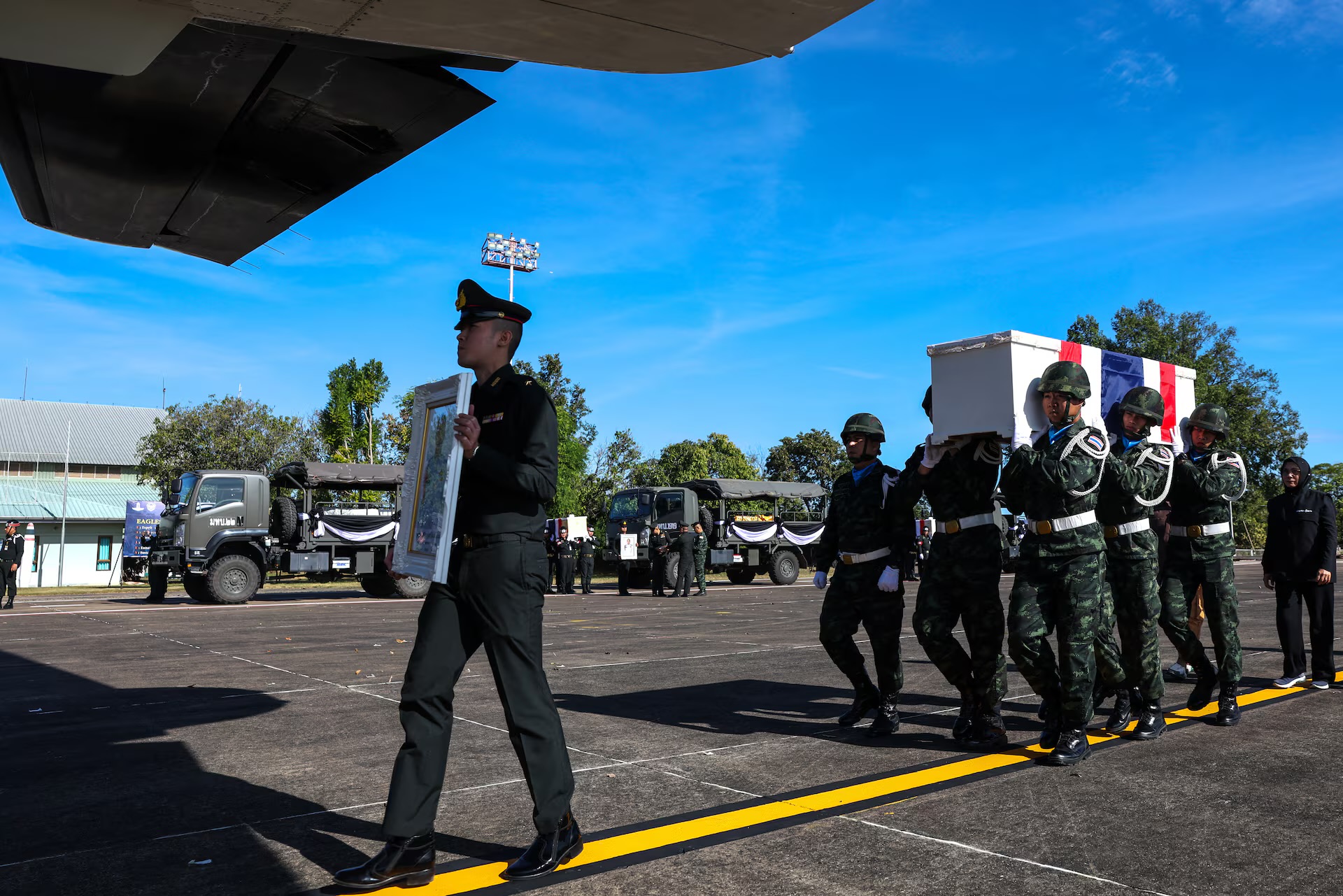
The renewed clashes mark one of the most serious flare-ups in years between the two ASEAN neighbors. Since Monday, at least 26 people have been killed in Thailand and Cambodia combined, with more than 650,000 civilians displaced on both sides of the 817-kilometer frontier. Thailand has imposed a curfew in Trat province, while accusing Cambodian forces of rocket attacks that killed both soldiers and civilians. Cambodia, in turn, alleges Thai airstrikes and shelling hit civilian infrastructure—claims Bangkok denies, insisting it has targeted only military assets.
Despite Washington’s involvement, the ceasefire appears fragile at best. Trump said Friday that Thailand’s caretaker Prime Minister Anutin Charnvirakul and Cambodian Prime Minister Hun Manet had agreed to halt all fighting. Yet within 48 hours, clashes resumed, bridges were destroyed, and artillery positions targeted in Cambodia’s Koh Kong province. Anutin’s declaration that Thailand would fight “until we feel no more harm and threats” highlights the political constraints facing leaders on both sides.
Energy markets and regional trade are now watching closely. Thailand’s Energy Ministry confirmed oil exports to Cambodia have already been halted since June, but a formal, military-enforced blockade would dramatically raise the stakes—risking spillover into shipping insurance, cross-border trade, and investor confidence in mainland Southeast Asia. ASEAN’s credibility as a conflict-mitigation framework is also under strain, as bilateral hostilities test the bloc’s ability to contain escalation among its own members.
What began as a border skirmish is evolving into a multi-domain confrontation where fuel, shipping lanes, and civilian displacement are becoming strategic variables. If Thailand pulls the energy lever fully, Cambodia’s economy—and ASEAN’s image as a zone of stability—could face lasting damage. For investors and policymakers alike, the key question is no longer whether the ceasefire will hold, but how far economic warfare will go before diplomacy regains control.
