
Political paralysis and structural debt are pushing Southeast Asia’s second-largest economy to the brink
Thailand was once the envy of Southeast Asia—a high-growth “Asian Tiger” that powered ahead on manufacturing, consumption, and tourism. In 2026, it stands at the opposite end of the spectrum. With growth now forecast to be the weakest in the region, the country’s economic slowdown is no longer cyclical. It is structural—and increasingly personal.
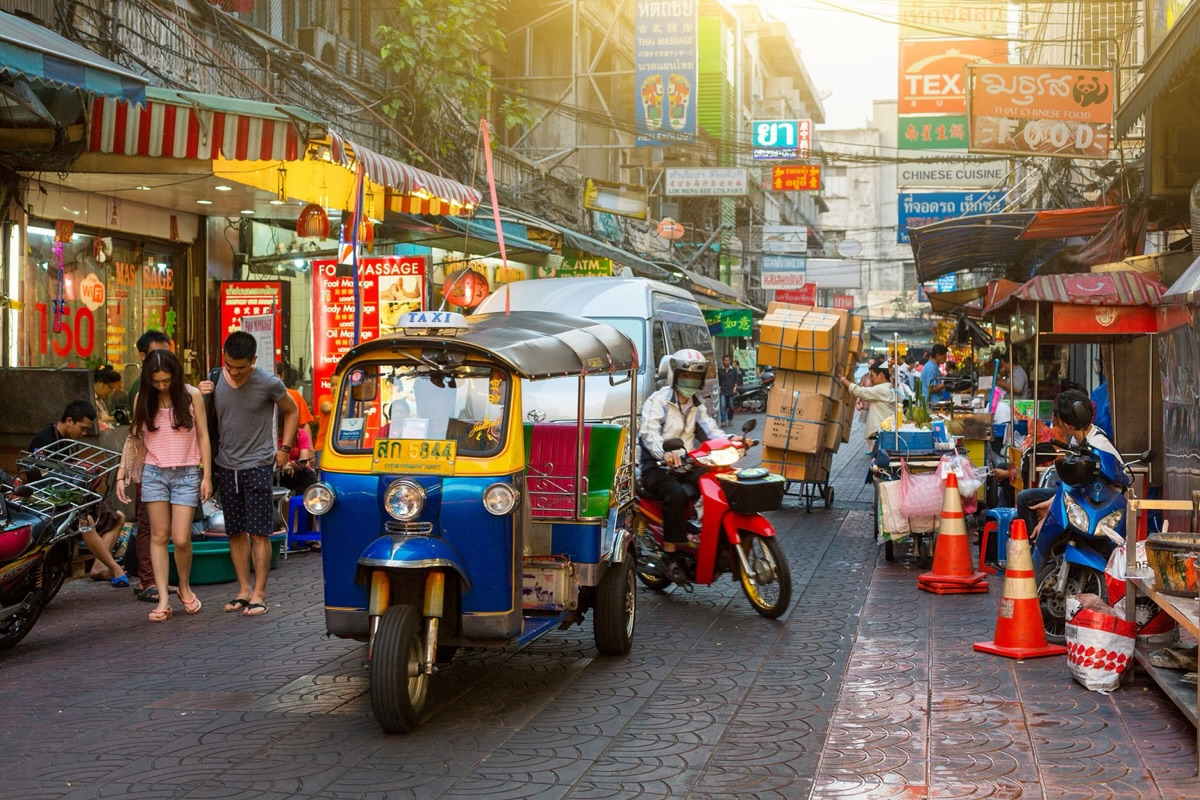
In Bangkok, the consequences are visible at street level. Tipvimol Wanitthaphan, a 57-year-old restaurant owner, is preparing to shut down her small eatery after four years of operation. Once packed with office workers, the shop now sits nearly empty. Revenues have fallen by more than two-thirds as households tighten spending, while outstanding car loans have forced her to slash personal expenses and depend financially on her daughter. Her story mirrors a broader reality facing millions of Thais as purchasing power erodes and confidence collapses.
Thailand, Southeast Asia’s second-largest economy, has been stuck in low gear for years. After recording double-digit growth in the late 1980s, including a 13% expansion in 1988, the country has managed barely 2% annual growth over the past five years. The International Monetary Fund now projects growth of just 1.6% in 2026—the lowest among major Southeast Asian economies. Burin Adulwattana, chief economist at Kasikornbank, captured the shift bluntly: Thailand has gone from “Teflon Thailand” to what many now call the “sick man of Asia.”
All three of the country’s traditional growth engines are weakening at once. Manufacturing, once anchored by Thailand’s role as a regional automotive hub, is retrenching. Global carmakers including Nissan, Honda, and Suzuki have closed plants or scaled back operations, pushing factory utilization and domestic vehicle sales below pre-pandemic levels. According to industry leaders, production has yet to regain momentum—and may not without deeper reform.
Domestic demand is equally fragile. The real estate sector is suffering its worst downturn in three decades as banks tighten credit amid rising default risks. Inflation has cooled so sharply that Thailand’s consumer price index is expected to fall in 2025 for the first time, a sign not of relief but of weakening demand. Household debt now sits near 90% of GDP—one of the highest ratios in Asia—while wages have stagnated for years.
Tourism, long Thailand’s economic lifeline, is no longer providing the buffer it once did. While arrivals are expected to reach nearly 33 million in 2025, that figure remains well below the 40 million peak in 2019 and even trails 2024 levels. Security concerns, including high-profile crime incidents involving foreign visitors, have dented confidence, while intensified competition from Vietnam and Japan is reshaping travel flows across Asia. Industry leaders warn that reputational damage, combined with weak policy coordination, is slowing the sector’s recovery.
Behind the economic malaise lies a deeper political problem. Thailand has had three prime ministers in as many years, with reformist parties repeatedly sidelined by entrenched military-royalist forces. Policy continuity has suffered, investment decisions have stalled, and confidence in long-term planning has eroded. As Kitti Pornsiwakit of the Thai Tourism Marketing Association noted, a stable and credible government is now a prerequisite for revival—not a luxury.
Structural pressures are compounding the challenge. Thailand’s population has been shrinking for four consecutive years, with the 2025 birth rate hitting its lowest level in 75 years. An aging workforce, rising competition from Vietnam’s manufacturing boom, and a flood of low-cost Chinese imports are squeezing traditional industries from all sides.
Economists increasingly agree that incremental fixes are no longer enough. Thailand needs a fundamental reset—loosening protectionist policies, reopening doors to foreign investment, upgrading infrastructure, and pivoting toward higher-value sectors such as pharmaceuticals, biotechnology, and data centers. Without that shift, the slowdown risks becoming permanent.
For ordinary Thais, the crisis is already real. Hair salon owners, café operators, and street vendors across Bangkok report fewer customers and tighter budgets. “I only spend on my children now,” said one small business owner. “Everything else has to wait.”
The broader warning is stark. Thailand’s struggles are not just a local story—they are a case study in how political gridlock, demographic decline, and delayed reform can quietly drain a once-dynamic economy. As neighbors accelerate ahead, Thailand faces a defining question: reform decisively now, or accept a prolonged slide from regional leader to cautionary tale.
