
World’s largest economy restarts after 43-day freeze, but political volatility, data gaps, and debt risks now move to center stage.
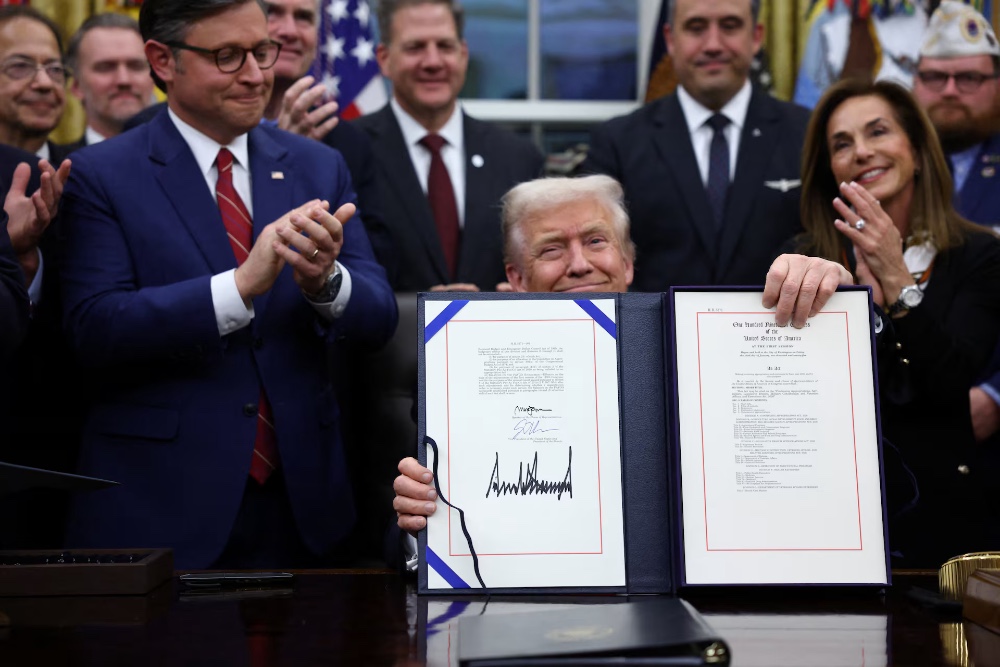
MARKET INSIDER – The United States has officially reopened after the longest government shutdown in its history—an unprecedented 43-day paralysis that froze economic data, stalled federal paychecks, disrupted air travel, and left global markets navigating in the dark. U.S President Donald Trump signed the emergency funding bill late Wednesday, ending a standoff that had reverberated far beyond Washington. But for investors, multinationals, and policymakers worldwide, the deal offers relief without resolution.
The shutdown—born from a failed congressional fight over healthcare subsidies—became a live demonstration of the political fragility inside the world’s largest economy. With the U.S. adding nearly USD 1.8 trillion to its USD 38 trillion national debt each year, and with critical economic indicators missing for more than a month, global fund managers now face a structural question: is U.S. political dysfunction becoming a macro risk in itself?
Trump praised the reopening while simultaneously blasting Democrats, declaring, “We can never let this happen again.” Yet the bill only funds the government until January 30, meaning Washington may be just weeks away from another showdown. U.S. Representative David Schweikert compared the ordeal to “a Seinfeld episode,” emphasizing that lawmakers spent 40 days locked in conflict without producing any lasting policy outcome.
For everyday Americans, the immediate impact is tangible. Hundreds of thousands of federal workers return to their posts, food aid resumes for millions of families, and air-traffic control systems are expected to stabilize ahead of the Thanksgiving travel surge. Investors will also regain access to key economic data—figures that guide interest-rate expectations, corporate planning, and global capital flows. However, the White House warns that some October data—including jobs and inflation reports—may never be released, leaving permanent holes in the economic timeline.
The shutdown produced measurable economic damage. Economists estimate it shaved more than 0.1 percentage point off U.S. GDP every week—an effect expected to be partially reversed but not fully erased. Meanwhile, the political fight continues: Democrats failed to secure an extension of federal healthcare subsidies, setting up another high-stakes vote in December. And new tensions loom as Congress prepares to confront demands for the release of unclassified Jeffrey Epstein documents—an issue that could once again consume legislative bandwidth.
Despite weeks of partisan blame, neither side emerged with a clear win. A Reuters/Ipsos poll shows the public almost evenly split: 50% blame Republicans, 47% blame Democrats. And while the government is funded again, the deeper concern remains unanswered—whether Washington can govern predictably enough to anchor global confidence.
As the U.S. restarts, markets are asking the real question: If a 43-day shutdown can happen once, what stops it from happening again—and what does that mean for the world economy heading into 2025?
