
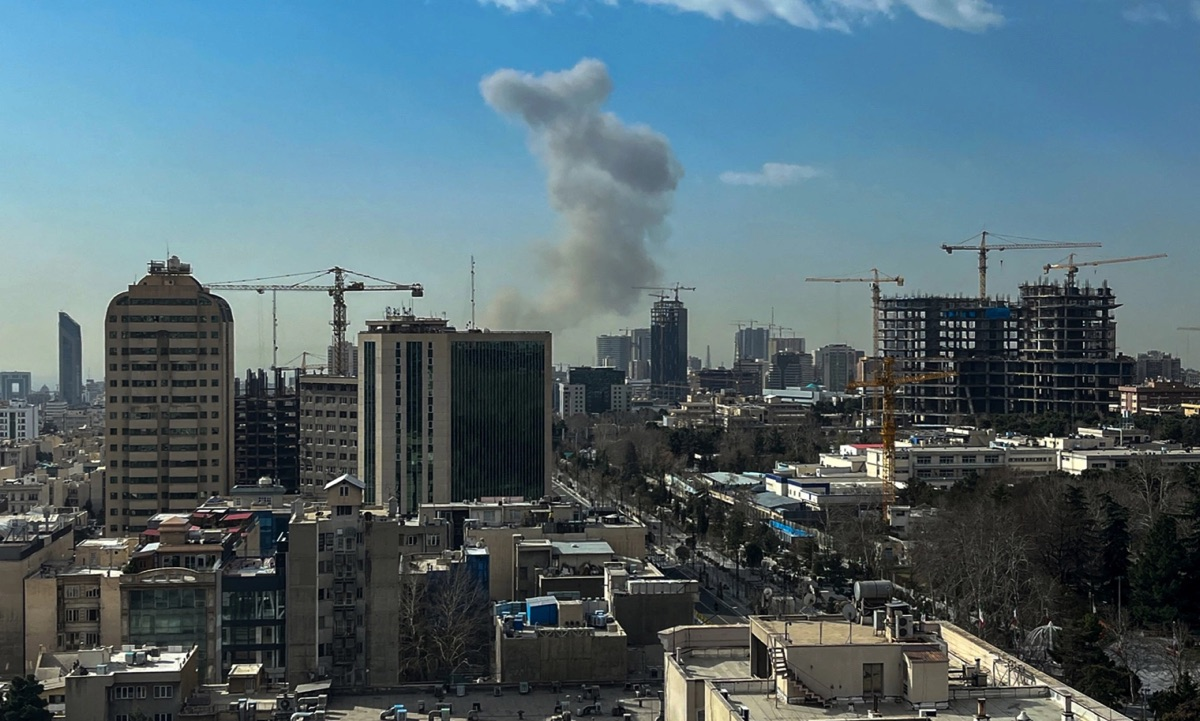
Air raids, regime-change rhetoric and oil chokepoints rattle markets from Gulf hubs to Wall Street
MARKET INSIDER – U.S President Donald Trump has moved from threat to force in Iran, authorizing major air strikes alongside Israeli Prime Minister Benjamin Netanyahu in what the Pentagon dubbed “Operation Epic Fury.” The escalation, aimed at neutralizing Iran’s leadership and nuclear ambitions, has triggered missile retaliation across Israel and U.S.-aligned Gulf states—instantly widening geopolitical and economic fault lines.
For global markets, the message is stark: this is no longer brinkmanship. It is a live conflict with open-ended consequences for oil flows, inflation trajectories, capital markets, and regional stability.
Trump framed the strikes not only as a preemptive move against Iran’s nuclear program but also as a historic opportunity for regime change, urging Iranians to “take over your government.” The rhetoric raises the stakes dramatically. Foreign air campaigns rarely catalyze domestic uprisings, and there is little precedent for bombing leading to peaceful political transition. Even if Supreme Leader Ali Khamenei were removed, the powerful Islamic Revolutionary Guard Corps could consolidate authority rather than concede it.
Tehran has already responded with missile and drone strikes targeting Israel and U.S. assets in Bahrain, Qatar, and the United Arab Emirates. Airspace closures and airport shutdowns in financial hubs such as Dubai and Abu Dhabi underscore how quickly military confrontation can disrupt trade, tourism, and investment. For Gulf economies seeking to diversify beyond hydrocarbons, sustained instability threatens foreign direct investment and sovereign funding plans.
The most immediate global risk remains energy. Iran sits at the gateway to the Strait of Hormuz, through which roughly one-fifth of the world’s oil passes. Analysts estimate that significant tanker disruption could remove up to 3 million barrels per day from global supply. With Brent crude already near $72 per barrel, a prolonged conflict could propel prices well above $100—reviving inflation pressures just as central banks attempt to stabilize growth.
Morgan Stanley has warned that large-scale retaliation combined with Gulf shipping disruptions would represent a supply shock comparable to historic oil crises. Whether Saudi Arabia can deploy spare production capacity—estimated near 2 million barrels per day—may determine how severe the shock becomes. Additional risks include renewed attacks on Red Sea shipping lanes by Iran-aligned Houthi forces, further straining global supply chains.
There is also a constitutional dimension at home. Trump did not seek congressional authorization for the strikes, potentially intensifying political debate in Washington even as the conflict unfolds. The gap between stated objectives—eliminating nuclear threats—and broader regime-change language adds ambiguity to the mission’s scope and exit strategy.
The broader question is duration. A short exchange might be absorbed by markets as a geopolitical premium. A prolonged campaign, however, could entrench a security-first posture in Tehran, destabilize Gulf energy infrastructure, and reshape global capital flows.
In the near term, oil, defense stocks, and safe-haven assets may benefit. Longer term, the costs are clearer than the benefits: heightened volatility, elevated inflation risk, and renewed fragmentation in a world economy already navigating tariff disputes and technological disruption.
Trump’s decision has shifted the strategic equation. Whether it results in containment or cascading escalation will define not just the Middle East’s trajectory—but the direction of global markets in 2026.
