
(Market Insider) – The U.S. Federal Reserve (Fed) cut its benchmark interest rate by 25 basis points on September 17, bringing it down to a range of 4.00%–4.25%. This was the first policy move under President Donald Trump’s second term, ending a nine-month pause amid political and economic uncertainty.
Powell: “The Outlook Is Still Unclear”
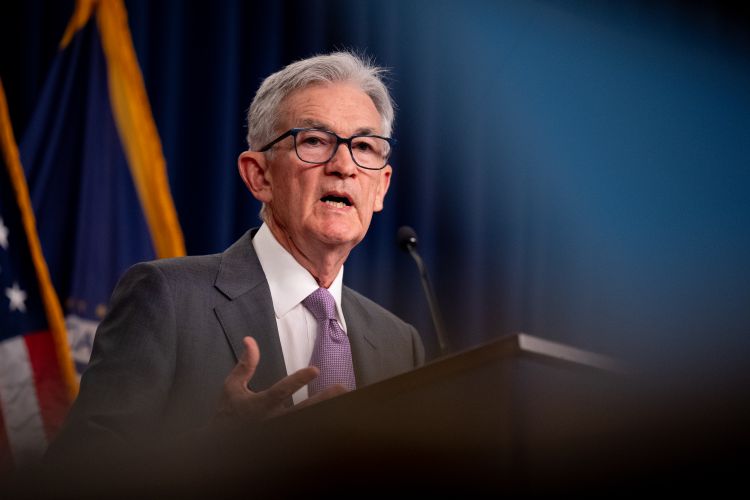
In his post-meeting press conference, Fed Chair Jerome Powell acknowledged that the U.S. economic outlook remains uncertain.
“The situation is not entirely clear enough to say precisely what needs to be done,” Powell said. Still, he described the latest cut as a “risk management” move, stressing that policymakers cannot afford to wait for Trump’s trade and tax policies to fully play out. “We have to look ahead, not through the rearview mirror,” he added.
The decision was not unanimous. Newly confirmed Fed Governor Stephen Miran—Trump’s appointee who joined the board just a day before the meeting—voted against the move, arguing for a deeper 50-basis-point cut.
More Cuts Ahead, Growth Forecast Raised
In its updated economic projections, the Fed signaled the possibility of two more cuts this year, likely in October and December. Policymakers also raised their 2025 growth forecast to 1.6%, up from 1.4% in June.
Unemployment is still projected to reach 4.5% by year-end, while the Fed’s preferred inflation gauge, the Personal Consumption Expenditures (PCE) index, is expected to hold at 3% this year and ease to 2.6% in 2026.
Powell emphasized that rising labor-market risks were the key reason for easing policy, despite the inflationary effects of Trump’s tariffs. He characterized the labor market as being in a state of “low hiring, low firing,” but warned that youth unemployment was climbing due to fewer job openings.
“If layoffs were to rise, there would not be enough new jobs to offset them,” Powell cautioned.
Inflation Pressures, But Jobs Take Priority
The Fed is navigating a delicate balance between its dual mandate of price stability and maximum employment. Import tariffs have driven up prices of goods such as furniture and home appliances, though Powell said the full impact has yet to materialize.
The August Consumer Price Index (CPI) rose 2.9% year-on-year, matching analyst expectations. Inflation data has largely aligned with forecasts in recent months, despite tariff-related volatility. Powell stressed that protecting employment remains the Fed’s top priority:
“There is a real risk of significant deterioration in the labor market. But let’s not forget that unemployment is still 4.3% and GDP growth is 1.5%, which shows the economy is not in crisis,” he noted.
Politics and Independence Under Scrutiny
The Fed’s action comes amid heightened political pressure. President Trump has openly criticized Powell and the central bank for not cutting rates more aggressively—at one point calling for reductions of “several percentage points.”
Powell faced direct questions about Fed independence, particularly with Miran’s dual status as both a Fed governor and a White House staffer. “We’ve welcomed a new member, and as always, the committee remains united in pursuing our dual mandate. We are strongly committed to maintaining independence,” Powell said.
The Fed’s governance has also been unusually turbulent. Governor Lisa Cook’s future remains uncertain despite a recent appeals court ruling that Trump cannot dismiss her over a mortgage fraud allegation. Meanwhile, Democrats have raised concerns about Miran’s close ties to Trump, noting that he remains a White House employee on unpaid leave while serving at the Fed. Miran has insisted he will provide an independent economic voice.
