
Oil risk surges as carriers deploy, missile fire spreads across Gulf
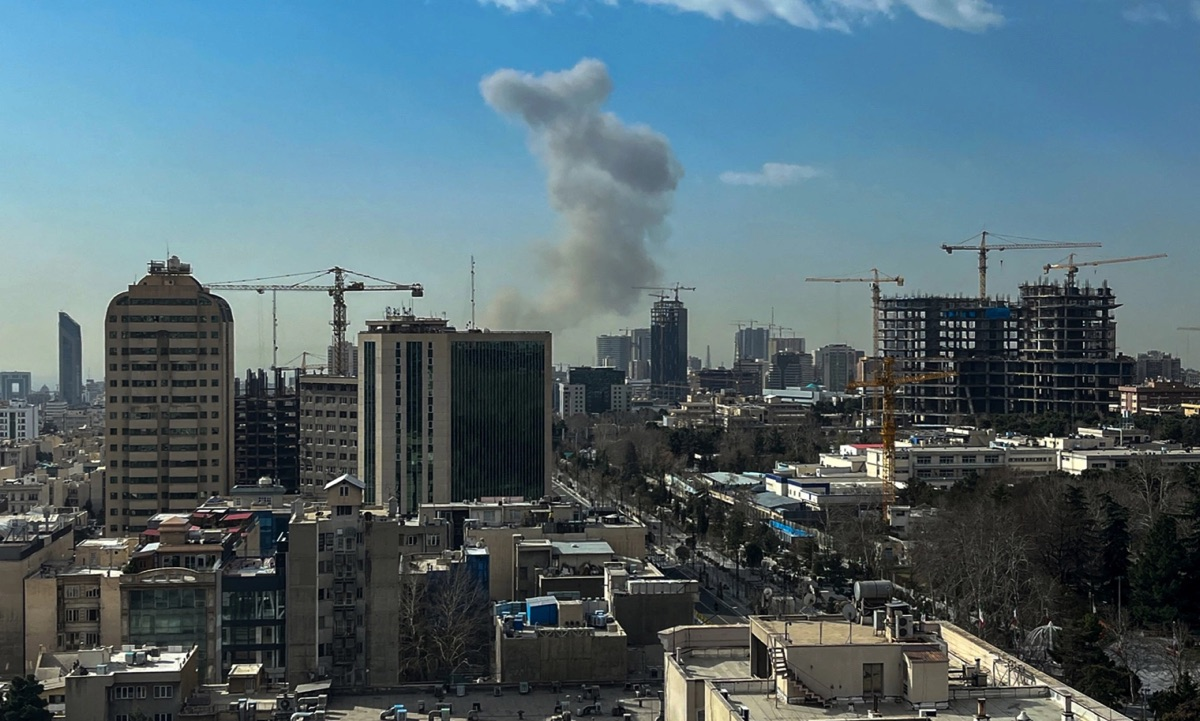
MARKET INSIDER – The Middle East has entered a dangerous new phase after the United States and Israel launched coordinated strikes on Iran, triggering retaliatory missile attacks that hit at least four U.S. military installations in the region. President Donald Trump confirmed that “major combat operations” are underway, describing the mission as an effort to eliminate “imminent threats” from Tehran.
Explosions were reported across Tehran and other Iranian cities, while missile alerts sounded in Israel and parts of the Gulf. The escalation comes after weeks of mounting tension around stalled nuclear negotiations—and as global energy markets brace for potential disruption through the Strait of Hormuz.
According to U.S. officials cited by Reuters, American forces conducted air and sea strikes targeting Iranian military and nuclear-linked infrastructure. Iranian authorities said ministries in southern Tehran were hit. Israel also confirmed daytime strikes in and around the capital, with Prime Minister Benjamin Netanyahu thanking Trump for what he called “historic leadership” and reiterating that Iran must not be allowed to acquire nuclear weapons.
Iran responded with ballistic missile launches across the region. Bahrain reported that facilities linked to the U.S. Fifth Fleet were targeted. The United Arab Emirates and Qatar condemned Iranian missile fire, describing it as a violation of sovereignty, while air defenses intercepted incoming threats. The U.S. embassy in Manama issued shelter-in-place warnings amid fears of further strikes.
At the diplomatic level, efforts appear shattered. Recent negotiations in Geneva—mediated by Oman and attended by Rafael Grossi of the International Atomic Energy Agency—had aimed to limit Iran’s nuclear program in exchange for sanctions relief. Iranian President Masoud Pezeshkian had publicly insisted Tehran does not seek nuclear weapons. But Washington accused Iran of attempting to rebuild capabilities following prior U.S. strikes on facilities at Fordow and Isfahan.
Global reaction was swift. French President Emmanuel Macron called for an emergency United Nations Security Council meeting, warning of “grave consequences,” while Russia condemned the strikes as destabilizing. Airlines rerouted flights, with carriers including Lufthansa suspending service to Tel Aviv and parts of the Gulf.
The stakes extend well beyond regional security. Iran sits astride the Strait of Hormuz, a chokepoint through which roughly 20% of global oil supply transits. Energy prices had already climbed to six-month highs on strike speculation; sustained hostilities could inject a fresh inflationary shock into global markets just as central banks attempt to stabilize growth.
For investors, this marks a convergence of geopolitical and macro risk. Defense stocks may rally, oil volatility may spike, and safe-haven assets could see renewed inflows. But prolonged conflict would test fragile supply chains and strain diplomatic alliances across Europe and Asia.
The decisive question now is whether this exchange remains contained—or escalates into a broader regional war involving multiple state actors. With warships deployed and missiles in flight, diplomacy has narrowed to a thin corridor. Markets, governments, and energy traders alike will be watching whether that corridor holds—or closes entirely.
