
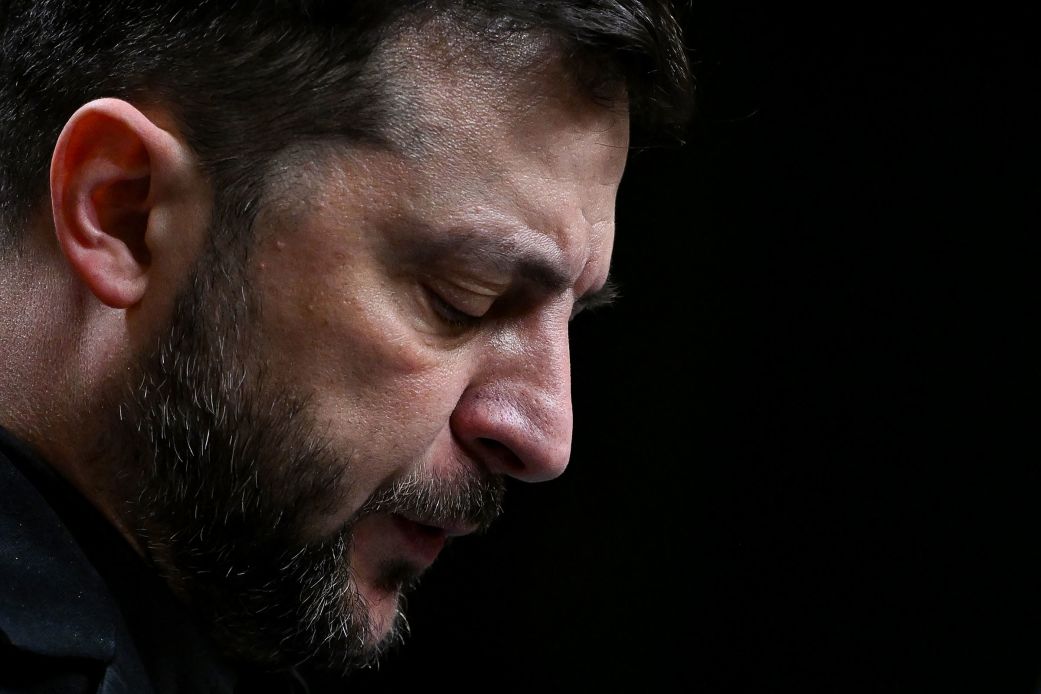
Confidential reviews found repeated overpayments, failed deliveries and new contracts awarded to suppliers already under investigation.
MARKET INSIDER — Ukraine lost approximately $1.2 billion to suspected fraud, waste and weak management in military procurement during 2024, according to confidential government audits reviewed by The New York Times.
The findings suggest procurement failures were not limited to isolated contracts. Seven of Ukraine’s 10 largest defense suppliers reportedly continued receiving orders despite criminal investigations, incomplete deliveries or the arrests of senior managers.
The disclosures raise questions about Kyiv’s wartime oversight and the protection of increasingly scarce public and foreign resources, although the audit reports have not been publicly released and several cases remain subject to litigation or appeal.
Key Highlights
- Confidential audits identified approximately $1.2 billion in procurement losses during 2024.
- Eighteen suppliers reportedly received new agreements despite failing to deliver under earlier contracts; six had never completed one.
- The findings could intensify pressure from Ukraine’s allies for stronger competition, contractor screening and public accountability.
Audits identify recurring failures
The New York Times reviewed findings from Ukraine’s State Audit Service and the Defense Ministry’s internal audit unit, together with court records relating to military suppliers.
The documents reportedly covered defense contracting during 2024 and 2025. Auditors attributed approximately $1.2 billion in 2024 losses to a combination of suspected fraud, waste, overpayment and mismanagement.
Because the underlying audits remain classified, their complete methodology, contract sample and definition of “losses” cannot be independently evaluated.
The figure should therefore not be interpreted as $1.2 billion conclusively stolen through criminal corruption. It includes several categories of financial damage, including defective equipment, unjustified pricing, undelivered orders and weak contract administration.
The broader pattern is nevertheless significant.
Auditors identified 18 companies that received new contracts after failing to fulfill previous agreements. Six had not successfully completed a single contract, while seven of the country’s 10 largest military suppliers continued receiving orders despite investigations or other serious warning signs.
Defective mortar rounds became a prominent example
One of the highest-profile cases involved the state-owned Pavlohrad Chemical Plant.
According to court documents and Ukraine’s Security Service, the company supplied more than 233,000 mortar rounds that could not be reliably used by the military.
The affected deliveries reportedly included approximately 100,000 82-millimeter rounds and nearly 133,000 120-millimeter rounds. Investigators estimated the resulting state losses at 3.3 billion hryvnias.
Some rounds allegedly suffered from defective fuses or unstable propellant charges, preventing them from operating as intended.
Ukraine’s Security Service accused the company’s former chief executive and his deputy of knowingly supplying unusable ammunition and falsifying documents to explain production delays. An indictment was sent to court, meaning the allegations still require judicial determination.
Former plant director Leonid Shyman has denied wrongdoing in the mortar-round case. His lawyer said he intended to appeal a separate conviction involving the sale of explosives at inflated prices.
Despite the ammunition problems and investigation, auditors found that the Defense Procurement Agency continued awarding contracts to the plant.
One order worth approximately $280 million was reportedly approved while Shyman was on bail. The plant also received contracts to supply nearly all of Ukraine’s 122-millimeter artillery ammunition during 2025.
The case illustrates a central weakness identified by the audits: serious performance problems did not automatically disqualify a supplier from obtaining additional state business.
Ukraine allegedly rejected the cheapest rocket offer
A second case concerned a 2024 tender for Turkish-manufactured artillery rockets.
Three bidders reportedly offered identical rockets from the same manufacturer at prices of approximately $4,200, $4,600 and $5,100 per unit.
Arca Defense, the Turkish manufacturer, submitted the lowest offer through a direct sale. Ukraine instead selected the highest-priced proposal from a subsidiary of Czech industrial group Czechoslovak Group, which would act as an intermediary.
According to the audit findings, that choice added approximately $130 million to the procurement cost. Auditors reportedly found no documented justification for rejecting the direct and less expensive offer.
Across the contracts examined, approximately $126 million was attributed to lower-priced bids being disregarded and weapons being purchased at inflated prices. The similarity between these figures suggests some categories may overlap and should not be added together without access to the complete audit documentation.
The case does not establish that every intermediary is unnecessary. Arms transactions can require financing, export licensing, transportation, insurance, integration and political-risk management that a manufacturer may not provide.
The procurement record must show what additional value justified the higher price. Auditors reportedly concluded that it did not.
Failed Serbian rocket deal left advance payments at risk
A third case involved Soviet-designed rockets sourced from a Serbian manufacturer.
Because of Serbia’s political relationship with Russia, Ukraine used intermediaries to structure the transaction. The contract was awarded to Spetstechnoexport, a Ukrainian state-owned arms-trading company with a history of incomplete deliveries.
Auditors said the company did not possess the necessary Serbian export license. Instead, it submitted a guarantee letter from Ukrainian military intelligence.
Spetstechnoexport then subcontracted the transaction to U.S.-based Regulus Global. The rocket agreement ultimately collapsed after then-Defense Minister Rustem Umerov sought to remove intermediaries and have Regulus negotiate directly with the Defense Procurement Agency.
By early 2025, Spetstechnoexport had become the agency’s largest debtor based on unfulfilled contracts, according to the audit findings. The Ukrainian government sued to recover penalties and interest, while the company pursued claims against Regulus.
Regulus told The New York Times that it had committed no violations and had become caught between the parties during the procurement reorganization. At least $100 million in advance payments reportedly remains subject to legal disputes.
Wartime urgency helps explain—but not excuse—the failures
Ukraine has had to acquire enormous quantities of ammunition, drones, missiles and air-defense equipment while fighting a larger adversary.
Normal procurement systems can take months or years to qualify suppliers, conduct tenders and inspect deliveries. Wartime conditions require faster decisions, secrecy and a greater willingness to work with unfamiliar manufacturers or intermediaries.
Those conditions naturally increase risk.
Supply scarcity can also make it difficult to remove a poorly performing contractor if only a small number of factories can produce compatible Soviet-standard ammunition.
However, urgency does not explain why companies repeatedly received contracts without delivering—or why identical products were purchased through higher-priced intermediaries without documented justification.
The audit findings indicate that Ukraine’s problem was not simply the unavoidable cost of emergency procurement. Weak consequences for underperformance allowed existing risks to persist across multiple contracting cycles.
Political fallout could deepen
The report comes amid a series of corruption investigations involving senior Ukrainian officials and people close to President Volodymyr Zelenskyy.
Former Defense Minister Mykhailo Fedorov, dismissed during a government reshuffle in July, has said entrenched interests resisted his efforts to reform military procurement.
Fedorov argued that attempts to introduce more competitive tenders and restructure procurement created opposition inside the defense establishment. His removal prompted public protests and concern among some domestic weapons manufacturers that reform momentum could slow.
His comments constitute a political allegation, not proof that particular officials interfered with specific contracts identified in the audits.
The controversy nevertheless places responsibility on Fedorov’s successor and the Defense Procurement Agency to demonstrate that contractor selection and enforcement are improving.
Why the findings matter to Ukraine’s allies
Ukraine relies heavily on military and financial support from the United States, European governments and multilateral institutions.
Much of the equipment supplied by allies is transferred directly rather than purchased through Ukraine’s domestic procurement system. Even so, reports of waste can weaken political support for further aid, especially among lawmakers already questioning its scale and oversight.
The $1.2 billion figure is small relative to the total economic cost of the war, but it is operationally significant. The same money could finance ammunition, drones, fortifications, salaries or repairs to energy infrastructure.
Procurement failures also carry a battlefield cost that cannot be measured solely in dollars. Defective ammunition and delayed deliveries can leave military units without usable equipment when it is needed.
For Ukraine’s partners, the appropriate response is therefore stronger monitoring and institutional reform—not an assumption that every defense contract is compromised.
What reform would require
Ukraine needs a contractor-performance system that automatically records late deliveries, defective products, penalties, litigation and criminal investigations.
New contracts for poorly performing suppliers should require documented exemptions explaining why the company remains essential despite earlier failures.
Competitive bidding should become the default where operational secrecy and supply scarcity allow it. When intermediaries are used, agencies should record the licensing, logistical, financing or political value they provide.
Advance payments also require stronger safeguards, including staged disbursement, bank guarantees, performance bonds or escrow arrangements tied to verified production milestones.
Finally, parliamentary and independent oversight bodies need access to procurement records without publicly disclosing information that could help Russia.
Ukraine has already demonstrated that competition can produce savings. A recent procurement of 155-millimeter artillery rounds reportedly reduced expected costs by 16%, showing that speed, military secrecy and price discipline do not have to be mutually exclusive.
The audits expose a serious wartime vulnerability. Their lasting importance will depend on whether Ukraine converts the findings into a system where failed delivery brings consequences—and successful performance, rather than political access, determines who receives the next contract.
