
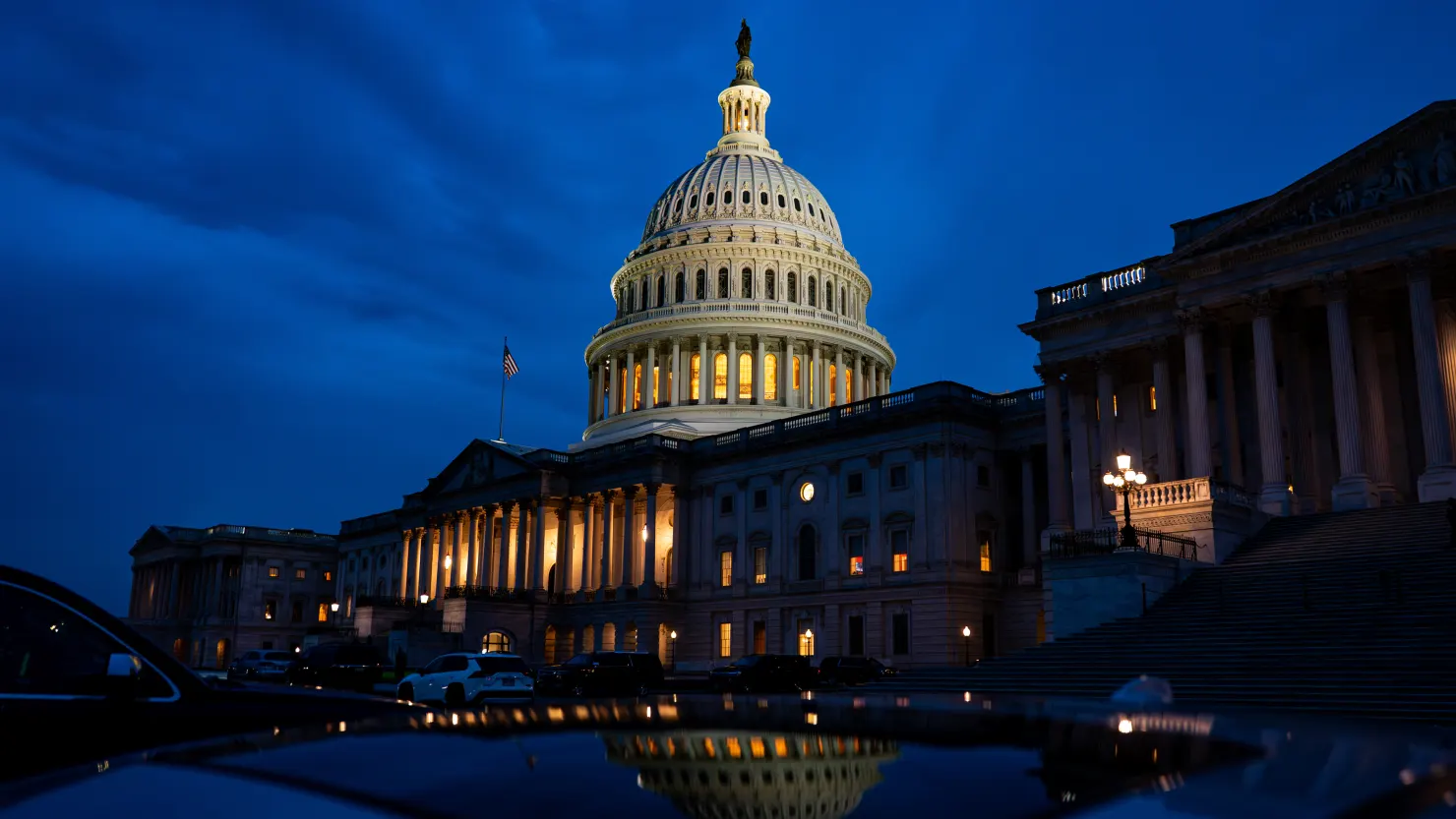
WASHINGTON – The United States government is in a full shutdown after top Republicans and Democrats, including President Donald Trump, failed to reach an agreement on a short-term funding deal before the deadline. The stalemate centers on an immediate demand by Democrats, led by Sen. Chuck Schumer and Rep. Hakeem Jeffries, that any stopgap funding measure must include an extension of enhanced Obamacare tax credits.
The political gridlock has immediately triggered a high-stakes blame game. Shortly after the shutdown began, a White House webpage declared, “Democrats Have Shutdown the Government,” featuring a clock detailing the time that has passed.
However, Democrats quickly pushed back, pinning the blame squarely on the Republican-controlled government. California Governor Gavin Newsom stated on X, “Donald Trump just shut down the government.” Former Vice President Kamala Harris echoed this sentiment, posting, “President Trump and Congressional Republicans just shut down the government because they refused to stop your health care costs from rising. Let me be clear: Republicans are in charge of the White House, House, and Senate. This is their shutdown.”
The Financial and Workforce Impact
For investors and market observers, the most salient detail is the direct economic consequence. The shutdown will result in the immediate furlough of hundreds of thousands of federal employees, echoing the last full shutdown in 2013, which sidelined approximately 850,000 workers.
The Congressional Budget Office (CBO) estimated that the current impasse will lead to the furlough of about 750,000 employees. In a response to Sen. Joni Ernst, R-Iowa, the CBO further stated that the total daily cost of compensation for these furloughed workers would be roughly $400 million.
The agency noted that while furloughed workers are expected to receive back pay upon their return, the number of affected employees could fluctuate daily, with some agencies potentially recalling employees or furloughing more as the shutdown persists.
Threats of Permanent Cuts
Adding a layer of severe uncertainty to the federal workforce, President Trump has suggested that his administration could use the shutdown to take major actions, including cutting government benefits for “large numbers of people.”
Furthermore, the White House Office of Management and Budget has heightened tensions by warning federal agencies in a recent memo to prepare for the possibility of mass firings in the event the shutdown is prolonged, suggesting that some job cuts could be made permanent.
