
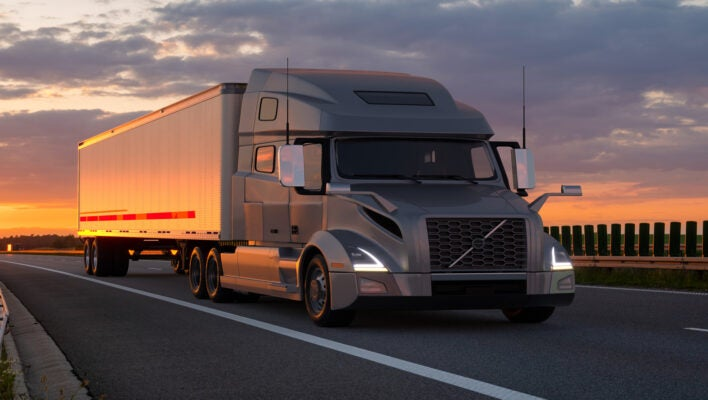
MARKET INSIDER – The U.S President Donald Trump has announced a significant escalation in the administration’s efforts to protect domestic companies from foreign competition, imposing a 25% import tariff on all medium and heavy-duty trucks entering the U.S., effective November 1.
The new 25% levy will apply to a comprehensive range of large vehicles. This includes delivery vans, refuse trucks, construction vehicles, transit buses, shuttle and school buses, as well as tractor-trailers and specialized heavy-duty trucks.
President Trump stated on Monday that this measure is designed to safeguard domestic manufacturers from what he termed “unfair foreign competition.” This move is anticipated to benefit U.S. companies such as Peterbilt and Kenworth (both owned by Paccar) and Freightliner (owned by Daimler Truck).
This latest announcement follows a previous statement last month where Mr. Trump indicated that heavy-duty truck imports would face new tariffs starting October 1, citing national security concerns.
The U.S. Chamber of Commerce had previously urged the Commerce Department not to proceed with new truck tariffs, pointing out that the top five import sources—Mexico, Canada, Japan, Germany, and Finland—are all U.S. allies or close partners and do not pose a threat to national security.
The application of a 25% rate on heavy trucks stands in contrast to existing trade agreements regarding lighter vehicles. For light-duty cars, the U.S. has agreed to a 15% tariff under trade deals with Japan and the European Union. It remains unclear if larger vehicles were intended to be covered by that lower rate. Furthermore, the administration has allowed manufacturers to deduct the value of U.S. components from the tariffs due on light vehicles assembled in Canada and Mexico, a provision designed to encourage North American supply chains.
The imposition of these substantial tariffs introduces new uncertainty into the global commercial vehicle market and could lead to price increases for fleet operators and businesses relying on imported heavy equipment. International investors should closely monitor potential retaliatory measures from affected trading partners and the subsequent shifts in global manufacturing and supply chain strategies by major truck makers.
