
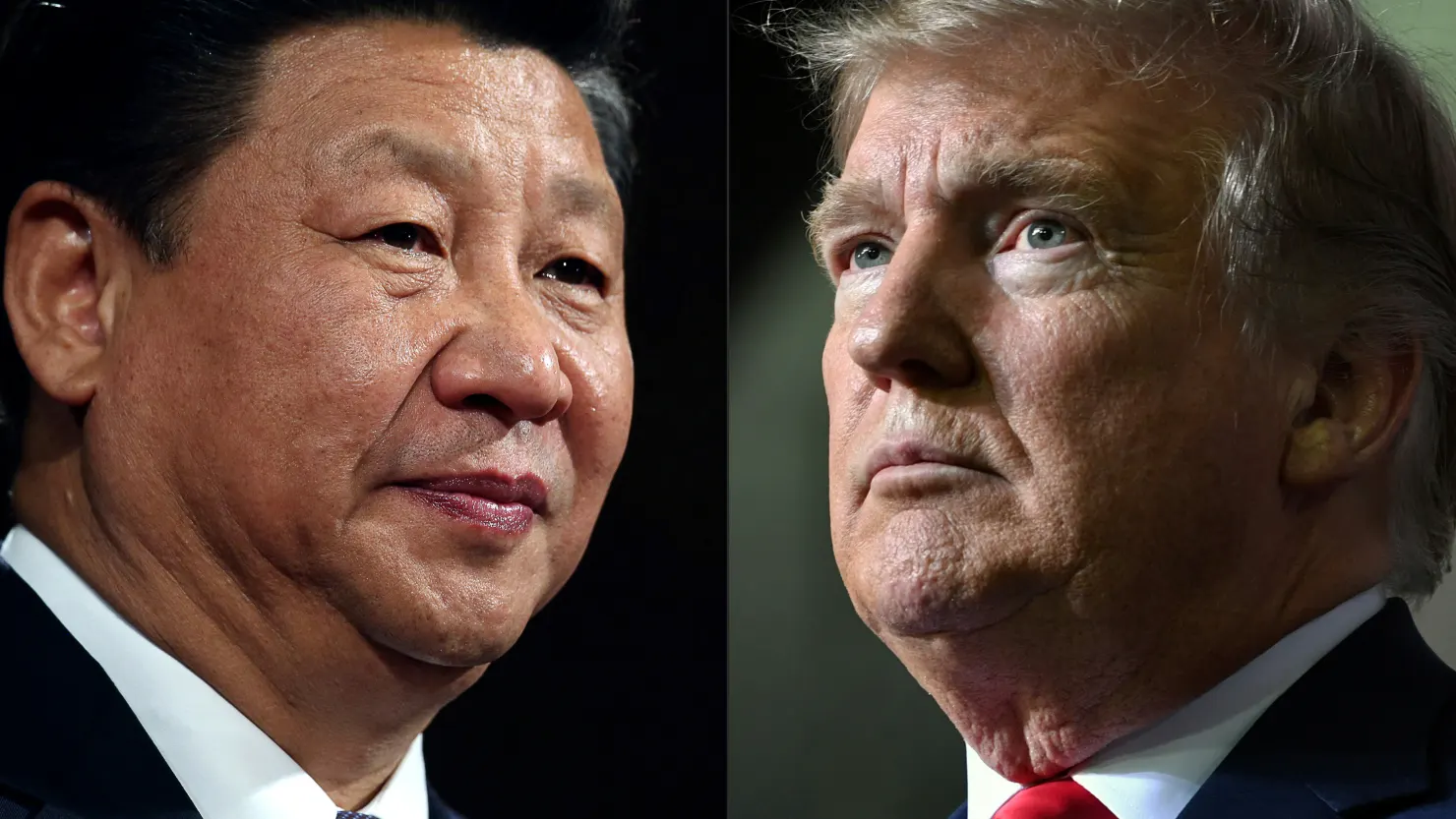
While Washington flags wins on rare earths and social media, analysts say China is playing a different game—demanding stability, tech access, and an end to U.S. pressure on its global trade partners.
As U.S. President Donald Trump heads to South Korea for a high-stakes meeting with China’s Xi Jinping, he’s broadcasting trademark optimism, telling reporters he looks forward to a “great meeting” where “a lot of problems are going to be solved.”
But in Beijing, the mood is one of icy silence.
This disconnect is at the heart of what analysts call a “familiar pattern”: a fundamental U.S. misunderstanding of China’s core interests. This gap between U.S. photo-op politics and China’s long-term strategic demands has profound implications for global markets, tech stocks, and international supply chains.
While the Trump administration is previewing potential “wins” on hot-button issues like TikTok or rare earth minerals, Beijing’s wishlist is far more structural, non-negotiable, and has little to do with social media apps.
Here is what analysts on the ground say China really wants.
1. An End to ‘Ad Hoc’ Chaos
The single biggest demand from Beijing is stability. For global business leaders, this is the entire ballgame.
“Businesses need to have certainty. There’s no certainty right now,” said Cameron Johnson, a senior partner at Shanghai-based consulting firm Tidalwave Solutions.
The Trump administration’s unpredictable, “tit-for-tat” approach—with tariffs doubling in weeks and 90-day pauses creating a constant cliff-edge—is toxic to Beijing’s state-managed planning. China is looking for a “ceasefire,” says Zichen Wang of the Center for China and Globalization, to end the escalating cycle of U.S. measures and Chinese countermeasures.
2. A Full Tariff Rollback, Not Just a Pause
Beijing’s most practical ask is a complete rollback of U.S. tariffs, which it sees as punitive and illegitimate. The current “pause” is set to expire in mid-November, and Trump’s lingering threat of new tariffs up to 100% has frozen capital investment.
China isn’t just waiting, however. It’s actively hedging. As its U.S. exports plunge, shipments to other regions are surging. Tellingly, Southeast Asia has now overtaken the European Union as China’s largest trading partner, a strategic pivot accelerated by the trade war.
3. Reopening the U.S. Tech Tap
This is an existential issue for Beijing. U.S. restrictions on Chinese access to advanced American technology, particularly high-end semiconductors from companies like Nvidia, have accelerated over the last three years.
The damage is real. Nvidia has stated its market share in China has fallen to “zero” as a result of the curbs. While Trump has alluded to discussing export restrictions on AI chips, the question for Beijing—and the entire tech sector—remains.
“What the Chinese themselves are hoping for is not to be as constrained with technology,” Johnson said. “Is the U.S. done? Or is this going to continue and continue and continue?”
4. Stop Squeezing China’s Global Partners
Perhaps the most sophisticated and urgent point for Beijing is how the U.S. is “rippling” its trade war through third countries. This is no longer just a bilateral dispute; it’s a global campaign.
Analysts point to several recent examples:
- The Netherlands: The Dutch government’s move to take over Nexperia, a chip subsidiary of a U.S.-blacklisted Chinese company.
- Malaysia: A new U.S. trade agreement includes clauses barring Kuala Lumpur from working with “third countries” (i.e., China) in ways that disadvantage U.S. tech.
- China’s Counter: Beijing’s expansion of rare earth restrictions is seen as direct leverage to counter Washington’s semiconductor blockade.
“Businesses are also concerned about that because that could bleed into all different kinds of situations,” Johnson noted. Beijing wants a guarantee that its legitimate firms won’t be cut off from global supply chains via U.S. pressure on its allies.
5. The ‘Respect’ Agenda: Taiwan, Tech, and Superpower Status
Beijing’s long-standing demand for “mutual respect” is often dismissed in the West as diplomatic jargon. It’s not.
It’s a direct demand for Washington to acknowledge China’s core interests and its status as an equal. According to Dong Shaopeng, a senior researcher at Renmin University, this includes:
- Adherence to Beijing’s position on Taiwan and the South China Sea.
- Acceptance that China’s technological and economic development is “reasonable,” not a threat to be contained.
The ‘Breakthrough’ Is Unlikely
In the end, few expect a substantial resolution. The gap between Trump’s desire for a headline-grabbing “win” and Xi’s demand for a new, systemic respect is likely too vast to bridge in a single meeting.
“I don’t think this week’s meeting will see results,” said Dong.
Both leaders may leave with a photo-op and a vague “framework” agreement. But for international businesses and investors, the fundamental economic conflict—and the market uncertainty it fuels—is set to continue.
