
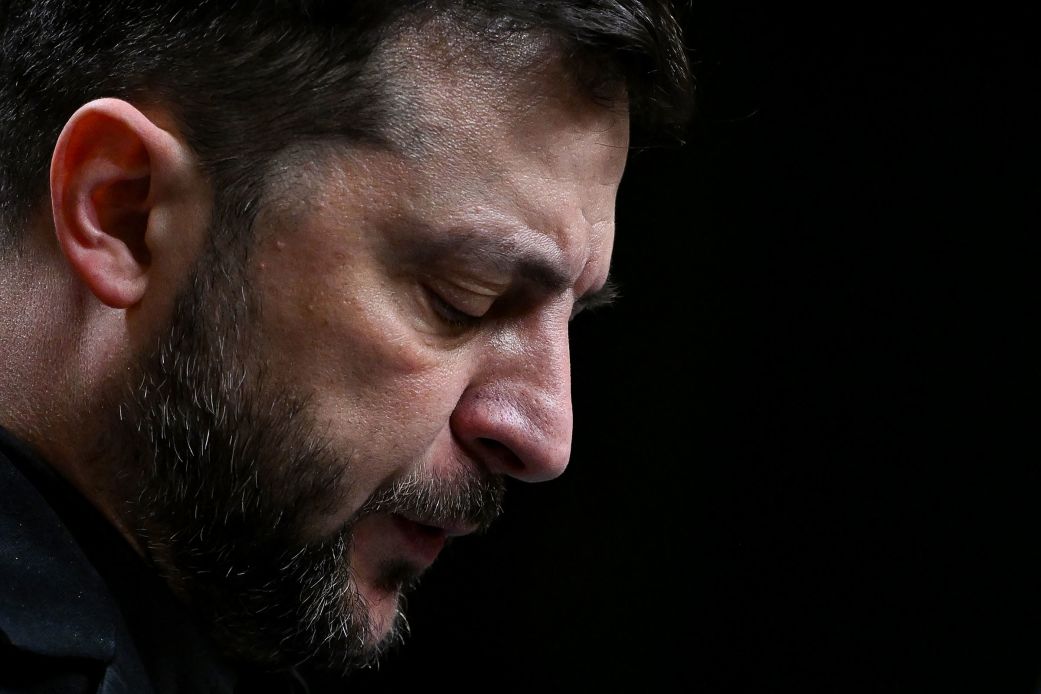
Trump’s shifting deadlines and Moscow’s hardline demands push Ukraine toward its most perilous diplomatic crossroads since the war began
Ukraine’s President Volodymyr Zelensky is facing the starkest choice of the war: accept a deeply unfavorable peace deal that requires conceding strategic territory, or reject it and risk prolonged conflict at a moment when Kyiv’s military, political, and financial vulnerabilities are intensifying. After weeks of diplomatic turbulence, U.S. President Donald Trump quietly stepped back from his self-imposed Thanksgiving deadline for a peace agreement, a signal that his envoy Steve Witkoff’s upcoming mission to Moscow is unlikely to produce a breakthrough.
The geopolitical stakes could not be higher. Russia continues to insist on full control of the Donetsk region, a demand neither Ukraine nor its European backers see as militarily viable or politically survivable. Washington’s latest proposal appears to have removed that concession, setting up yet another impasse in a cycle of dual-track negotiations that repeatedly generate the illusion of progress while entrenched red lines remain immovable. The decade-long evolution of this conflict—from Crimea to Donbas to the full-scale invasion—has hardened distrust on both sides, making any deal that relies on Moscow’s long-term compliance an inherently fragile gamble.
Behind the diplomatic theater lies a deeper strategic crisis. Ukraine’s battlefield position is deteriorating on three simultaneous fronts: rapid Russian gains in Zaporizhzhia, relentless pressure in Pokrovsk, and steady advances around Kupiansk. Kyiv’s manpower shortages have become acute, and the country’s European funding lifeline for 2025 remains uncertain. Russia, by contrast, continues to mobilize resources with a singular focus, pushing the war’s attritional pressure onto Ukraine’s collapsing demographics and exhausted forces.
Zelensky also faces political turbulence at home. News that anti-corruption investigators searched the residence of his chief-of-staff and lead negotiator, Andriy Yermak, threatens to undercut the negotiating team just as Trump increases pressure for concessions. Meanwhile, Russia’s drone attacks have already brought the key hub of Kramatorsk within close range, raising fears that the remaining parts of Donetsk under Ukrainian control could fall this winter.
The bigger question now is whether Ukraine and its allies can force Moscow to break first. Kyiv hopes that Russia’s relentless spending, its staggering casualty count, and the opaque fragility of its political system may eventually push the Kremlin toward compromise. But as the Wagner mutiny in 2023 showed, Russian instability is impossible to predict—and just as impossible to rely on strategically.
What once seemed politically unthinkable in Europe—Ukraine ceding territory in exchange for peace—has now entered the conversation through Trump’s initial 28-point peace plan. While the idea has vanished from the leaked European counterproposal, it remains central to Putin’s maximalist demands. That tension guarantees the cycle will repeat: Trump’s envoy will hear that Putin will not budge on Donetsk, Trump will relay that to Kyiv, and Zelensky will again face mounting pressure for concessions he cannot politically survive.
Zelensky’s choice is hideous precisely because neither option offers security. A flawed deal risks emboldening Moscow, yet refusing one may accelerate Ukraine’s military collapse. The world’s most consequential peace negotiation now hinges on whether Kyiv can endure long enough to outlast the Kremlin’s will—or whether geopolitical fatigue will force an outcome Ukraine has fought for nearly a decade to avoid.
