
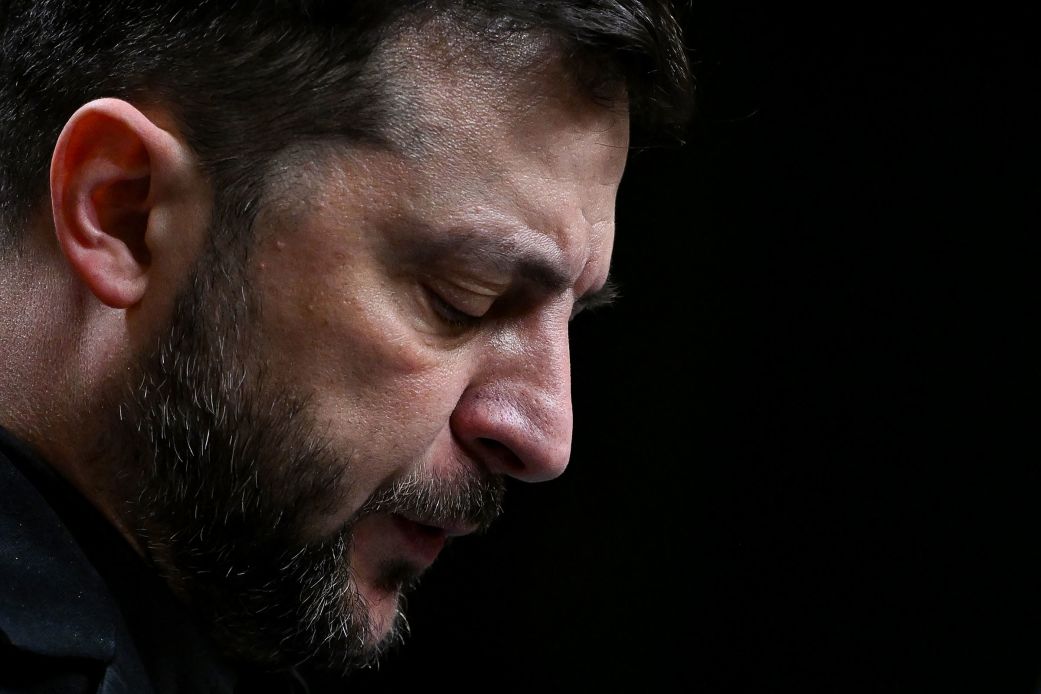
A sweeping security overhaul signals a dual-track strategy: peace talks—or tech-driven escalation
As Ukraine enters its fifth year of full-scale war with Russia, President Volodymyr Zelensky has launched the most far-reaching government reshuffle since the invasion began—resetting the country’s security, intelligence, and defense leadership in a move that underscores how high the stakes have become. The changes, unveiled in the first days of 2026, reflect a stark reality: Kyiv is preparing simultaneously for diplomacy and for a longer, more technologically intense war.
Within days, Zelensky replaced the heads of military intelligence, civilian intelligence, the Security Service (SBU), and the State Border Guard, while nominating a leading architect of Ukraine’s digital transformation to run the Ministry of Defense. He also appointed a new chief of staff seen as one of his most trusted lieutenants. “Today, we have begun a significant reshuffle—internal changes aimed at making Ukraine stronger,” Zelensky said on January 2.
At the center of the overhaul is Kyrylo Budanov, the 39-year-old lieutenant general who transformed Ukraine’s military intelligence (HUR) into one of Kyiv’s most effective wartime institutions. Budanov now heads the Presidential Office, replacing Andriy Yermak, who resigned last November following an anti-corruption investigation. Budanov’s former role at HUR is being filled by Oleh Ivashchenko, previously head of the Foreign Intelligence Service.
The shake-up extends across the security apparatus. At the SBU, Lieutenant General Vasyl Maliuk stepped aside, with Major General Yevhen Khmara—commander of the elite Alpha unit—taking over on an interim basis. The Border Guard Service will also see new leadership after the dismissal of Serhiy Deineko, a move long demanded by critics citing border vulnerabilities.
Perhaps the most closely watched appointment is at defense. Mykhailo Fedorov, 35, has been nominated as Minister of Defense after serving as deputy prime minister for digital transformation. Fedorov is widely credited with building Ukraine’s UAV combat ecosystem from scratch, scaling production to roughly 200,000 drones per month, and digitizing public services for 20 million citizens through the Diia platform. His vision—“fighting with machines instead of manpower”—signals a decisive bet on asymmetric, technology-led warfare.
The reshuffle also targets economic resilience. Former prime minister Denys Shmyhal takes over the Ministry of Energy, a sector battered by repeated Russian strikes and shaken by a recent corruption scandal. The move aims to stabilize infrastructure critical to both civilian life and the war effort, while reassuring European partners watching Kyiv’s reform agenda closely.
Why now? Zelensky has framed the changes as parallel preparations. After meeting national security advisers from 18 partner countries on January 3, he said Budanov would focus on peace negotiations while Fedorov prepares the defense establishment for a technologically intensive campaign if diplomacy fails. “There is a first path—the less painful one—which is peace and diplomacy. That is my number one priority,” Zelensky said, adding that Ukraine must be ready if pressure on Russia proves insufficient.
Analysts see a broader message. Political scientist Volodymyr Fesenko argues the reshuffle reflects Zelensky’s drive to make the state more efficient under extreme pressure, while signaling renewed anti-corruption resolve to the European Union—a key condition for Ukraine’s accession ambitions. Elevating younger figures like Fedorov also suggests a generational and doctrinal shift away from attritional warfare toward innovation-led defense.
Whether the overhaul delivers results will become clear in the months ahead. But the intent is unmistakable: Ukraine is reorganizing for survival and leverage, preparing to negotiate from strength—or to fight smarter, not harder. In a war increasingly defined by endurance and technology, Zelensky’s gamble is that structure, speed, and innovation can still tilt the balance.
