
Chip giants fuel UK startup as global battle for autonomous driving heats up
MARKET INSIDER – The race to dominate the future of transportation is no longer just about cars—it’s about chips, AI, and global platforms. A fresh $60 million investment into UK-based autonomous driving startup Wayve by Advanced Micro Devices, Qualcomm, and Arm Holdings signals a strategic shift in how the driverless car ecosystem is being built—and who controls it.
While modest compared to Wayve’s earlier $1.2 billion raise, the new funding underscores a deeper alignment between AI-driven mobility software and the semiconductor giants powering it. In a market increasingly defined by vertical integration, Wayve is positioning itself as a neutral platform—one that could sit at the center of a fragmented global auto industry.
Unlike rivals such as Waymo, Wayve is betting on a radically different approach: autonomous driving without reliance on high-definition maps or hyper-localized training. Instead, its AI “driver” is designed to learn and adapt in real time, potentially allowing for faster, cheaper global deployment. That distinction could prove निर्णative as automakers seek scalable solutions across markets with vastly different road conditions.
The strategic importance of this latest investment lies in hardware compatibility. With backing now spanning major chipmakers—including earlier investor Nvidia—Wayve can integrate its software across multiple silicon platforms. This flexibility is critical in an industry where automakers rely on diverse chip architectures, and it gives Wayve a rare advantage: the ability to “meet the industry where it is,” as CEO Alex Kendall puts it.
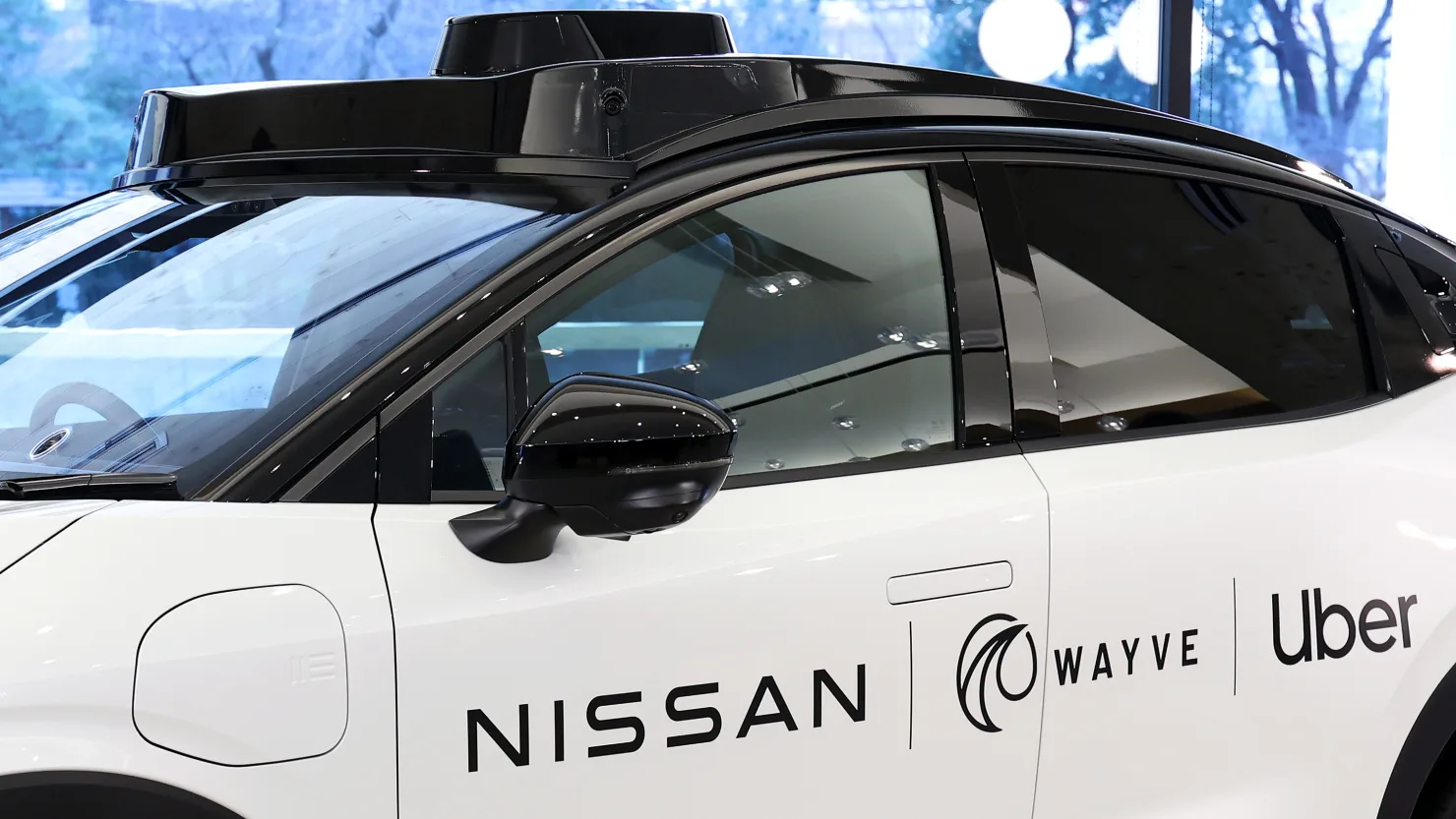
Wayve is already testing its technology across the U.K., Germany, Japan, and the U.S., and has partnered with Nissan Motor to embed its AI into driver-assistance systems. In collaboration with Uber, the companies are also developing robotaxi services—an increasingly crowded space as competitors accelerate global expansion.
That competition is intensifying fast. Waymo is preparing to launch passenger services in London, while Chinese players such as Baidu, WeRide, and Pony.ai are pushing aggressively into international markets. The result is a fragmented but rapidly scaling global race—where software adaptability and hardware partnerships may matter more than first-mover advantage.
The bigger question for investors is not whether autonomous driving will arrive—but which ecosystem will dominate when it does. Wayve’s chip-agnostic strategy suggests a future where the winners aren’t just those who build the best cars, but those who control the intelligence layer across them. In that scenario, the real battleground shifts from the road to the semiconductor stack—and the stakes become far larger than mobility alone.
