
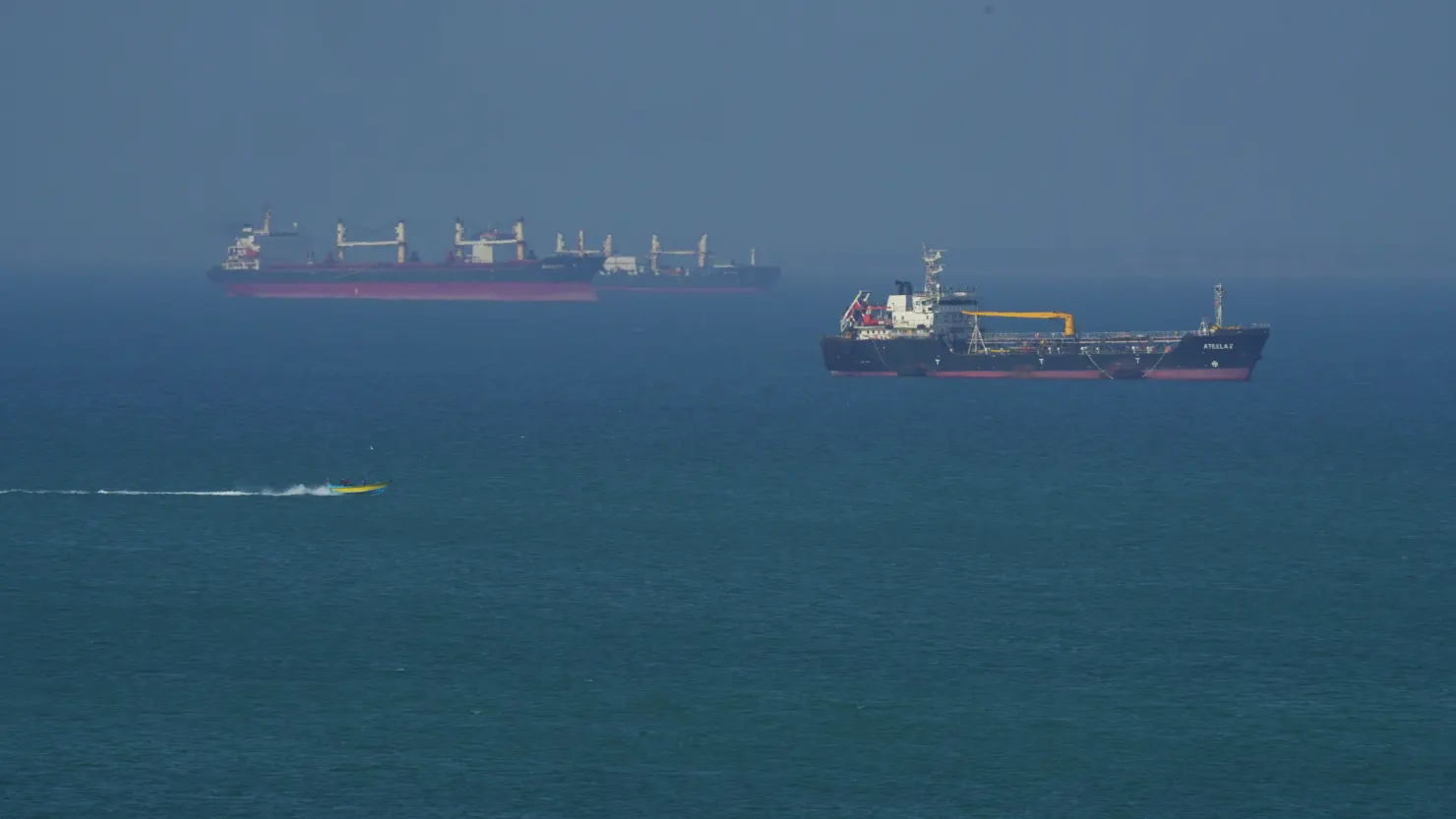
The strikes threaten Saudi Arabia’s main alternative export route as disruptions in the Gulf and Black Sea tighten global oil supplies.
MARKET INSIDER — Brent crude climbed above $100 a barrel on Thursday after Yemen’s Iran-aligned Houthis said they attacked two Saudi oil tankers in the Red Sea, widening the Middle East conflict to another critical energy corridor.
The international benchmark rose more than 6%, crossing $100 for the first time since May, while US West Texas Intermediate advanced above $90. The rally reflects growing concern that shipping could be disrupted simultaneously around the Strait of Hormuz, the Bab el-Mandeb Strait and the Black Sea.
Key highlights
- Brent crude rose more than 6% and surpassed $100 a barrel. The Houthis claimed missile and drone attacks on two Saudi tankers.
- One tanker was confirmed damaged near Jizan; the second reported attack remained unverified. U.S President Donald Trump threatened Iran and the Houthis with further military action.
- Kazakhstan’s oil production fell after attacks halted loadings at a major Black Sea terminal. Analysts warned that a full regional supply crisis could drive oil toward previous record highs.
What happened to the Saudi tankers?
The Houthis said they targeted the Encelia and Layla with missiles and drones for violating a naval blockade the group declared against Saudi Arabia.
A maritime-security source said the Encelia issued a distress call after being struck near the Saudi port of Jizan. Saudi state media reported that the attack caused a fire at the vessel’s bow. The incident involving the Layla had not been independently confirmed when the initial reports were published.
The attacks are particularly significant because Saudi Arabia has been using its East-West pipeline and Red Sea terminals to bypass disruption around the Strait of Hormuz.
Three tankers carrying Saudi crude to China and India had already reversed course following the Houthi warning, illustrating how threats alone can alter shipping patterns and raise insurance and freight costs. Reuters reported
Why did Brent cross $100?
The oil market is no longer pricing disruption at a single chokepoint. The Houthi campaign threatens traffic near Bab el-Mandeb just as Iranian actions continue to restrict Gulf exports through Hormuz.
President Donald Trump said Washington would hold Iran responsible for further Houthi attacks and threatened “major military punishment” against Tehran and the Yemeni group. Iran warned that any US strikes on its bridges or power plants would trigger retaliation against American-linked infrastructure and energy assets elsewhere in the region.
This exchange increased the probability of attacks on production, pipelines, ports and other critical infrastructure—not merely delays to individual vessels according to Reuters
Black Sea disruption adds to supply pressure
The Middle East escalation coincides with a separate disruption affecting Kazakhstan, whose crude is largely exported through the Caspian Pipeline Consortium’s terminal on Russia’s Black Sea coast.
Loadings were halted following drone attacks, forcing producers to reduce output because alternative export routes cannot handle the same volume.
Production at Kazakhstan’s Tengiz field reportedly fell from approximately 925,000 barrels per day to 406,000 barrels per day. Nationwide oil and condensate output dropped to around 1.63 million barrels per day, compared with a July average of 2.07 million.
The CPC system carries more than 80% of Kazakhstan’s oil exports, making an extended closure a potentially material loss for the physical market, Reuters added.
Could oil rise toward record highs?
Helima Croft, global head of commodity strategy at RBC Capital Markets, warned that simultaneous disruption across the Gulf, Red Sea and Black Sea could push Brent beyond levels reached after Russia’s 2022 invasion of Ukraine. In an extreme full-scale regional war, she said prices could challenge the 2008 peak near $146 a barrel.
Those projections are scenarios rather than base-case forecasts. Brent’s path will depend on whether the tanker attacks become a sustained campaign, whether Saudi exports continue through Yanbu and how quickly CPC loadings resume.
A credible ceasefire, safer shipping conditions or restoration of disrupted exports could remove part of the geopolitical premium quickly. Continued attacks on both Hormuz and Bab el-Mandeb would instead convert a risk-driven rally into a deeper physical supply shock.
What it means for Asian markets
Asia is particularly exposed because China, India, Japan and South Korea are major importers of Middle Eastern crude. Diversions around threatened waterways increase voyage times, freight charges and war-risk insurance costs.
Sustained oil prices above $100 would also intensify inflation pressure, weaken the trade balances of energy-importing economies and limit central banks’ ability to reduce interest rates.
For Vietnam, higher crude prices could benefit upstream producers and oil-service companies, but refiners, airlines, manufacturers and transport businesses would face rising input costs. The earnings effect on individual energy companies will depend on inventory timing, regulated retail prices and refinery margins—not simply the direction of crude prices.
