
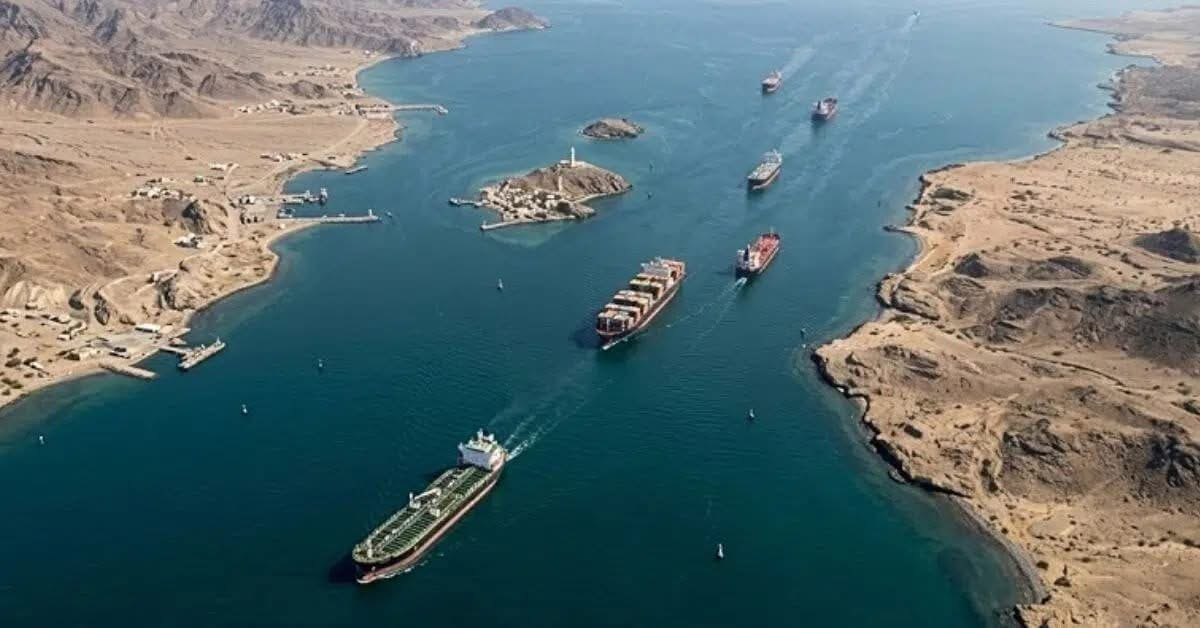
Ceasefire brings first ships through Strait of Hormuz, yet tanker traffic stalls amid uncertainty and crypto toll rumors
MARKET INSIDER – The world’s most critical oil chokepoint is technically open—but global energy markets are still holding their breath. Just hours after a fragile ceasefire between the U.S. and Iran, the first vessels have crossed the Strait of Hormuz, a passage that carries roughly 20% of the world’s oil supply. Yet instead of a surge, traffic remains eerily thin—highlighting a deeper truth: geopolitical risk doesn’t disappear with a handshake.
For investors, the message is immediate and global. Oil flows remain constrained, insurance premiums elevated, and supply chains vulnerable—despite official claims that the route is “open.” In reality, the gap between diplomacy and execution is now the market’s biggest risk variable.
The initial crossings, tracked by MarineTraffic, involved only bulk carriers transporting dry goods—not oil tankers. That distinction is critical. Tanker flows, the backbone of global energy logistics, remain effectively frozen after renewed tensions triggered by Israeli strikes in Lebanon. The ceasefire, while symbolically significant, has yet to restore confidence among shipping operators navigating one of the most militarized waterways on Earth.
At the center of the hesitation is ambiguity from Tehran. Iranian authorities have signaled that passage is permitted—but only under strict coordination with its armed forces and subject to unspecified “technical limitations.” Industry insiders say this vague framework introduces operational and legal uncertainty, particularly for insurers and shipowners. Reports that Iran may impose transit tolls payable in cryptocurrency—and conduct inspections on all vessels—have further complicated decision-making for global carriers.
Shipping executives are responding with caution bordering on paralysis. Companies with vessels stranded in the Persian Gulf report no direct communication channels with Iranian authorities and no clear safety guarantees. Even industry giant Maersk has declined to resume normal operations, citing insufficient clarity despite welcoming the ceasefire. The result is a maritime bottleneck, with hundreds of vessels effectively waiting on the sidelines.
The numbers underline the disruption. Before the conflict erupted in late February, over 100 vessels—including oil tankers—passed through Hormuz daily. During the peak of hostilities, that figure collapsed to single digits. Even in the week leading up to the ceasefire, traffic recovered only marginally, reaching about 10% of normal volumes, according to data from Lloyd’s List. Analysts at Kpler now expect just 10 to 15 vessels per day in the near term—far below what global energy markets require for stability.
Meanwhile, political messaging remains sharply optimistic. U.S. officials, including Defense Secretary Pete Hegseth, insist the strait is open, while President Donald Trump has framed the ceasefire as a decisive victory, predicting economic upside and a rapid normalization of trade flows. But markets are signaling skepticism. Oil traders and shipping firms are pricing in not just risk—but confusion.
That confusion may prove more disruptive than outright conflict. Unlike a full closure, which triggers immediate rerouting and pricing adjustments, today’s partial reopening creates a gray zone where decisions stall and capital hesitates. For global investors, this is the real takeaway: the Strait of Hormuz is no longer just a geopolitical flashpoint—it is now a test case for how fragile ceasefires can distort markets without fully breaking them.
If flows don’t normalize quickly, the world could face a new kind of supply shock—not from scarcity, but from hesitation. And in that environment, the biggest opportunity may lie not in betting on oil itself, but in anticipating how long uncertainty can keep the world’s most important trade artery only half open.
