
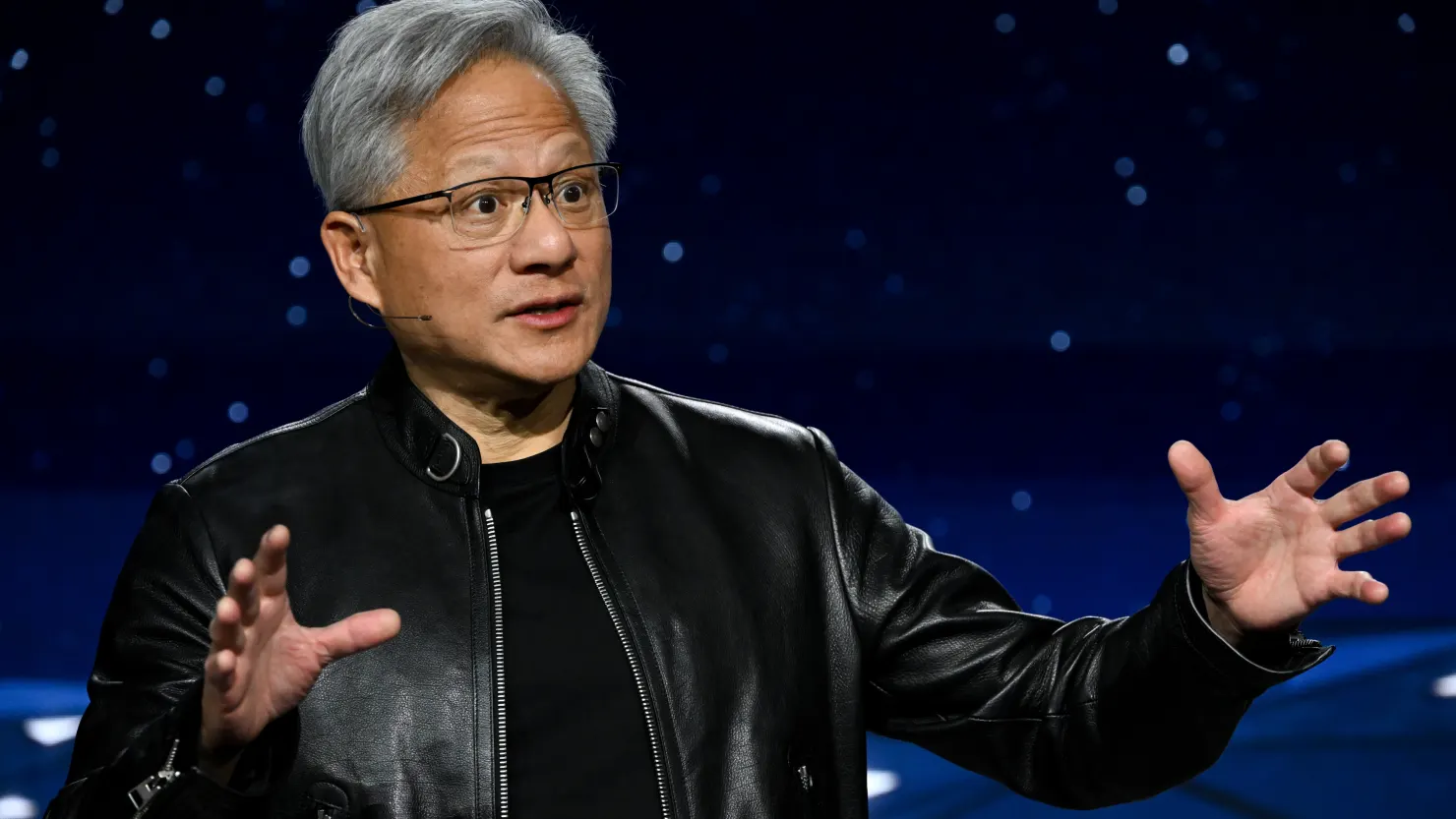
Jensen Huang joins Trump’s China delegation as AI, tariffs and Boeing deals dominate high-stakes talks in Beijing
MARKET INSIDER – The surprise addition of Jensen Huang to President Donald Trump’s China delegation signals just how central artificial intelligence has become to the next phase of US-China economic diplomacy. The last-minute invitation to the NVIDIA Corporation chief executive underscores Washington’s growing recognition that AI chips, computing power, and semiconductor supply chains are now as strategically important as oil, aircraft, or tariffs.
The move also comes at a sensitive moment for global markets, as investors closely watch whether the Trump-Xi summit can stabilize worsening tensions between the world’s two largest economies. From advanced semiconductors to rare earth minerals and trade access, the outcome of the Beijing meetings could shape the future of global technology, manufacturing, and capital flows for years.
Nvidia confirmed on May 12 that Huang joined the presidential delegation at Trump’s invitation “to support America and the administration’s goals.” According to reports from Politico, the White House extended the invitation after media outlets noted that Huang had initially been absent from the official list of business leaders accompanying the US president on the three-day visit to China.
The delegation reflects the industries now sitting at the center of geopolitical competition. Alongside Huang are Elon Musk of Tesla, Tim Cook of Apple, Larry Fink of BlackRock, Boeing CEO Kelly Ortberg, Meta executive Dina Powell McCormick, and Visa CEO Ryan McInerney. The lineup highlights how Washington increasingly sees corporate America as an extension of strategic statecraft in its rivalry with Beijing.
Trump publicly dismissed reports suggesting Nvidia’s CEO had been excluded from the trip, posting on social media that “the great Jensen Huang” was aboard Air Force One “with pride.” A New York Post correspondent later reported that Huang boarded the aircraft during a refueling stop in Alaska, reinforcing speculation that the arrangement was finalized only hours before departure.
The Beijing visit marks Trump’s first trip to China since his 2017 state visit during his first presidency. It also represents the first in-person meeting between Trump and Chinese President Xi Jinping since late 2025. According to Reuters, China is expected to announce a major purchase of Boeing aircraft — potentially its largest order from the US aerospace giant in nearly a decade — alongside increased imports of American agricultural and energy products.
But beneath the ceremonial announcements lies a far deeper contest. Trade tariffs, Taiwan, export controls on advanced AI chips, and access to critical minerals are all expected to dominate negotiations. Trump has already indicated that pushing China to open its markets further to American companies will be his “first proposal” to Xi.
For global investors, Huang’s presence may prove more symbolic than any aircraft order. Nvidia has become the defining company of the AI boom, and its inclusion in the delegation suggests semiconductor diplomacy is now officially at the heart of US foreign policy. In an era where AI leadership increasingly determines economic and military power, the most valuable seat on Air Force One may no longer belong to Wall Street or Detroit — but to Silicon Valley.
