
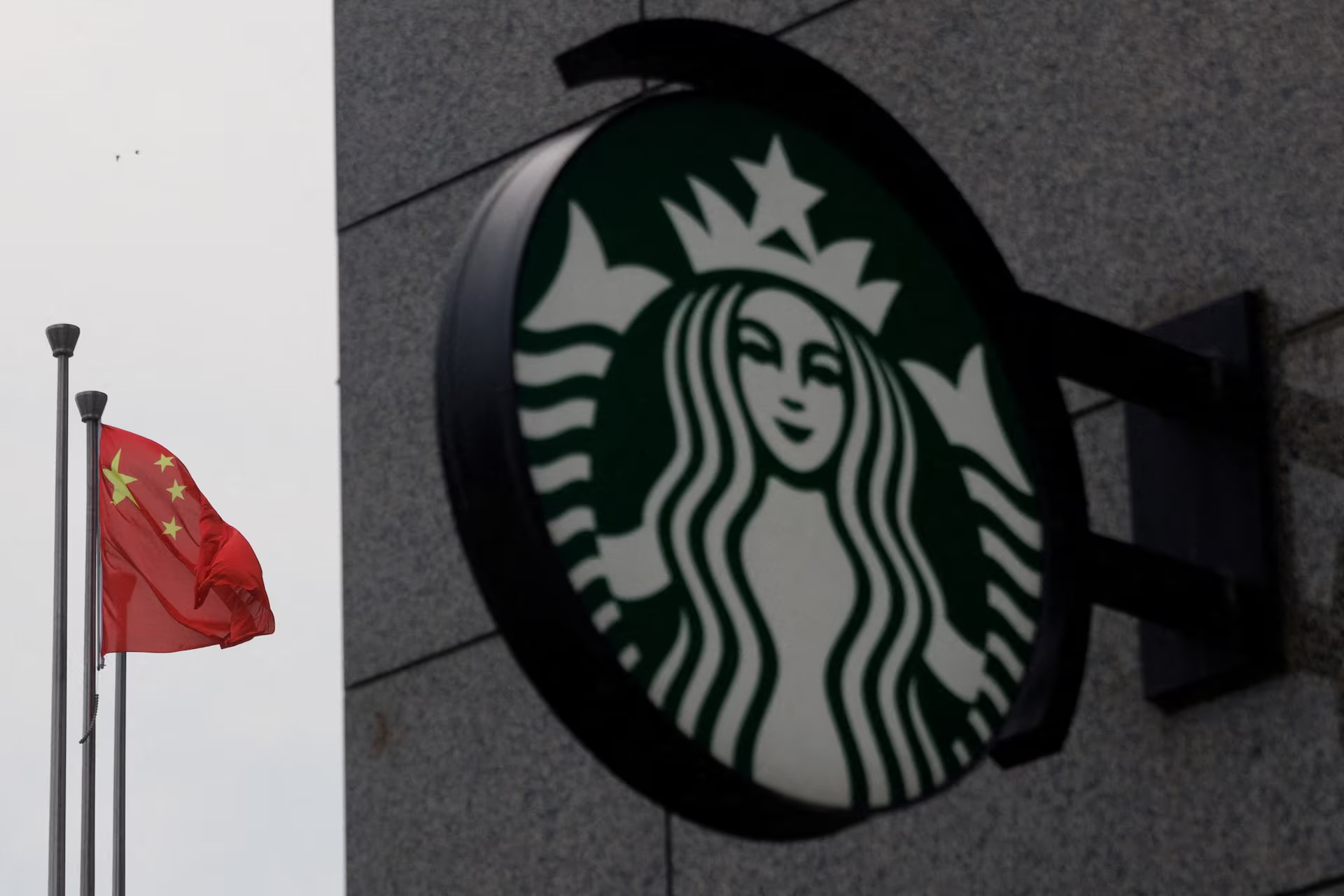
Coffee giant bets on local partnership to reignite growth as low-cost rivals Luckin and Cotti squeeze market share.
SHANGHAI — Starbucks (NASDAQ: SBUX) is handing control of its China business to Boyu Capital in a $4 billion deal that marks one of the largest divestments by a global consumer brand in China in recent years. The move signals the Seattle-based chain’s recognition that it needs local muscle to reignite growth in a fiercely competitive market dominated by fast-expanding domestic rivals.
Under the agreement, Boyu, whose founders include the grandson of former Chinese President Jiang Zemin, will hold up to 60% of a new joint venture, while Starbucks retains 40% and continues to license its brand and intellectual property to the partnership. The U.S. firm estimates the total value of its China business at more than $13 billion, including proceeds from the sale, its remaining stake, and long-term licensing income over the next decade.
Starbucks shares fell 3% in early U.S. trading Tuesday, but CEO Brian Niccol framed the move as a strategic pivot rather than a retreat. “We aim to bring the Starbucks experience to more customers, in more cities across China,” Niccol said. “We see a path to grow from today’s 8,000 Starbucks coffeehouses to more than 20,000 over time.”
Once the undisputed leader that introduced coffee culture to China in 1999, Starbucks’ market share has slid to 14% from 34% in 2019, according to Euromonitor International. The fall has been driven by Luckin Coffee and Cotti Coffee, whose sub-$1.50 lattes undercut Starbucks’ prices by more than two-thirds. Analysts warn it would be “a mistake” for Starbucks to enter a direct price war, noting its brand equity lies in premium positioning and its role as a social gathering space rather than a takeaway service.
The partnership with Boyu is expected to help Starbucks expand into lower-tier Chinese cities and boost store efficiency, leveraging the private equity firm’s deep local networks and digital partnerships. “Boyu isn’t a state-owned powerhouse like Citic, which partnered with McDonald’s in 2017, but it brings strategic agility and consumer-sector expertise,” said Jason Yu, general manager at CTR Market Research.
Boyu, headquartered in Hong Kong, has built a strong track record investing in China’s consumer and tech giants, including Mixue Group, the bubble tea empire behind Mixue Bingcheng, and a 45% stake in luxury retailer SKP.
For Starbucks, the deal mirrors a growing trend among Western firms — from McDonald’s to Nike — opting for local alliances to navigate China’s evolving regulatory and consumer landscape. While the partnership cedes control, it may be the company’s best shot at reviving growth in its second-largest market — and at proving that the world’s most recognized coffee brand can still win over a nation increasingly fueled by homegrown brews.
