
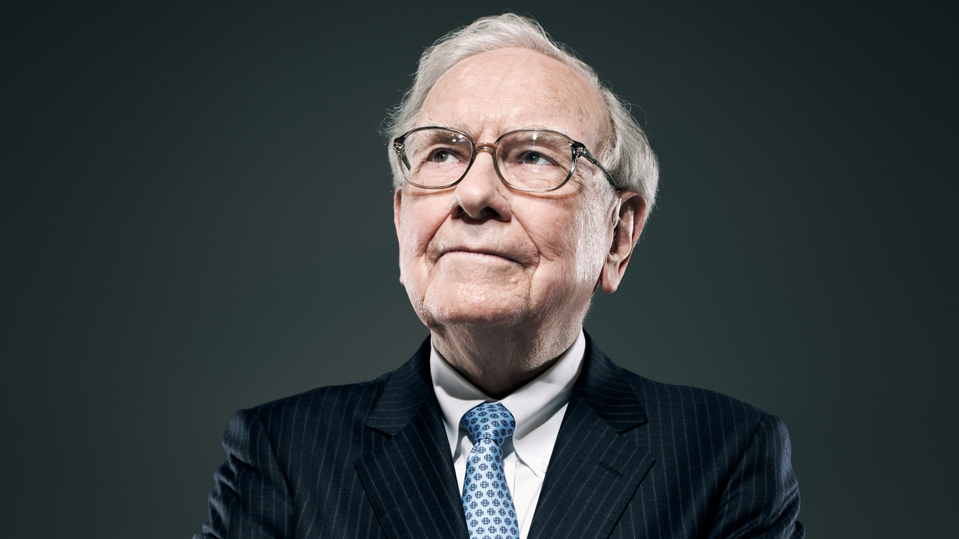
With $381 billion on the sidelines, the world’s most patient investor appears to be preparing for a market reset rather than fleeing risk
MARKET INSIDER – As 2025 draws to a close, few signals have captured Wall Street’s attention more than Warren Buffett’s unprecedented move to stockpile cash. Berkshire Hathaway is now sitting on approximately $381.7 billion in cash and cash equivalents — the largest reserve in the conglomerate’s history, and more than double the peak level held during the height of the Covid-19 crisis.
For an investor renowned for his long-term conviction and discipline, such an aggressive tilt toward liquidity is unlikely to be accidental. While retail investors are preoccupied with volatility in gold, cryptocurrencies and high-flying equities, Buffett appears to be positioning himself for a very different phase of the market cycle.
The underlying driver is valuation. One of Buffett’s favored market barometers, the Shiller CAPE ratio, has climbed to roughly 39.4, a level not seen since the dot-com bubble of 1999–2000. Historically, when valuations reach such extremes, Buffett has tended to step back, preserve capital and wait. The pattern is clear: in 2020, when CAPE crossed 35, Berkshire’s cash pile rose to about $150 billion; in 2022, as valuations normalized below 30, Buffett redeployed capital aggressively.
Today’s cash balance sends a measured but unmistakable message. Buffett is not predicting an imminent collapse, but he appears to believe that markets are priced for perfection, leaving little margin for error. In that context, a meaningful correction in 2026 becomes a risk worth preparing for.
Importantly, caution does not mean capitulation. Berkshire has not exited equities. The group still holds more than $267 billion in stocks, including a roughly $60.7 billion position in Apple, even after trimming its stake. This underscores a critical distinction often missed by smaller investors: Buffett is managing risk, not attempting to time the market.
His recent actions reinforce that philosophy. Even amid elevated valuations, Berkshire has selectively deployed over $5 billion into companies such as Alphabet, insurer Chubb and Domino’s Pizza — businesses he views as high quality and reasonably priced. The message is subtle but powerful: an expensive market does not mean every stock is expensive, and opportunity still exists for disciplined, bottom-up investors.
Cash, in this framework, is not dead money. It is strategic optionality. Holding liquidity provides psychological resilience during turbulence and, more importantly, the ability to act decisively when prices disconnect from fundamentals. If markets do correct sharply, as history suggests they often do after periods of excess, those with available capital will be best positioned to acquire durable assets at attractive prices.
Buffett’s record cash hoard should therefore be read less as a forecast of doom and more as a reminder of first principles. Avoid panic selling, focus on business quality rather than headlines, and maintain enough liquidity to turn volatility into opportunity. If 2026 does bring heightened instability, the real risk may not be market declines themselves, but being unprepared when rare, asymmetric opportunities finally emerge.
