
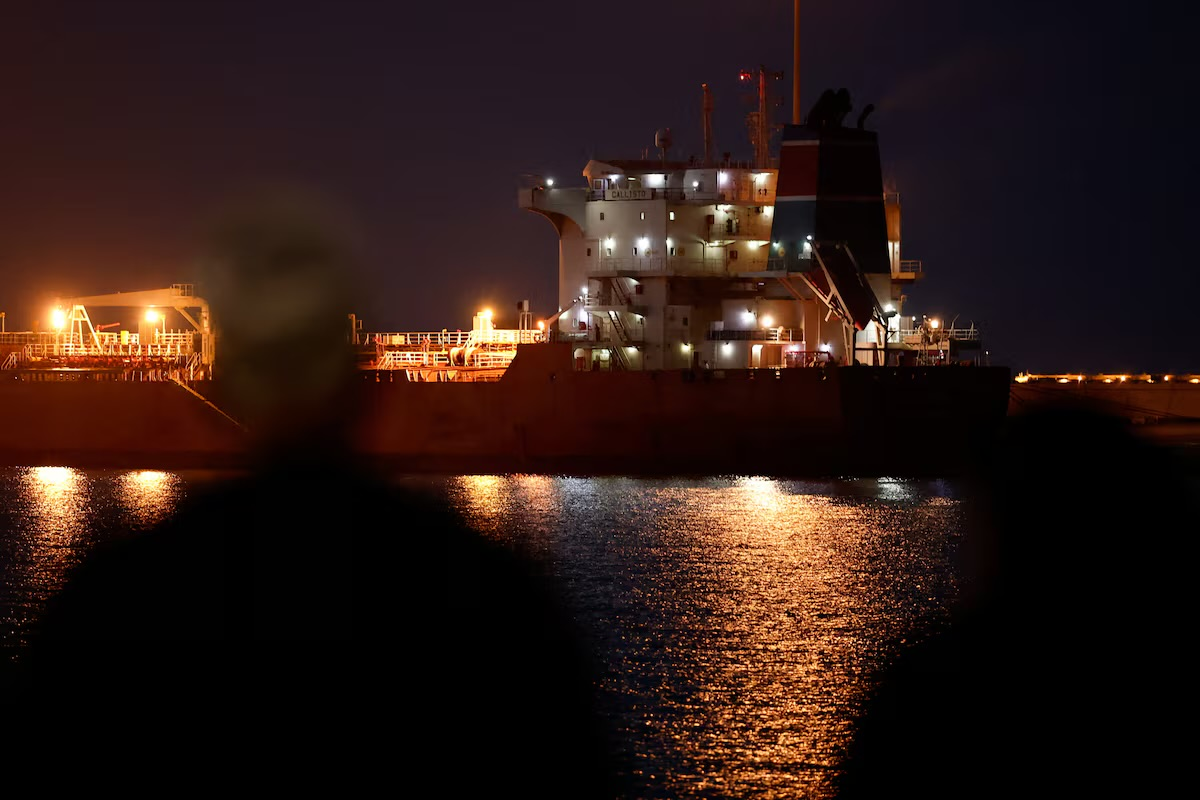
Strait of Hormuz shutdown exposes how Tehran—not Washington—now controls the timeline for restoring oil flows.
MARKET INSIDER – The global energy system is facing a stark new reality: reopening the world’s most critical oil routes may depend less on Washington’s military power and more on Tehran’s willingness to stand down. As war tensions ripple across the Persian Gulf, energy executives say Iran now holds decisive leverage over when global energy markets can stabilize.
The shift became clear when Saudi Aramco informed customers it could not confirm which ports would handle upcoming exports. Buyers were warned shipments could depart either from Gulf terminals or via Red Sea routes, highlighting the uncertainty created by the closure of the Strait of Hormuz, through which roughly 20% of the world’s oil and liquefied natural gas supply normally flows.
For energy traders and refiners, the message was unmistakable: supply security now hinges on whether shipping through Hormuz becomes safe again. Iran’s retaliation against U.S. and Israeli strikes—including drone and missile attacks targeting vessels—has effectively halted tanker traffic through the narrow waterway, disrupting energy flows to refineries, petrochemical plants, and power stations across Asia and Europe.
The shock has forced emergency responses from global policymakers. The International Energy Agency has coordinated a 400-million-barrel emergency oil release, more than double the size of its previous record intervention in 2022. Meanwhile, Donald Trump has signaled that the United States could deploy naval escorts to secure shipping lanes through Hormuz.
Yet industry insiders say military protection alone may not restore confidence. Shipping companies and oil traders warn that tanker traffic will not resume at scale unless Iran itself signals that vessels can pass safely. Even if Washington declares victory, Tehran retains the capacity to disrupt shipping for months using inexpensive drones, naval mines, or proxy attacks, according to analysts including Neil Quilliam and Helima Croft, a former CIA analyst.
The consequences are already rippling through global energy markets. Drone attacks recently targeted Port of Fujairah, while strikes on Kharg Island—which handles roughly 90% of Iran’s oil exports—have further escalated tensions. The conflict has triggered refinery shutdowns across Saudi Arabia, the UAE, Bahrain, and Israel, sending oil and gas prices surging by as much as 60%.
Production cuts across the region are mounting rapidly. Analysts estimate Middle Eastern output has fallen by 7 to 10 million barrels per day, equivalent to nearly 10% of global oil demand. In Saudi Arabia, Aramco has reportedly shut production at the massive Safaniya and Zuluf offshore fields, reducing the kingdom’s output by about 20%. In Iraq, production has plunged by 70%, while output in the UAE—OPEC’s third-largest producer—has been halved.
The crisis has also rippled into global gas markets. Qatar has halted liquefied natural gas shipments entirely, temporarily removing about 20% of global LNG supply from the market and warning buyers they may not receive cargoes until May.
Even if fighting stops soon, the damage to market confidence could linger. Energy analysts at firms such as Morgan Stanley and Rapidan Energy Group warn that insurers, tanker operators, and oil companies may take months to return to Gulf routes due to heightened security risks and soaring insurance premiums.
For global markets, the lesson is sobering. In an era of interconnected supply chains, the world’s energy system remains deeply vulnerable to geopolitical chokepoints. And in the current conflict, the timeline for stabilizing oil and gas flows may ultimately depend on a single question: when Iran decides the war at sea is over.
