
Markets wobble despite Wall Street highs as oil risk and geopolitics return to center stage
MARKET INSIDER – Global markets are once again being steered less by earnings and more by geopolitics, as renewed uncertainty around U.S.-Iran negotiations sends ripples across Asia-Pacific equities and energy markets. Investors are recalibrating risk in real time, with the fate of the Strait of Hormuz—through which roughly 20% of global oil flows—emerging as the single most critical variable shaping near-term sentiment.
Asian equities mostly retreated Tuesday, even as U.S. benchmarks like the S&P 500 and Nasdaq Composite pushed to fresh record highs overnight. The divergence underscores a growing disconnect: Wall Street optimism fueled by liquidity and tech momentum is increasingly colliding with geopolitical fragility in energy-sensitive regions.
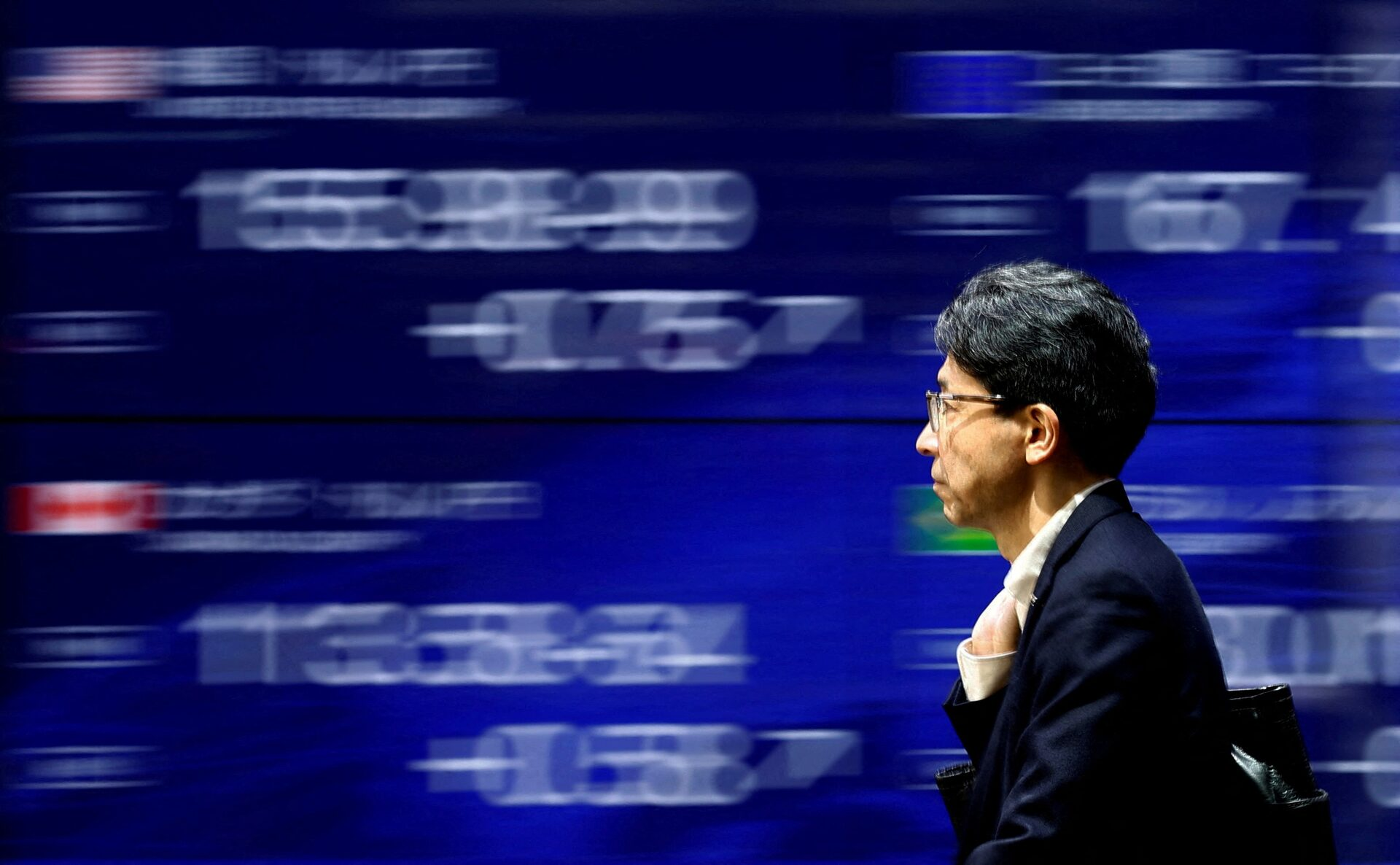
Japan’s Nikkei 225 fell over 1% after hitting an all-time high a day earlier, while the broader Topix managed modest gains. In South Korea, the Kospi edged higher, contrasting with declines in the tech-heavy Kosdaq. Across Greater China, the Hang Seng Index and CSI 300 both slipped, reflecting cautious positioning amid escalating macro risks.
At the center of market anxiety is a potential diplomatic opening. According to the White House, Donald Trump and his national security team are evaluating Iran’s reported offer to reopen the Strait of Hormuz—conditional on sanctions relief and a halt to U.S. military pressure. However, conflicting signals remain. Trump has previously insisted that sanctions would only be lifted once a deal is “100% complete,” raising doubts over whether this proposal represents a genuine path to de-escalation or merely a tactical maneuver in a prolonged standoff.
The implications extend far beyond diplomacy. Oil prices have already begun reacting to the uncertainty, feeding into inflation expectations globally. Japan’s central bank, the Bank of Japan, held rates steady at 0.75% but revised inflation forecasts upward, explicitly citing supply-side risks linked to the Iran conflict. This reinforces a broader theme: central banks may be forced to navigate a more complex environment where geopolitical shocks disrupt the disinflation narrative.
Meanwhile, corporate developments highlight a market still searching for direction. Chinese tech entrant Lightelligence surged over 380% in its Hong Kong debut, signaling continued appetite for high-growth innovation plays. In contrast, battery giant Contemporary Amperex Technology saw its shares drop 7% amid a multi-billion-dollar capital raise, reflecting investor sensitivity to liquidity and dilution risks in a volatile macro backdrop.
The broader takeaway for global investors is clear: markets are entering a phase where geopolitical catalysts can override fundamentals in the short term. With U.S. futures still pointing higher and liquidity conditions supportive, the bullish narrative remains intact—but increasingly fragile.
If the Strait of Hormuz becomes a bargaining chip rather than a resolved risk, the next market breakout may not be driven by tech earnings or rate cuts, but by the outcome of a single geopolitical negotiation. For investors, that shifts the playbook from valuation-driven strategies to scenario-based positioning—where timing, not just fundamentals, will define returns.
