
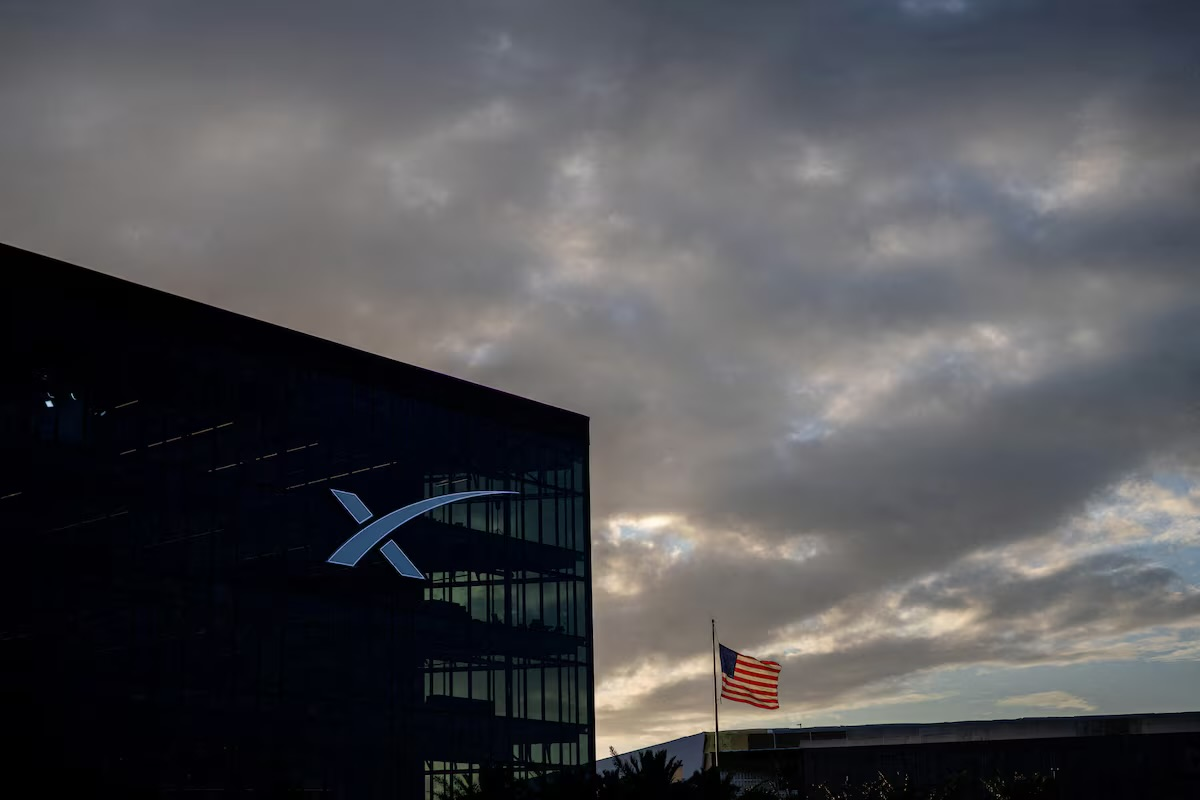
Oversubscribed nearly fourfold, Elon Musk’s SpaceX is attracting record investor interest despite market turbulence and a sharp tech selloff.
MARKET INSIDER – At a time when global markets are grappling with volatility, rising geopolitical risks, and a deep correction in technology assets, investors appear united behind one bet: SpaceX. Elon Musk’s aerospace and satellite giant has reportedly attracted more than $250 billion in investor demand ahead of its highly anticipated initial public offering, nearly four times the $75 billion the company aims to raise, positioning it for what could become the largest IPO in history.
The extraordinary demand underscores a growing belief among institutional investors that SpaceX is no longer merely a rocket company. Instead, many view it as a rare convergence of aerospace, telecommunications, artificial intelligence, and infrastructure—a combination that could define the next era of global economic growth.
According to people familiar with the offering, the IPO is currently running at an oversubscription rate of between three-and-a-half and four times the planned deal size. Long-term institutional investors have reportedly submitted substantial orders, while Musk himself briefly joined virtual meetings with prospective investors during the ongoing roadshow. SpaceX President Gwynne Shotwell and Chief Financial Officer Bret Johnsen have also been actively courting major investors alongside Morgan Stanley, the lead underwriter.
What makes the enthusiasm particularly remarkable is the backdrop against which the offering is taking place. The Nasdaq has suffered its sharpest decline in more than a year, while Bitcoin remains significantly below its January peak. Some analysts have even speculated that investors are liquidating positions across public markets to free up capital for SpaceX shares—a rare phenomenon that highlights the scale of interest surrounding the company.
In investor presentations, SpaceX has emphasized two dominant growth engines: its market-leading launch business and its rapidly expanding Starlink satellite internet network. The company claims it has been responsible for the majority of mass sent into orbit globally over the past three years, giving it a competitive advantage few rivals can match. More importantly, SpaceX is positioning itself as a critical player in the race to build the infrastructure required for the AI economy.
The company has outlined an ambitious vision centered on a potential $23 trillion artificial intelligence opportunity, arguing that Earth-based energy and computing constraints will eventually limit AI development. SpaceX believes its launch capabilities could enable future data centers and computing infrastructure to be deployed in space, bypassing regulatory, land, and power limitations that increasingly challenge large-scale projects on Earth. The thesis taps directly into one of the biggest concerns facing the technology industry today: whether sufficient computing power can be built quickly enough to support the next wave of AI innovation.
SpaceX also continues to highlight Starlink’s broader social and economic impact, arguing that satellite connectivity can help bridge the digital divide for billions of people still lacking reliable internet access. In doing so, the company presents itself not only as a commercial enterprise but also as a platform with global strategic significance.
Whether SpaceX ultimately justifies its valuation remains one of the most important questions facing investors. Yet the scale of demand suggests markets are increasingly willing to place trillion-dollar bets on companies that control critical infrastructure rather than simply software. If the last decade belonged to cloud computing, the next may belong to the firms building the physical foundations of AI—and investors appear convinced that SpaceX intends to be at the center of that future.
