
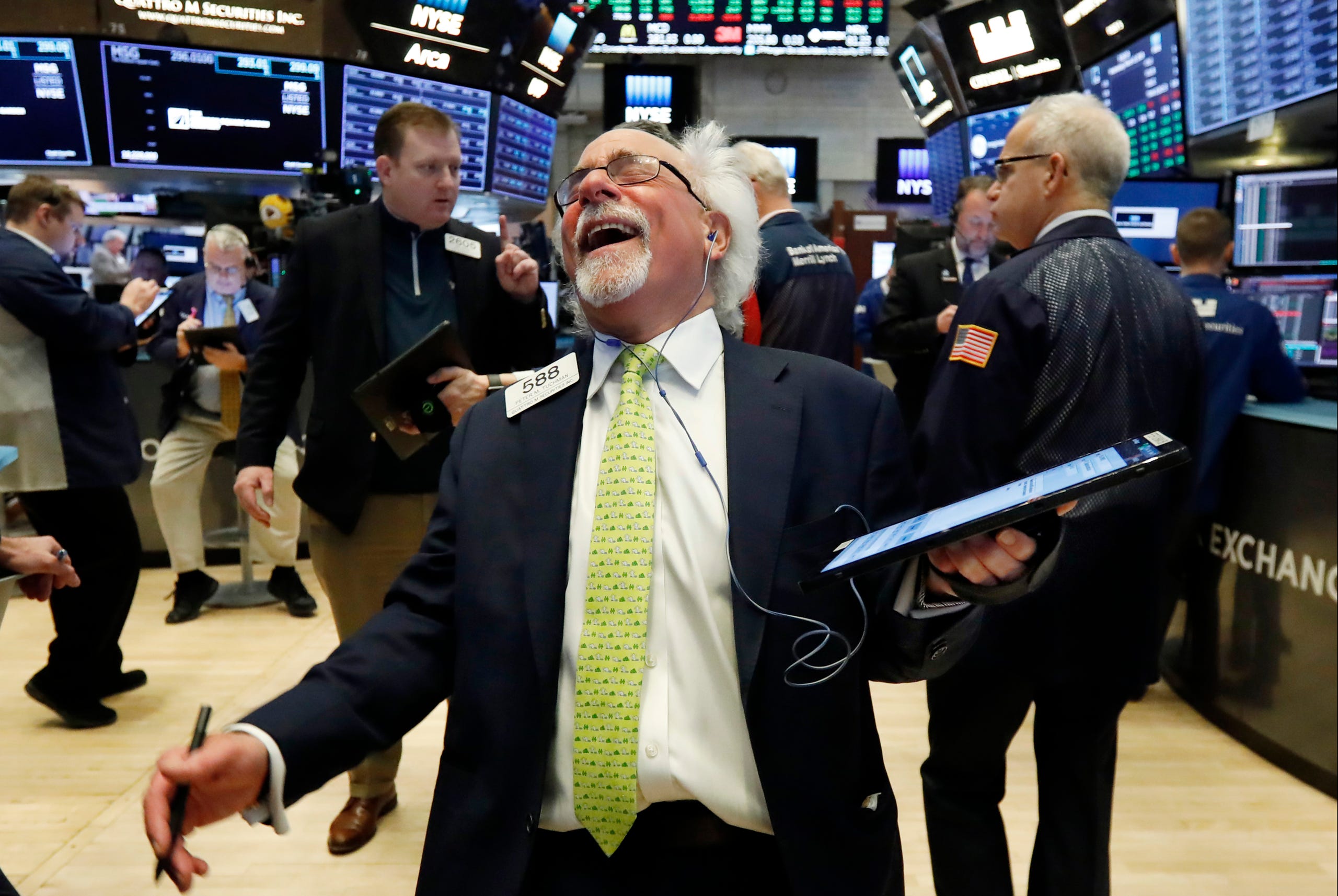
Dow Jumps 900 Points While Markets Bet on Lower Geopolitical Risk and a New AI-Fueled Rally
MARKET INSIDER – Global markets staged a powerful relief rally on Thursday after U.S. President Donald Trump announced that Washington had canceled planned military strikes against Iran and was close to finalizing an agreement that would prevent Tehran from obtaining a nuclear weapon. The sudden shift from potential conflict to diplomacy sent U.S. stocks sharply higher and oil prices tumbling, underscoring how quickly geopolitical tensions can reshape investor sentiment across global markets.
The rally highlighted a broader theme dominating financial markets in 2026: investors remain willing to look past geopolitical shocks as long as economic growth, artificial intelligence investment, and corporate earnings continue to support risk assets. With fears of a major Middle East escalation easing, traders rushed back into technology and semiconductor stocks, driving one of the strongest sessions on Wall Street this month.
The Dow Jones Industrial Average surged nearly 930 points, or 1.86%, to close at 50,848.75. The S&P 500 gained 1.75%, while the Nasdaq Composite climbed 2.54%, led by a sharp rebound in semiconductor shares. The turnaround followed Trump’s announcement that the United States had canceled strikes that were reportedly planned for Thursday evening and was preparing to sign a deal with Iran in the near future.
“We have a deal that Iran will never have a nuclear weapon,” Trump told reporters at the White House, adding that negotiations were in their final stages and a formal signing could happen soon. The comments marked a dramatic reversal from earlier statements in which the president warned that the U.S. would attack Iran “very hard” and potentially assume control of key Iranian oil infrastructure.
Energy markets reacted immediately. U.S. benchmark West Texas Intermediate crude fell more than 2.5% to settle below $88 per barrel, while Brent crude dropped nearly 3% to around $90. Traders interpreted the diplomatic breakthrough as reducing the risk of supply disruptions in one of the world’s most strategically important energy-producing regions. Lower oil prices also helped ease concerns that rising energy costs could reignite inflation pressures across major economies.
The biggest winners on Wall Street were semiconductor companies, as investors returned to the AI trade that has powered markets for much of the past two years. Shares of Micron Technology, Advanced Micro Devices, and Intel rallied sharply, helping the iShares Semiconductor ETF jump more than 8%. Intel received an additional boost after Bank of America upgraded the stock to “Buy,” fueling renewed optimism about the company’s turnaround prospects.
Investor enthusiasm is also building ahead of SpaceX’s highly anticipated public market debut, expected to become the largest IPO in history with an estimated valuation of approximately $1.8 trillion. Many analysts view the offering as another milestone in the accelerating global AI infrastructure boom, which continues to drive unprecedented spending on chips, data centers, cloud computing, and advanced software systems.
Economic data provided further support for the rally. While producer prices rose 1.1% in May, exceeding expectations, core inflation remained relatively contained. That reinforced the view that higher oil prices have not yet significantly filtered through to broader consumer and business costs, allowing investors to focus on growth opportunities rather than inflation risks.
Yet beneath Thursday’s optimism lies a larger question for global investors: has the market become too comfortable with geopolitical risk? The speed with which Wall Street shifted from pricing in military escalation to celebrating a diplomatic breakthrough suggests that markets increasingly view geopolitical crises as temporary trading events rather than long-term economic threats. Whether that confidence proves justified may determine not only the next move in oil prices, but also the sustainability of the AI-driven bull market that continues to power global equities.
