
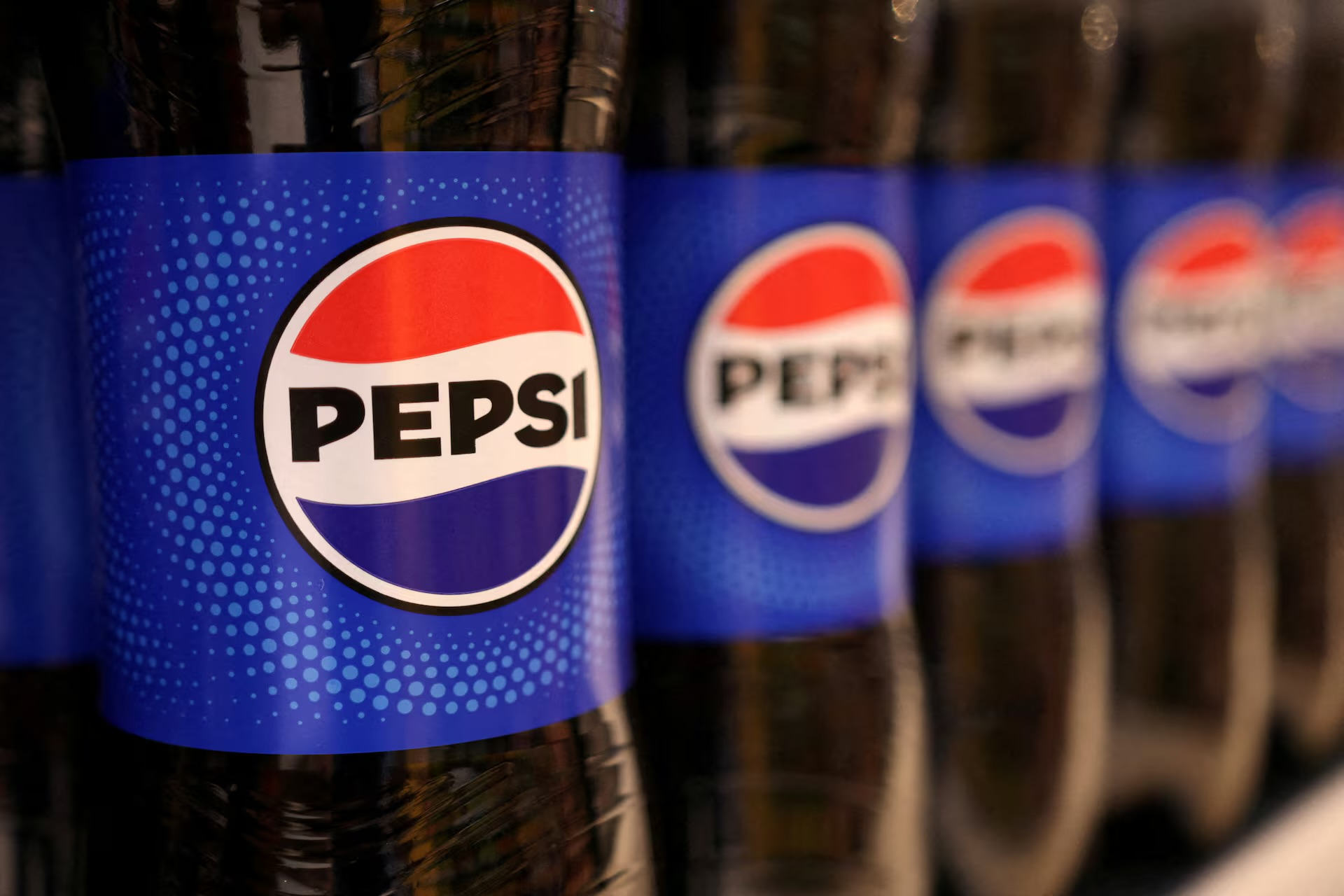
Global demand stays resilient, but weaker North American sales highlight mounting pressure from inflation and cautious consumer behavior.
MARKET INSIDER – PepsiCo delivered a mixed set of quarterly results, underscoring a growing divide between resilient international demand and increasingly cautious consumer spending in the United States. While the food and beverage giant exceeded revenue expectations, earnings came in just below Wall Street forecasts as inflation-driven budget pressures continued to weigh on its core North American business.
The results offer another signal that even the world’s largest consumer brands are facing a more price-sensitive customer. With elevated fuel costs, persistent inflation, and higher household expenses squeezing disposable income, investors are watching closely to see whether consumer staples companies can maintain growth without sacrificing margins or market share.
PepsiCo reported adjusted earnings of $2.20 per share, narrowly missing analysts’ expectations of $2.21, while quarterly revenue climbed 6.4% to $24.18 billion, ahead of the $23.95 billion consensus estimate. Net income attributable to shareholders rose sharply to $2.98 billion, compared with $1.26 billion a year earlier, supported by lower restructuring-related impacts and continued international momentum. Organic revenue, which excludes acquisitions, divestitures, and currency fluctuations, increased 2.4%, reflecting steady underlying demand.
Chief Executive Ramon Laguarta acknowledged that performance in the United States softened as consumers became increasingly selective with their spending. “Results were tempered in the quarter as U.S. food and beverage category performance moderated with consumer budgets tightening due to rising inflationary pressures,” he said in prepared remarks. The quarter coincided with heightened geopolitical tensions following the U.S.-Iran conflict, which sent global oil prices swinging and pushed the U.S. national average gasoline price to $4.56 per gallon in late May, increasing pressure on household budgets.
The contrast between PepsiCo’s domestic and international operations was striking. Global food volumes rose 3%, while beverage volumes increased 2%, demonstrating healthy demand across overseas markets. In North America, however, the company’s food division posted flat volume growth, while beverage volumes declined 4%, extending a slowdown that has persisted for more than two years as consumers react to higher prices.
To regain market share, PepsiCo has begun rolling back prices on several flagship snack brands, including Lay’s, Doritos, Tostitos, and Cheetos, with discounts reaching as much as 15%. The company is also refreshing the branding of iconic products such as Gatorade and Lay’s in an effort to reconnect with consumers and stimulate demand without relying solely on price increases.
Despite near-term challenges, PepsiCo maintained its full-year outlook, projecting 2% to 4% organic revenue growthand 4% to 6% growth in core constant-currency earnings per share. The decision suggests management remains confident that international expansion, brand strength, and pricing discipline will offset ongoing weakness in North America.
For global investors, PepsiCo’s latest results reinforce a broader trend emerging across the consumer goods sector: multinational companies are increasingly relying on international markets to fuel growth while navigating softer demand in developed economies. The next battleground may not be pricing power alone—but which global brands can successfully balance affordability, innovation, and premium positioning as consumers worldwide become more value-conscious.
