
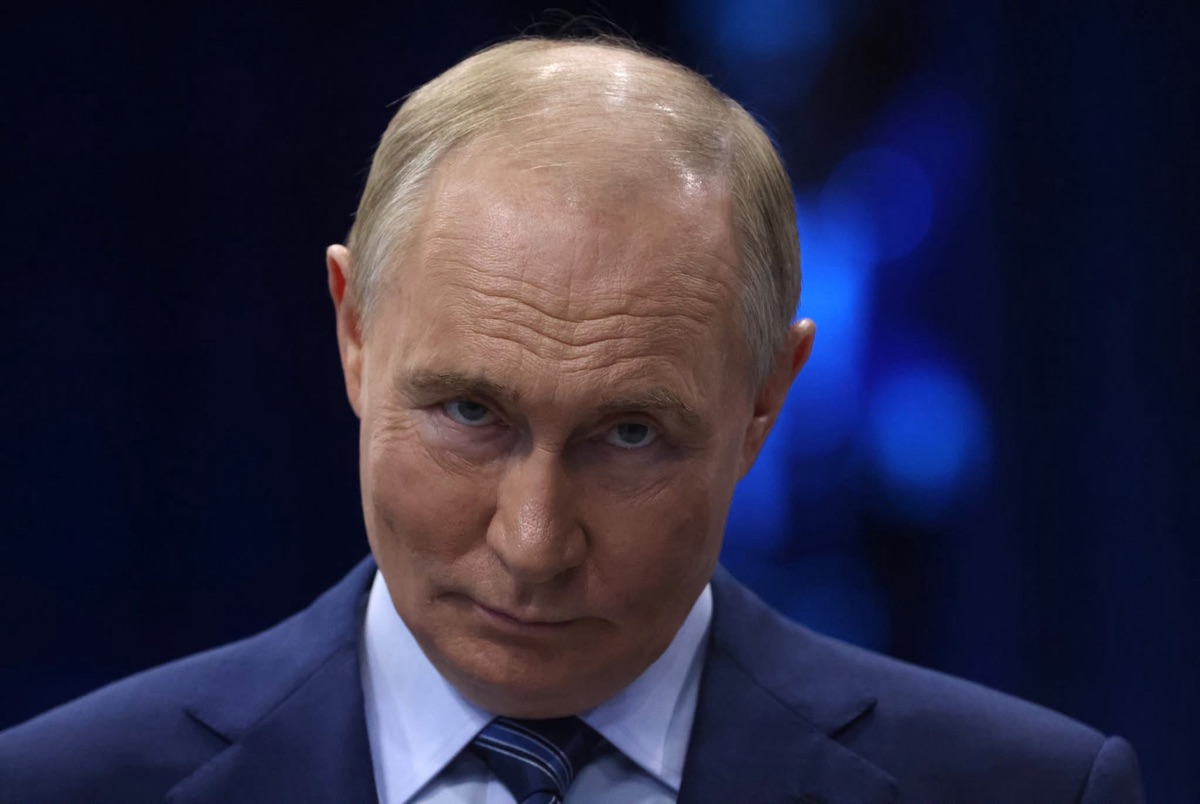
Russia’s quarter-century under Vladimir Putin highlights a growing clash between political continuity and democratic turnover
MARKET INSIDER – At a time when governments across the Western world are changing leaders with increasing frequency, one political figure continues to defy the trend. More than 25 years after first entering the Kremlin, Vladimir Putin remains Russia’s dominant leader, having outlasted six U.S. presidents, eight British prime ministers, four French presidents, and four German chancellors. The contrast is more than a historical curiosity—it reflects a widening divide in how major powers govern, compete, and pursue long-term strategic objectives.
For investors, policymakers, and business leaders, the implications stretch far beyond Russia. As geopolitical competition intensifies, the world is increasingly defined by two competing governance models: one built around regular elections, leadership turnover, and institutional checks; the other centered on continuity, centralized decision-making, and long-term strategic planning. The outcome of that divergence could shape global markets, energy security, defense spending, and international alliances for decades.
When Putin first assumed power in 1999, the geopolitical landscape looked dramatically different. The White House was occupied by Bill Clinton, the United Kingdom was led by Tony Blair, France by Jacques Chirac, and Germany by Gerhard Schröder. Since then, Western democracies have experienced repeated political transitions driven by elections, shifting voter priorities, economic cycles, and changing public sentiment.
The United States alone has moved through the administrations of Bill Clinton, George W. Bush, Barack Obama, Donald Trump, Joe Biden, and now a second Trump presidency. Britain has experienced even greater political turnover, cycling through Tony Blair, Gordon Brown, David Cameron, Theresa May, Boris Johnson, Liz Truss, Rishi Sunak, and Keir Starmer. Germany has transitioned from Schröder to Angela Merkel, Olaf Scholz, and Friedrich Merz, while France has been led successively by Chirac, Nicolas Sarkozy, François Hollande, and Emmanuel Macron.
Supporters of Russia’s model argue that long-term leadership provides strategic consistency, enabling sustained execution of national priorities in defense, energy, infrastructure, and foreign policy. They contend that stability allows governments to pursue multi-decade objectives without the disruptions often associated with electoral cycles and shifting political coalitions.
Critics, however, argue that concentrated power carries significant risks. They point to concerns over institutional flexibility, accountability, innovation, and succession planning. In their view, democratic systems may appear less efficient in the short term, but leadership rotation and competitive politics help societies adapt more effectively to changing economic and geopolitical realities.
What makes Putin’s tenure especially significant is not simply its length, but what it reveals about a broader transformation in global governance. As geopolitical fragmentation accelerates and major powers increasingly prioritize security, economic resilience, and national interests, the debate between stability and accountability is becoming more central to international affairs.
The real question is no longer whether Vladimir Putin’s political longevity is extraordinary—it clearly is. The deeper question is which governance model will prove more effective in an era defined by technological disruption, economic competition, and geopolitical uncertainty. As nations navigate a rapidly changing world, the answer may shape the next quarter-century of global power just as profoundly as any election, conflict, or economic cycle.
