
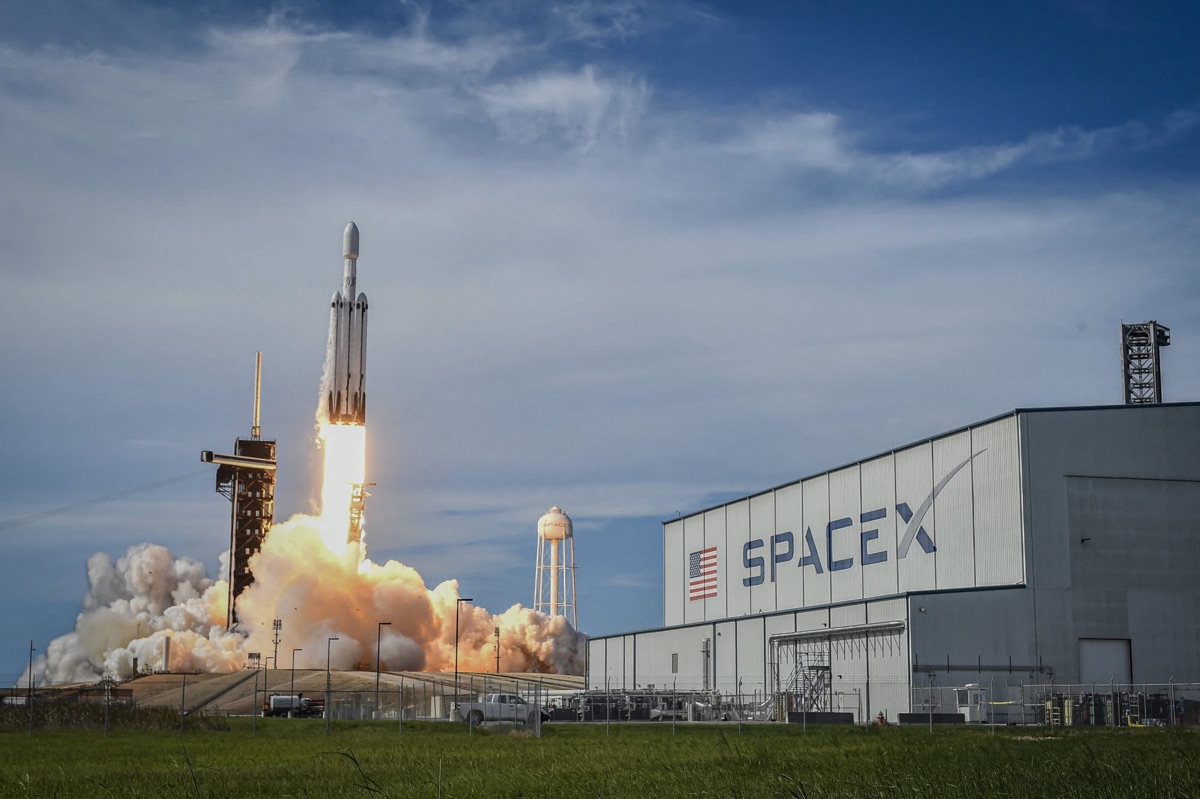
Elon Musk’s space giant targets a record-breaking $75 billion raise, eclipsing Tesla and reshaping the future of AI, aerospace, and public investing.
MARKET INSIDER – Wall Street is preparing for what could become the most consequential public offering of the decade. Elon Musk’s SpaceX has set a fixed IPO price of $135 per share, targeting a staggering $1.77 trillion valuation and a record-breaking $75 billion fundraising effort. If successful, the listing would instantly rank SpaceX among America’s largest publicly traded companies and mark a turning point in how investors access the rapidly converging worlds of artificial intelligence, space infrastructure, and advanced energy systems.
The offering is about far more than rockets. It represents the public market debut of a company that sits at the intersection of some of the world’s most strategic industries: satellite communications, defense technology, AI computing, energy storage, and space exploration. For global investors searching for the next generation of trillion-dollar growth stories, SpaceX may become the ultimate test case.
SpaceX plans to sell 555.6 million shares, with underwriters holding an option to purchase an additional 83.3 million shares. The transaction would generate roughly $75 billion in proceeds, with a potential increase of another $11.2 billion if overallotment options are exercised. Led by Goldman Sachs, alongside Morgan Stanley, Bank of America, Citigroup, and JPMorgan Chase, the IPO is expected to debut on the Nasdaq under the ticker symbol “SPCX” on June 12.
What makes this offering particularly unusual is SpaceX’s decision to bypass the traditional IPO pricing range and instead launch the roadshow with a fixed share price. The move follows extensive pre-marketing discussions with institutional investors and suggests confidence in demand levels rarely seen in public market history. At the proposed valuation, SpaceX would surpass the market capitalization of many iconic American corporations and move ahead of Tesla, which currently commands a valuation of approximately $1.6 trillion.
The IPO also highlights the increasingly interconnected ecosystem Musk has built across his businesses. Recent regulatory filings revealed that SpaceX’s AI division, xAI, purchased $269 million worth of Tesla Megapack energy storage systems in April, adding to hundreds of millions of dollars in previous transactions between the companies. Tesla itself owns nearly 19 million SpaceX shares, valued at more than $2.5 billion at the IPO price. These relationships have fueled growing speculation that Musk may eventually pursue a broader integration of his corporate empire, combining SpaceX, Tesla, xAI, and related ventures into a unified technology powerhouse.
The timing is equally significant. SpaceX’s market debut arrives as the global AI race intensifies and private technology valuations reach unprecedented levels. Rivals including Anthropic and OpenAI are also moving toward public offerings, creating what could become the largest wave of AI-related IPOs since the internet boom. Investors are increasingly seeking exposure not only to software and AI models but also to the physical infrastructure that powers them—satellites, data networks, energy systems, and advanced manufacturing capabilities.
If SpaceX successfully achieves its target valuation, the implications will extend far beyond Silicon Valley. The offering could reset valuation benchmarks for private technology companies worldwide, accelerate the commercialization of space-based industries, and deepen investor appetite for companies that combine AI, energy, communications, and national security capabilities under a single corporate umbrella.
The bigger question may not be whether SpaceX can justify a $1.77 trillion valuation today, but whether investors are witnessing the emergence of a new category of company altogether—one that blurs the lines between aerospace contractor, AI platform, telecom operator, energy provider, and global infrastructure giant. If that vision materializes, SpaceX’s IPO may eventually be remembered not as the culmination of Musk’s ambitions, but as the beginning of an entirely new era for public markets.
