
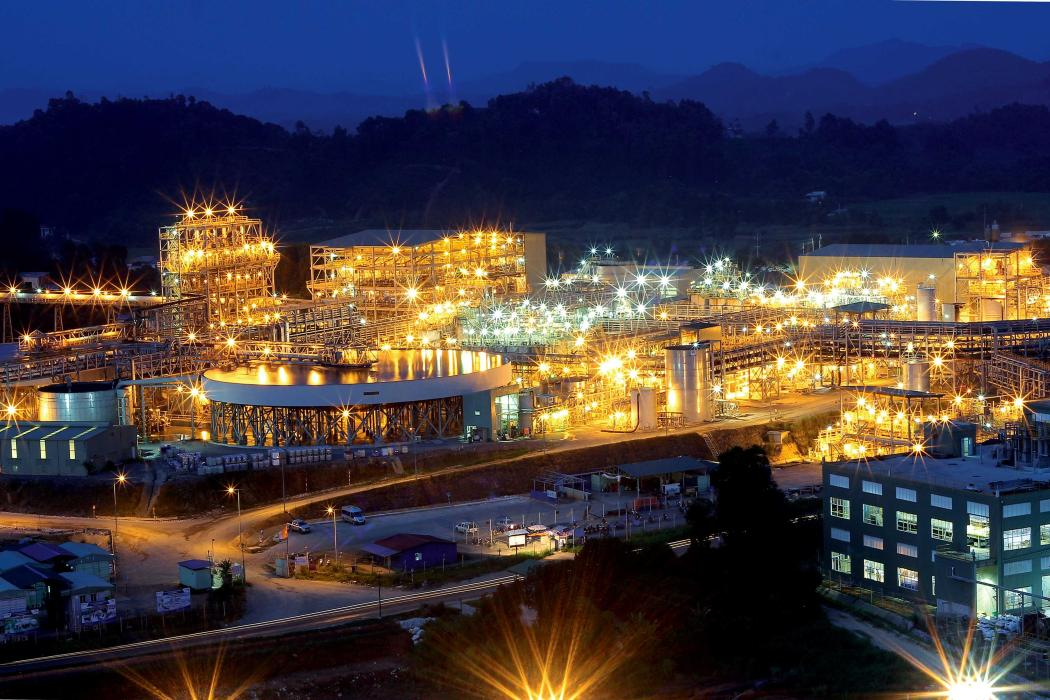
With the world’s third-largest tungsten reserves and advanced refining capabilities, Vietnam is emerging as a critical hub for semiconductor, defense, and AI industries.
MARKET INSIDER – As the global race for artificial intelligence, semiconductors, and defense technologies accelerates, one of the world’s most strategically important industrial metals is quietly moving to the center of geopolitical and supply chain discussions. While rare earths often dominate headlines, tungsten may prove just as critical—and Vietnam is increasingly positioned as one of the biggest beneficiaries.
Vietnam holds the world’s third-largest tungsten reserves, behind only China and Russia, according to international geological estimates. More importantly, the country is no longer simply a resource supplier. It is rapidly establishing itself as a high-value processing hub at a time when governments and manufacturers are racing to diversify critical mineral supply chains away from excessive dependence on China.
Tungsten is prized for having one of the highest melting points and greatest hardness of any naturally occurring metal, making it indispensable for semiconductor manufacturing, aerospace, defense systems, energy infrastructure, industrial tooling, and advanced electronics. As AI adoption fuels unprecedented demand for data centers, high-performance chips, and next-generation computing infrastructure, global consumption of tungsten has accelerated while supply remains increasingly constrained.
That imbalance has triggered an extraordinary surge in prices. Ammonium paratungstate (APT)—the benchmark intermediate product used in tungsten processing—was trading around US$330 per metric ton unit (mtu) at the end of 2024. By late 2025, prices had climbed above US$800/mtu before reportedly surpassing US$3,000/mtu in early 2026. Market participants attribute the sharp rally largely to tightening Chinese export controls alongside rapidly expanding demand from AI, semiconductor manufacturing, and defense industries, leading some analysts to describe the market as entering a new commodity supercycle.
Vietnam’s strategic position extends beyond its mineral reserves. In a notable sign of growing international confidence, South Korean producer GB Innovation (GBI) recently agreed to ship domestically mined tungsten ore to Vietnam for processing under a partnership with Masan High-Tech Materials. Rather than refining the ore domestically, GBI will utilize Masan’s processing facilities in Vietnam to produce higher-value tungsten products—a move that underscores the country’s expanding role in global critical minerals processing.
The partnership also reflects a broader structural shift. While several countries possess commercially viable tungsten deposits, few have developed large-scale refining capabilities outside China. Masan High-Tech Materials, which operates Vietnam’s Nui Phao tungsten mine, has become one of the world’s largest integrated tungsten mining and processing platforms outside the Chinese market, giving it a potentially strategic advantage as manufacturers seek more resilient supply chains.
The company is positioning itself to capitalize on the favorable market backdrop. At its 2026 annual shareholders’ meeting, Masan High-Tech Materials projected revenue of approximately VND20.3 trillion—nearly triple the previous year’s level—while forecasting net profit between VND1.7 trillion and VND2.5 trillion, representing a dramatic recovery from 2025.
Meanwhile, industry optimism appears to be extending well beyond mining. According to Hwang, market demand has become so strong that nearby hotels are reportedly “fully booked” as global cloud computing providers and semiconductor companies line up to secure long-term supply agreements, highlighting the growing competition for strategic industrial capacity tied to the AI boom.
For investors, the story extends far beyond one company or one commodity. As governments prioritize critical mineral security alongside AI infrastructure and defense manufacturing, Vietnam’s combination of abundant tungsten reserves and advanced refining expertise could transform the country from a regional mining player into one of the world’s most strategically important links in the next generation of industrial supply chains. If today’s AI boom evolves into a decade-long investment cycle, tungsten—not rare earths—may ultimately become Vietnam’s most valuable strategic resource.
