
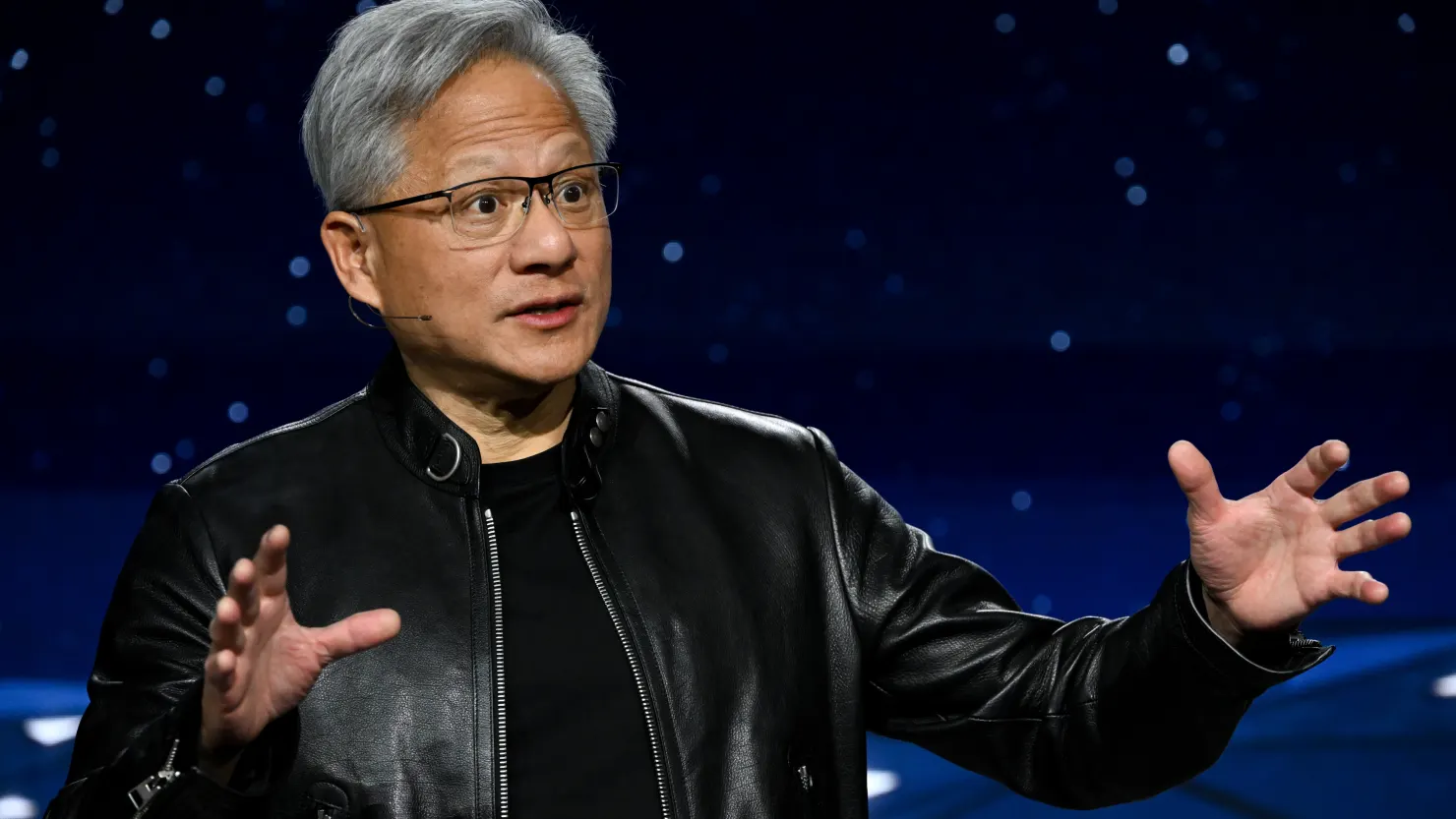
Jensen Huang expands Nvidia’s physical AI ecosystem as Japan accelerates its push to become a global leader in intelligent manufacturing.
MARKET INSIDER – Nvidia is doubling down on Japan as the next battleground for artificial intelligence, unveiling a new AI model designed for robots while forging alliances with some of the country’s biggest industrial and pharmaceutical companies. The move underscores a broader shift in the AI race—from chatbots and language models toward “physical AI,” where intelligent machines interact with the real world, potentially reshaping global manufacturing, healthcare, and robotics.
The announcement also highlights Japan’s growing importance in the global AI supply chain. As governments and corporations pour billions into AI infrastructure, Nvidia is positioning itself at the center of an ecosystem that extends far beyond semiconductor sales. Instead, the company aims to become the foundational platform powering next-generation factories, autonomous robots, and AI-driven scientific discovery.
During a two-day visit to Tokyo, Nvidia CEO Jensen Huang introduced Cosmos 3 Edge, a new world model designed to help robots and vision AI agents perceive, understand, and navigate physical environments in real time. Unlike traditional large language models that primarily process text, world models integrate multiple forms of sensory input, enabling machines to interact more naturally with the physical world.
“The next frontier of AI is in the physical world, and this is a once-in-a-generation opportunity for Japan,” Huang said. “Japan invented modern manufacturing. Now, it has the opportunity to reinvent it for the age of intelligent industries.”
To accelerate that vision, Nvidia is building a broad coalition of Japanese industrial leaders, including Fujitsu, Hitachi, and Kawasaki Heavy Industries, creating an ecosystem that spans robotics, automation, advanced manufacturing, and AI infrastructure. The initiative comes as Japan ramps up national AI investment, following Microsoft’s $10 billion commitment to expand cloud and cybersecurity capabilities, while SoftBank continues backing large-scale AI projects alongside partners including Microsoft and Sakura Internet.
The strategy extends well beyond manufacturing. Nvidia is also strengthening its presence in healthcare and biotechnology through Tokyo-1, Japan’s AI-powered drug discovery consortium operated by Xeureka, a subsidiary of Mitsui. Powered by Nvidia’s BioNeMo Agent Toolkit, the platform is enabling pharmaceutical leaders including Astellas Pharma, Daiichi Sankyo, and Ono Pharmaceutical to accelerate AI-assisted drug discovery and biomedical research, illustrating how agentic AI is rapidly moving from experimental technology into commercial scientific applications.
Japan’s AI market is projected to reach nearly $28 billion by 2029, supported by government policies encouraging AI adoption and strong demand for international technology partnerships. For Nvidia, whose chips already underpin much of the world’s AI infrastructure, Japan offers something even more valuable than another major customer: a proving ground for the next generation of intelligent industries where AI is embedded into factories, hospitals, laboratories, and autonomous machines.
As the AI race enters its next phase, the winners may no longer be determined solely by who builds the smartest chatbot. Instead, the companies that successfully integrate AI into the physical economy—powering robots, manufacturing, healthcare, and scientific innovation—could define the next trillion-dollar technology cycle. Nvidia’s latest push into Japan suggests that the future of AI may be built not just in data centers, but on factory floors and in laboratories around the world.
