
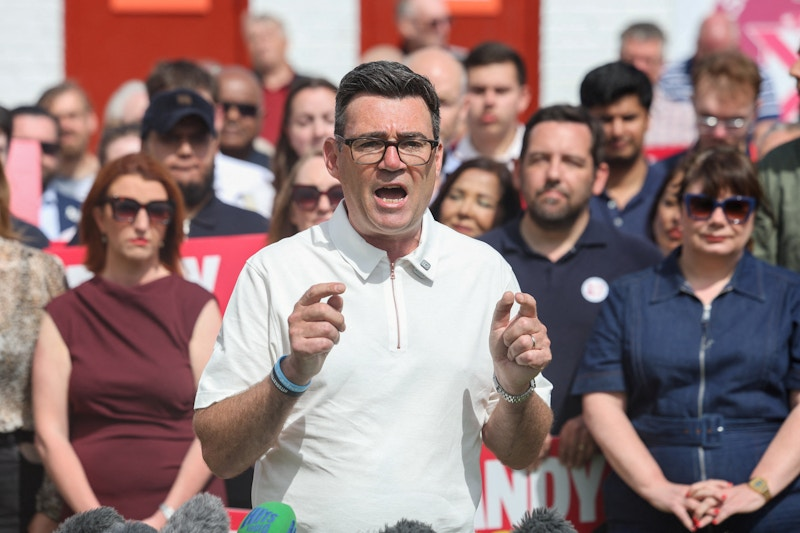
Britain’s incoming leader promises political stability and a rebalancing of economic power, while investors await his cabinet choices and signals on taxation, spending and fiscal discipline.
MARKET INSIDER — Andy Burnham was set to become Britain’s prime minister on July 20, 2026, succeeding Keir Starmer and becoming the country’s seventh leader in just over a decade. Burnham, 56, was due to be invited by King Charles III to form a government after winning the leadership of the governing Labour Party on July 17. He has pledged “more stable and responsible politics,” but investors are awaiting his choice of chancellor and details of his plans for public spending, taxation, regional devolution and struggling utilities.
Key takeaways
- Labour confirmed Burnham as its leader on July 17 after he secured support from 379 Labour members of parliament and 23 affiliated organisations.
- Sterling rose 0.13% to $1.3475 during early trading on July 20, while the 10-year UK government bond yield increased 1.9 basis points to 4.9724%.
- Burnham wants to devolve power from London, promote domestic industry and address living costs, but has yet to announce his cabinet or a detailed fiscal programme.
How will Andy Burnham become UK prime minister?
The transfer of power was scheduled to begin with Starmer delivering a final address outside 10 Downing Street before formally submitting his resignation to King Charles III at Buckingham Palace.
Burnham would then meet the monarch and be invited to form a government. The process does not require an immediate general election because Labour remains the governing party with a parliamentary majority.
Burnham’s route to Downing Street was secured on July 17, when Labour formally announced him as its new leader. The party said he received backing from 379 Labour MPs and 23 affiliated organisations.
His appointment follows a turbulent period in British politics. Burnham will be the seventh UK prime minister in just over a decade, according to Reuters and the Associated Press, underscoring the challenge behind his promise to restore stability.
Who is Andy Burnham?
Born near Liverpool, Burnham studied English at the University of Cambridge before entering professional politics as a researcher and parliamentary adviser.
He was elected to parliament in 2001 and later served in ministerial positions under Labour prime ministers Tony Blair and Gordon Brown. His cabinet roles included health secretary, culture secretary and chief secretary to the Treasury.
Burnham unsuccessfully sought the Labour leadership in 2010 and 2015. After his second defeat, he moved away from Westminster politics and won election as mayor of Greater Manchester in 2017.
His national profile rose during the COVID-19 pandemic. In 2020, he challenged the Conservative government led by Boris Johnson over financial support accompanying tighter restrictions on Greater Manchester. The dispute strengthened Burnham’s standing in northern England and helped establish his “King of the North” nickname.
After nine years as mayor, Burnham returned to parliament in June 2026. He represents Makerfield, a constituency in northwestern England.
What policies is Burnham likely to prioritise?
Burnham has said he wants to “rewire” Britain by shifting political and economic power away from Whitehall and towards regional governments.
His proposals include giving local leaders greater authority over housing, transport, education, skills and economic development. He has also proposed establishing a “Number 10 North” in Manchester to support decentralisation and regional regeneration.
Britain raises only about 6% of tax revenue below the national-government level, compared with 20% in France and roughly half in Germany and the United States, Reuters reported, citing the Organisation for Economic Co-operation and Development.
Burnham argues that greater local control could allow regions to design investment and public-service policies around their own economic needs. Critics, however, warn that devolution requires robust financial accountability and administrative capacity.
His economic agenda also includes rebuilding domestic manufacturing in areas such as steel, defence, energy, food and agriculture. Burnham has linked higher defence investment to reindustrialisation and reducing reliance on overseas suppliers.
He has advocated a stronger emphasis on technical education and apprenticeships, alongside greater public control over essential services such as water, housing, transport and energy.
Those broad commitments do not yet constitute a fully costed fiscal programme. Investors will need details on funding, taxation and the extent to which spending plans comply with Britain’s existing fiscal rules.
How did UK markets react to the leadership transition?
The initial market response was restrained. The pound rose 0.13% against a slightly weaker US dollar to $1.3475 on July 20 and strengthened modestly against the euro, Reuters reported.
The yield on 10-year British government bonds, known as gilts, increased 1.9 basis points to 4.9724%, while the two-year yield was broadly unchanged at 4.3772%. Bond yields move inversely to prices.
Sterling’s limited move suggested that investors had largely anticipated the transfer of power. Market attention was focused instead on Burnham’s choice of chancellor of the Exchequer, Britain’s finance minister.
Reports that Home Secretary Shabana Mahmood could receive the Treasury role helped ease concerns that the incoming administration might pursue a sharp increase in borrowing and spending. Burnham had not confirmed the appointment at the time of publication and urged Labour members to disregard cabinet speculation.
The distinction matters for investors. A chancellor viewed as committed to Britain’s fiscal rules could reassure gilt and currency markets, while an unexpectedly expansionary programme could raise concerns about borrowing, inflation and interest rates.
What does Burnham’s government mean for businesses and investors?
Burnham inherits a weak-growth economy, pressure on household finances and poorly performing public services. His attempt to address those problems through regional investment and public-sector reform could affect infrastructure, construction, transport, utilities, defence and domestic manufacturing.
Water companies may face particularly close scrutiny. Thames Water, Britain’s largest water provider, is heavily indebted and has faced criticism over sewage leaks. Deputy Labour leader Lucy Powell said the company could be placed under “special measures,” which would mean operating under government control.
The incoming government’s decisions on North Sea oil and gas development will also matter to energy companies and investors assessing the future of Britain’s energy transition.
For international investors, the central question is whether Burnham can pursue economic reform without weakening fiscal credibility. Britain’s experience with the short-lived government of Liz Truss in 2022 demonstrated how quickly unfunded fiscal measures can disrupt sterling and government bonds.
What could Burnham’s leadership mean for Asia?
The immediate direct impact on Asian and emerging-market assets is likely to be limited. However, Britain remains a significant destination for Asian investment in finance, real estate, technology, energy and manufacturing.
A sustained programme of infrastructure investment and regional devolution could create opportunities outside London, particularly in northern English cities. Stronger support for domestic manufacturing could also generate new partnerships, although policies favouring local production may affect overseas suppliers.
Burnham has pledged continued British support for Ukraine and closer defence and security ties with European countries. He has said less about relations with China, India and Southeast Asia, leaving trade and foreign-investment policy among the areas requiring clarification.
Why it matters
Burnham’s elevation is more than a change in Labour’s leadership. It tests whether a former regional mayor can apply a decentralised model of government at the national level while preserving market confidence.
His political appeal rests partly on presenting himself as an alternative to Westminster’s established governing style and as a stronger opponent of Nigel Farage’s Reform UK, which has led opinion polls for months. Turning that appeal into higher growth and improved public services will require decisions that could have material consequences for taxes, public borrowing and regulated industries.
Outlook: What should investors watch next?
The first indicators will be Burnham’s cabinet appointments, especially the chancellor, business secretary and energy secretary. Investors should then assess any changes to fiscal rules, taxation and departmental spending, as well as policy decisions involving Thames Water and North Sea energy. Sterling and gilt yields will provide the clearest immediate measure of market confidence, while upcoming UK labour-market, inflation and retail-sales data will shape expectations for the Bank of England.
