
The election-linked proposal requires Congress and could worsen inflation, deficits and pressure on the Treasury market.
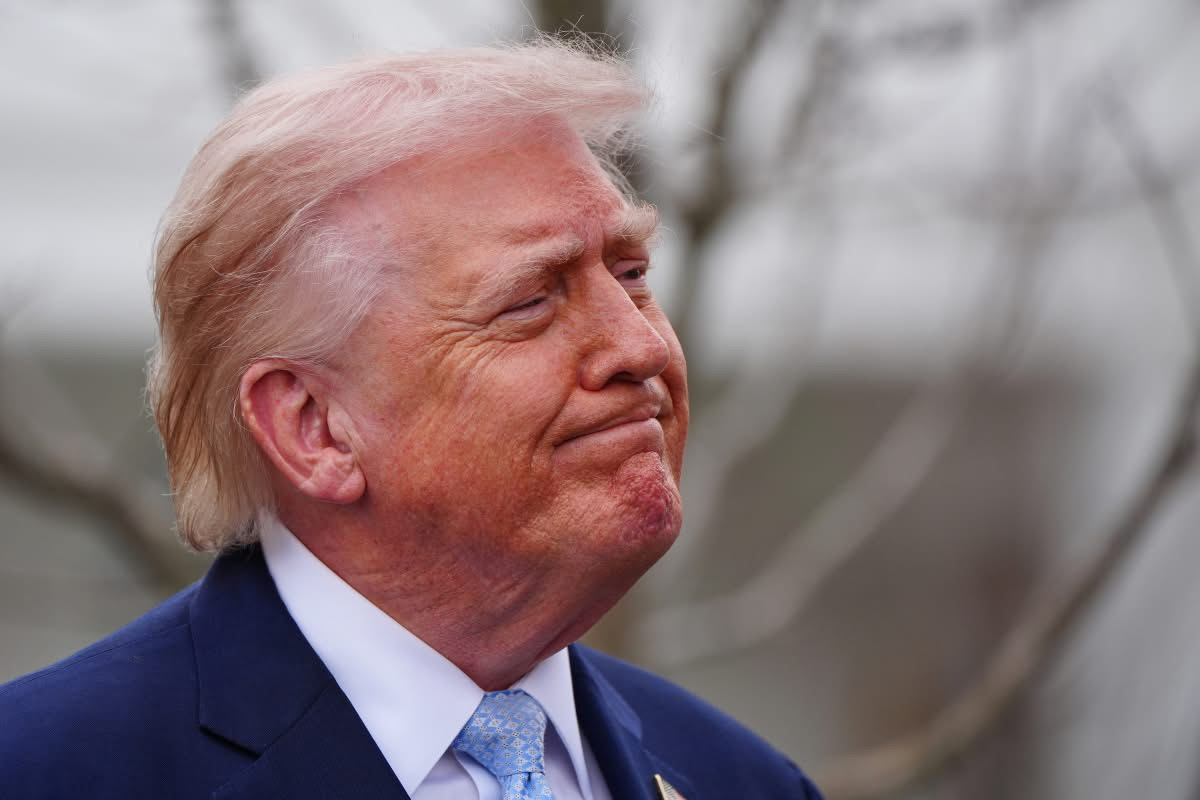
MARKET INSIDER — President Donald Trump has promised a $5,000 payment to every American adult if Republicans retain control of Congress in November, proposing a stimulus program that could cost approximately $1.35 trillion.
Trump provided few operational details and did not identify a sufficient funding source. Any nationwide payment would almost certainly require legislation and congressional appropriations, meaning a Republican victory would not automatically produce the checks.
The proposal could temporarily support consumer spending, but financing it through additional borrowing would expand the federal deficit, increase Treasury issuance and potentially intensify inflation just as oil prices and interest-rate expectations are already rising.
Key Highlights
- Trump promised a $5,000 “Trump Dividend” to American adults if Republicans retain both chambers of Congress.
- A universal payment to approximately 270 million adults would cost about $1.35 trillion before administrative expenses.
- The plan has no enacted funding mechanism and could raise inflation, Treasury yields and the likelihood of additional Federal Reserve tightening.
Trump puts himself at the center of the midterms
Trump announced the proposal during the Republican Party’s first dedicated midterm convention in Dallas.
“If the Republicans win, you win with us and you get $5,000,” he told supporters. “It will be called the Trump Dividend.”
He asked voters to behave as though his own name appeared on the ballot, warning that a Democratic victory would threaten border security, tax cuts, public safety and household wealth.
The November 3 election will determine control of the House of Representatives and part of the Senate. Retaining both chambers would give Republicans greater ability to pass tax, spending and regulatory legislation during the second half of Trump’s term.
The president’s nearly two-hour speech made him the central figure in the Republican campaign despite declining approval ratings and public dissatisfaction with living costs and the Iran war.
The strategy could mobilize Trump’s political base, but it also links vulnerable congressional candidates to the president’s most controversial policies and personal popularity.
Several Republicans facing competitive elections did not attend the convention, illustrating the party’s uncertainty over whether Trump will attract more supporters than opponents in closely contested states.
How much would the payments cost?
The total depends on eligibility.
Reuters estimated that the United States has approximately 270 million adults. Paying each of them $5,000 would cost:
270 million × $5,000 = $1.35 trillion
The original Vietnamese report used an estimate of 258.3 million adults, which would produce a slightly lower cost of approximately $1.29 trillion.
Neither estimate includes the administrative cost of identifying recipients, preventing duplicate payments and distributing the money.
A program restricted to adult citizens would cost less than one covering all adult residents. Excluding higher-income households would reduce the total further.
Trump did not specify an income threshold, citizenship test, tax-filing requirement or treatment of dependents. He also did not explain whether the payment would be taxable or whether recipients would need to spend it within the United States.
Vice President JD Vance subsequently suggested that wealthy Americans might not receive the dividend, appearing to narrow the president’s universal promise. He also identified tariff revenue as a potential funding source.
Until those details are established in legislation, $1.35 trillion is best understood as a high-level estimate rather than a finalized budget score.
Republican control would not make payment automatic
The president cannot independently authorize $1 trillion or more in new federal spending.
Congress controls appropriations under the U.S. Constitution. Lawmakers would need to pass legislation establishing eligibility, funding and the agencies responsible for administering the program.
Republican control of the House and Senate would make passage more possible, but not guaranteed.
Fiscal conservatives could object to the cost, while senators could demand income limits, tax offsets or spending reductions. Senate procedural rules may also require Republicans to use budget reconciliation unless the proposal receives sufficient bipartisan support.
The plan’s legal position is also uncertain because Trump explicitly connected the payment to an election outcome.
Legal specialists cited by the Associated Press said the proposal would not necessarily constitute bribery because the government payment is not conditioned on proving that an individual voted Republican. It remains a political promise of future legislation rather than a personal payment exchanged for a specific vote.
Nevertheless, election-law, appropriations and constitutional questions could arise depending on how the proposal is formally structured.
Tariffs would not cover the full bill
Vance’s suggestion that tariff revenue could finance the dividend does not resolve the arithmetic.
Even historically large tariff receipts would be unlikely to generate $1.35 trillion in readily available surplus funds.
Tariffs are federal taxes paid by companies importing goods into the United States. Some of their cost is absorbed by foreign suppliers, but much is passed to American businesses and consumers through higher prices.
Using tariff revenue for checks would therefore recycle part of an import tax back to households rather than create cost-free money.
The federal government is also already running an annual deficit of approximately $1.8 trillion. Tariff receipts currently help finance existing expenditure and do not sit in a separate account waiting to be distributed.
Unless Congress introduces equivalent spending cuts or other tax increases, most of the Trump Dividend would need to be funded through additional borrowing.
The proposal resembles an earlier plan for a $2,000 “tariff dividend” that did not receive congressional approval.
The inflation risk would depend on timing
A $5,000 payment would represent a substantial increase in household purchasing power.
The economic effect would depend on how quickly the money was distributed, which households received it and whether consumers spent or saved the funds.
Lower- and middle-income households generally spend a larger percentage of one-time payments, creating a stronger near-term boost to retail sales, travel, housing-related expenditure and debt repayment.
Businesses serving domestic consumers could benefit from higher revenue.
But if demand rises faster than the economy can supply goods and services, companies may increase prices. The effect would be especially strong if supply chains are already constrained or energy costs remain elevated.
The United States is currently experiencing renewed inflation pressure from oil above $100 a barrel, tariff-related import costs and a resilient labor market.
Adding more than $1 trillion of fiscal stimulus under those conditions would be materially different from issuing emergency payments during a recession.
Rather than offsetting lost income, the dividend could add demand to an economy already operating near capacity.
The Fed could offset part of the stimulus
Fiscal stimulus and monetary tightening can work against each other.
The dividend would increase disposable income and demand. The Federal Reserve might respond by raising interest rates further to prevent that demand from generating persistent inflation.
Markets already assign roughly a 60% probability to a quarter-point increase at the Fed’s September meeting. UBS expects two rate increases before the end of 2026.
A large new spending program could push rate expectations higher, particularly if it were not matched by tax increases or spending cuts.
That would reduce some of the dividend’s economic benefit.
Households might receive $5,000 but face higher mortgage, auto-loan and credit-card rates. Companies could gain additional sales while paying more to borrow and refinance debt.
The net effect would vary widely between households. Renters without significant debt could benefit more directly, while homebuyers and leveraged businesses could experience higher financing costs that outweigh the short-term stimulus.
Treasury markets would face additional supply
Financing a $1.35 trillion program through borrowing would require the Treasury to issue more bills, notes or bonds.
That increase would arrive as investors are already concerned about federal debt, persistent deficits and the quantity of government securities the market must absorb.
The 10-year Treasury yield has recently approached 5%, reaching its highest level since 2023. A $6 billion Treasury bond buyback failed to lower yields because its scale was small relative to the overall market and continuing issuance requirements.
The proposed dividend is more than 200 times the size of that buyback.
Not every dollar would necessarily be borrowed at once, and the maturity structure would matter. But a deficit-financed program would probably increase the term premium investors demand for holding longer-dated U.S. debt.
Higher Treasury yields would affect global markets by raising corporate borrowing costs, pressuring equity valuations and drawing capital toward dollar assets.
The proposal could therefore become market-relevant well before any checks are distributed if investors begin to believe that passage is likely.
Potential winners and losers
Consumer-facing companies would be the most direct potential beneficiaries.
Retailers, restaurants, travel providers, digital-commerce platforms and entertainment businesses could receive a temporary revenue boost as households spend part of the payment.
Banks and credit-card issuers might benefit if consumers repay balances, although stronger spending could also increase transaction volumes.
Bond-sensitive sectors would face a less favorable outcome. Real estate, utilities, infrastructure and highly valued technology companies could come under pressure if additional borrowing pushes yields higher.
Import-dependent retailers would face conflicting forces: stronger consumer demand but higher costs from the tariffs proposed as the dividend’s funding source.
Gold and Bitcoin could also receive support if investors interpret the program as evidence of fiscal expansion or dollar debasement. That reaction would not be guaranteed, since higher real interest rates can work against non-yielding assets.
The political objective is affordability
Trump’s proposal appears designed to address the economic issue most damaging to Republicans: the cost of living.
Higher fuel, food and housing expenses have weakened public confidence even though employment and headline economic activity remain resilient.
A direct payment is easy to communicate and provides a tangible benefit that tax deductions or regulatory changes may not deliver immediately.
But the proposal also creates a contradiction.
The administration argues that it is fighting inflation and protecting the dollar. A large deficit-financed transfer could increase both inflation and government borrowing, making those objectives harder to achieve.
The payment might improve household finances temporarily without addressing the structural causes of high living costs.
What investors should watch
The first question is whether the White House releases a formal plan specifying eligibility, funding and timing.
The second is whether Republican congressional leaders support the proposal. Their reaction will indicate whether it could become legislation or remain a campaign promise.
Investors should also watch whether the Congressional Budget Office or another independent body produces an official cost estimate.
Treasury yields will provide the clearest real-time measure of market concern. A further rise in long-term yields following detailed policy proposals would suggest investors expect higher deficits and inflation.
Finally, the election result alone will not determine whether payments occur. Passage would depend on congressional margins, internal Republican support and the method used to move the legislation through the Senate.
Trump’s $5,000 dividend could provide a powerful short-term boost to household spending. But without credible financing, the program would transfer much of its cost into federal debt, inflation risk and higher interest rates.
For voters, the promise is a check. For markets, it is potentially another $1.35 trillion fiscal commitment at a time when the cost of U.S. borrowing is already moving higher.
