
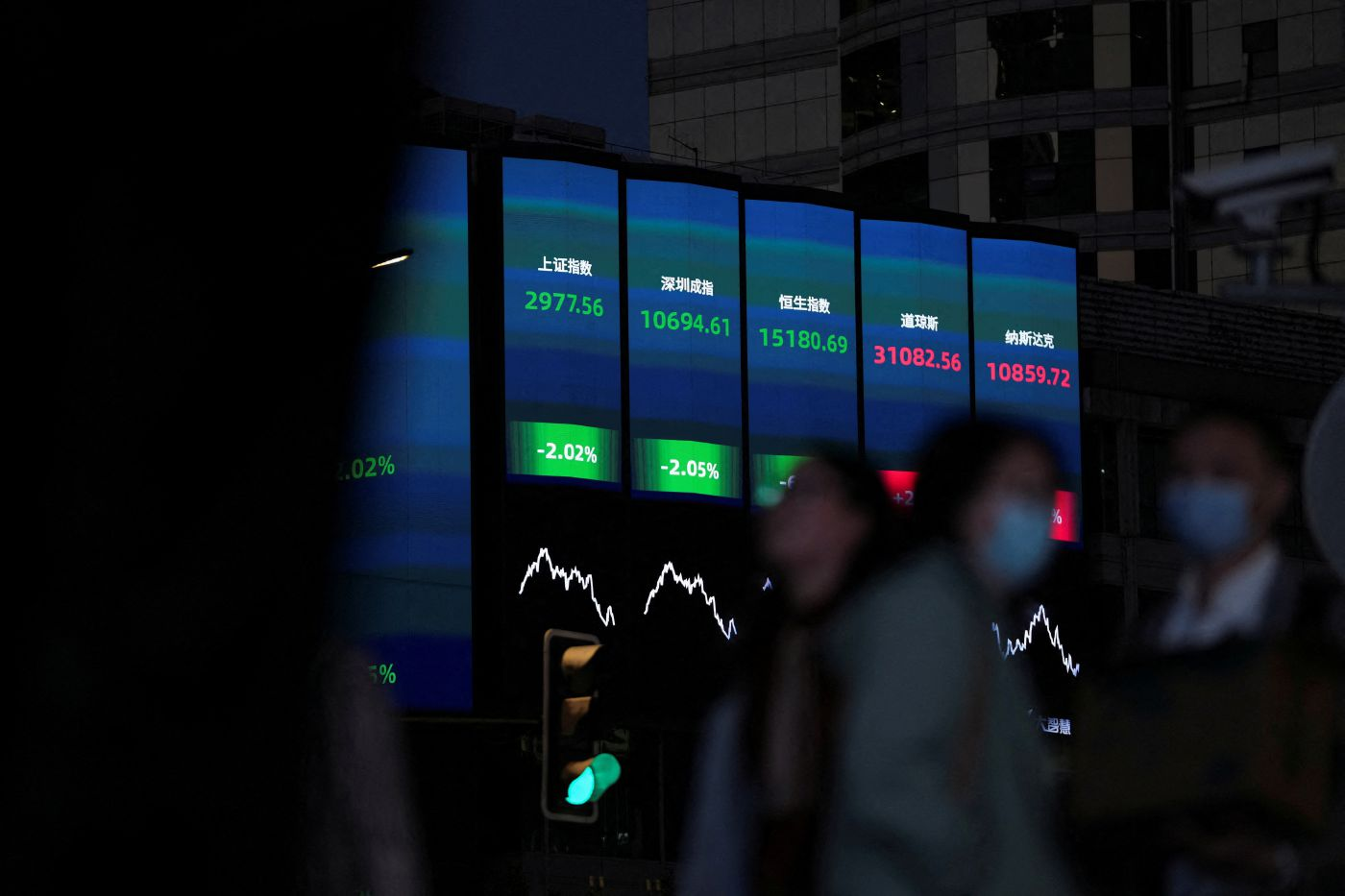
Strong U.S. employment data lifted growth-sensitive markets, but rising oil prices and interest-rate risks limited broader optimism.
MARKET INSIDER — Asia-Pacific stocks advanced on Monday despite renewed hostilities between the United States and Iran, as investors weighed stronger global growth signals against the risk of another energy-driven inflation shock.
Japan’s Nikkei 225 rose about 2%, South Korea’s Kospi gained 3% and the MSCI Asia-Pacific index excluding Japan added 0.9%. The rally followed an upbeat U.S. employment report, but oil prices also moved higher after American forces struck three Iranian tankers and Tehran launched ballistic missiles toward U.S. warships—renewing concerns over shipping through the Strait of Hormuz.
Key Highlights
- Japan’s Nikkei gained about 2% and South Korea’s Kospi rose 3%, leading a broad Asian advance.
- Brent crude traded above $96 a barrel after the U.S. and Iran exchanged attacks involving tankers and warships.
- Strong U.S. employment and higher energy prices are increasing pressure on the Federal Reserve and other central banks to tighten monetary policy.
Japan and South Korea lead Asian gains
Asian equities opened the week on a stronger footing, with technology-heavy markets recording the largest advances.
Japan’s Nikkei 225 rebounded approximately 2% after declining by a similar amount during the previous week. South Korea’s Kospi rose about 3%, while the smaller Kosdaq also gained in early trading.
The MSCI index of Asia-Pacific shares excluding Japan advanced 0.9%. Australia’s S&P/ASX 200 was comparatively subdued around the open.
The gains followed stronger-than-expected U.S. labor-market data, which investors interpreted as evidence that the world’s largest economy remains resilient despite high interest rates, elevated oil prices and geopolitical uncertainty.
That interpretation benefited exporters, semiconductor companies and other cyclical stocks sensitive to global economic growth.
However, the employment report also reduced expectations for monetary easing. Markets are now pricing a meaningful possibility that the Federal Reserve will raise interest rates again, creating a potential constraint on equity valuations.
U.S. strikes Iranian oil tankers
The positive equity reaction contrasted with another escalation in the six-month conflict involving the United States, Israel and Iran.
U.S. forces struck three Iranian oil tankers on Saturday after the American military said an aircraft carrier and a destroyer had been targeted with ballistic missiles.
According to the U.S. account, the warships avoided the attacks and no American personnel were injured. Two Iranian tankers were permanently disabled, while a third unladen vessel was destroyed after its crew was directed to abandon ship.
The U.S. described the tankers as part of a shadow network financing Iran’s Islamic Revolutionary Guard Corps and its regional allies.
Iranian state media subsequently reported that Tehran had targeted three oil tankers and three U.S. vessels in retaliation. Those claims could not be independently confirmed.
U.S. Central Command chief Admiral Brad Cooper warned that American forces could destroy more of Iran’s remaining oil fleet if necessary. Iran’s Foreign Ministry characterized the tanker attacks as a war crime and said Washington and its allies would bear responsibility for further escalation.
Targeting oil tankers broadens the confrontation beyond military and nuclear sites. It directly threatens Tehran’s export revenue while increasing the possibility that Iran will retaliate against commercial shipping or energy infrastructure elsewhere in the Gulf.
Hormuz risk keeps oil above $90
Brent crude rose approximately 0.2% to $96.45 a barrel on Monday after gaining almost 10% during the previous week. West Texas Intermediate increased 0.4% to around $91.85.
The immediate moves were relatively modest, but the price levels show that a substantial geopolitical premium is already embedded in the energy market.
Iran has said it plans to establish a restricted zone outside the Strait of Hormuz, adding another potential obstacle for commercial vessels.
Overall traffic through the waterway remains below pre-conflict levels, with many operators requiring naval escorts or avoiding the area because of missile, drone and insurance risks.
The Strait remains one of the world’s most important energy routes. Further restrictions would affect not only Iranian exports but also shipments from Saudi Arabia, the United Arab Emirates, Iraq, Kuwait and Qatar.
For Asian economies, that creates a direct vulnerability. China, India, Japan and South Korea are among the largest buyers of Middle Eastern energy, while fuel-importing Southeast Asian countries face higher transportation costs and inflation when crude prices remain elevated.
Washington signals a nuclear deal may not materialize
U.S. Energy Secretary Chris Wright added to the uncertainty by suggesting that Washington may not reach a negotiated nuclear agreement with Iran in the near term.
“There may not be a nuclear agreement,” Wright said during an interview with ABC News, raising the possibility that the United States would instead seek to destroy Iran’s ability to develop nuclear weapons.
He said an agreement might have to await a future Iranian administration, although he later told CBS that Washington remained open to diplomacy.
Wright also acknowledged that the Strait of Hormuz had not returned to pre-conflict conditions. He said commercial vessels could transit safely if they coordinated with the U.S. Navy, implying that a sustained military presence may be required to keep energy shipments moving.
The remarks indicate that the Trump administration is pursuing several objectives simultaneously: restricting Iran’s oil revenue, protecting shipping, degrading its military and nuclear capabilities, and retaining the possibility of negotiations.
Those objectives may be difficult to reconcile. Attacks intended to strengthen Washington’s bargaining position could instead harden Iran’s resistance and increase the danger to vessels in and around Hormuz.
Investors are balancing growth against inflation
The Asian rally suggests investors are currently giving greater weight to economic resilience than geopolitical risk.
Yet stronger employment and higher oil prices create the same policy problem: both can keep inflation above central-bank targets.
The U.S. 10-year Treasury yield was near 4.78%, its highest region since late 2023. Markets were pricing approximately a 58% probability of a Federal Reserve rate increase at its September 16 meeting and a 70% chance of a move by October.
The Bank of Japan is also moving closer to another rate increase, with markets assigning about a 75% probability to a quarter-point move on September 18.
Meanwhile, the European Central Bank is widely expected to raise its policy rate to 2.75% on Thursday, with investors focused on whether officials signal additional tightening before year-end.
This combination limits how far equity markets can treat strong economic data as unambiguously positive. Growth supports corporate earnings, but persistent inflation raises discount rates and makes bonds more competitive with equities.
U.S. holiday may reduce market signals
The New York Stock Exchange and Nasdaq will remain closed Monday for the Labor Day holiday, along with the U.S. bond market. Normal trading resumes Tuesday.
The closure means Asian markets are operating without a full price signal from Wall Street. U.S. futures were little changed, but holiday trading is generally thinner and may understate the eventual response to developments in the Gulf.
Investors should therefore be cautious about interpreting Monday’s Asian rally as evidence that markets have fully absorbed the geopolitical escalation.
What investors should watch next
The most immediate indicator will be shipping activity through the Strait of Hormuz. A further decline in tanker traffic—or confirmed attacks on additional commercial vessels—would likely push oil and insurance costs higher.
The second is Iran’s planned restricted zone. Its location, enforcement and treatment of internationally escorted ships will determine whether it represents a formal warning or a material new constraint on energy flows.
Investors should also monitor Friday’s U.S. consumer-price report. Economists expect core inflation to rise about 0.2% month on month, although a 0.3% result could strengthen expectations for an imminent Federal Reserve increase.
Finally, the market reaction when Wall Street reopens on Tuesday will provide a clearer assessment of whether investors remain comfortable holding risk assets while oil trades above $90 and military confrontation intensifies.
Asian stocks have started the week strongly, but the rally rests on a delicate assumption: that economic growth can remain resilient without the Middle East energy shock forcing central banks into substantially tighter policy.
