
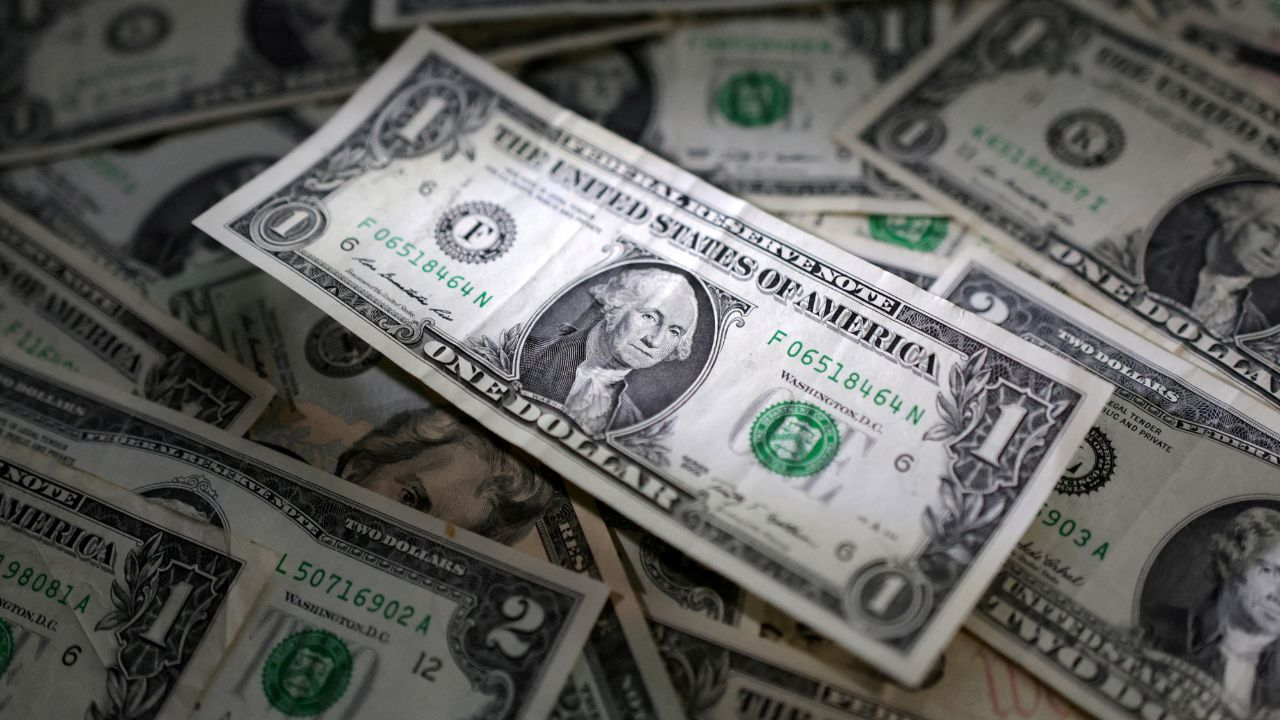
The greenback is losing support from interest-rate differentials as the ECB and Bank of Japan also move toward tighter policy.
MARKET INSIDER — The U.S. dollar struggled on Monday despite a sharp increase in expectations that the Federal Reserve will raise interest rates this month, as investors prepared for simultaneous tightening by other major central banks.
The dollar index slipped 0.07% to 99.09, close to its recent low, even after stronger-than-expected U.S. employment data lifted the probability of a September Fed increase to approximately 57%. The yen strengthened to around 155.88 per dollar, supported by Bank of Japan rate expectations, while U.S. debt concerns and demand for alternative stores of value continued to constrain the greenback.
Key Highlights
- Markets raised the probability of a September Federal Reserve rate increase to about 57% following strong U.S. employment data.
- The dollar index remained near recent lows because the ECB and Bank of Japan are also expected to tighten policy.
- The yen’s rebound is threatening carry trades and may signal a broader reallocation away from dollar-funded and yen-funded positions.
Strong jobs report revives Fed hike expectations
U.S. employers added 162,000 jobs in August, substantially above the average monthly gain of 31,000 recorded over the previous year.
The unemployment rate held at 4.1%, while average hourly earnings increased 0.3% from July and 3.1% from a year earlier. June and July payroll growth was also revised upward by a combined 55,000 jobs.
The figures suggested that the labor market remains more resilient than investors had expected, strengthening the case for the Federal Reserve to raise borrowing costs again if inflation stays elevated.
Markets subsequently priced an approximately 57% probability of a rate increase at the Fed’s September 15–16 meeting.
Ordinarily, such a shift would lift the dollar by increasing the yield available on U.S. assets. This time, however, the currency’s initial advance quickly faded.
The euro edged higher to around $1.1618, sterling held near $1.3519 and the dollar index fell to 99.09—only modestly above its recent low of 98.558.
Why the dollar is not responding normally
The dollar generally benefits when U.S. interest rates rise faster than those in other economies. That advantage becomes weaker when several central banks tighten at the same time.
Higher oil prices resulting from the U.S.-Iran conflict are creating inflation pressure across energy-importing economies. The same shock that may push the Federal Reserve toward another increase is also encouraging the European Central Bank and Bank of Japan to act.
The ECB is widely expected to raise its deposit rate by 25 basis points to 2.50% on Thursday. Market pricing also assigns a significant probability to another increase before the end of the year, although most economists expect the September move to conclude the cycle.
Eurozone inflation accelerated to 3.3% in August, driven largely by energy costs. That makes a near-term rate increase likely but also creates a difficult policy trade-off: tighter monetary policy cannot produce more oil and may add pressure to an already-fragile economy.
When European rates rise alongside U.S. rates, the change in relative returns is smaller. Investors therefore have less reason to shift capital into dollars solely because the Fed becomes more hawkish.
The yen is becoming a competing monetary-policy trade
The most significant move came from the Japanese yen, which strengthened more than 0.2% to approximately 155.88 per dollar after gaining over 2% during the previous week.
Markets are assigning about a 75% probability to a quarter-point Bank of Japan increase this month, with another move possible before year-end.
Expectations strengthened after Takuji Aida, an economic adviser to Prime Minister Sanae Takaichi, said the BOJ would probably raise rates in September and could follow with another increase by January.
Aida is regarded as a reflationist and had previously opposed premature monetary tightening. His revised forecast therefore suggests that support for higher rates is broadening even within the more dovish wing of Japan’s policy establishment.
The BOJ is expected to consider raising its policy rate to 1.25% at its September 17–18 meeting. Governor Kazuo Ueda has said officials will assess whether inflation risks justify action.
A stronger yen directly pushes the dollar-yen exchange rate lower. More importantly, it can trigger the unwinding of carry trades built around borrowing cheaply in yen to purchase higher-yielding assets elsewhere.
Carry trades face a structural test
The yen has been one of the world’s principal funding currencies because Japanese interest rates remained far below those in the United States and other developed markets.
Investors could borrow yen at relatively low cost and purchase U.S. bonds, technology stocks, emerging-market assets or higher-yielding currencies. The strategy performed well as long as the yen stayed weak and the return on the acquired asset exceeded funding costs.
That calculation changes when Japanese rates rise and the yen appreciates.
Investors closing carry trades must sell the assets they previously purchased and buy yen to repay their borrowing. This can reinforce yen strength and spread volatility across equities, bonds and emerging-market currencies.
The recent yen rally does not yet prove that a large-scale unwind is underway. It does indicate that the risk-reward balance has shifted, particularly after Japanese intervention and increasingly hawkish BOJ signals.
Persistent appreciation would provide stronger evidence that investors are reallocating capital rather than merely covering short-term currency positions.
U.S. fiscal concerns are limiting dollar demand
The dollar is also facing pressure from concerns over federal borrowing, rising interest expenses and uncertainty surrounding U.S. economic policy.
Higher Treasury yields do not always support a currency. If yields increase because an economy is strengthening, they tend to attract capital. If they rise because investors demand greater compensation for fiscal or inflation risk, the currency response can be weaker or even negative.
The U.S. 10-year Treasury yield has climbed close to 4.8%, near its highest level since late 2023. Yet the dollar remains near the bottom of its recent range.
That divergence suggests investors are not interpreting the entire increase in yields as an improvement in the relative attractiveness of U.S. assets. Part may represent a higher risk premium for inflation, government debt and policy uncertainty.
Gold’s strength and Bitcoin’s stabilization above $80,000 also indicate continued demand for scarce or non-sovereign assets, although cryptocurrency prices remain driven by several factors beyond dollar diversification.
Emerging-market currencies still face pressure
A weak dollar index does not mean every Asian or emerging-market currency will strengthen.
The index is heavily weighted toward developed-market currencies, particularly the euro and yen. Oil-importing economies can still experience depreciation if higher energy prices worsen their trade balances and increase demand for dollars to pay for imports.
India is especially exposed because of its reliance on imported crude, although central-bank intervention has recently supported the rupee. Southeast Asian currencies may also face pressure if oil remains above $90 and global bond yields continue rising.
By contrast, commodity exporters and economies with credible tightening cycles may prove more resilient.
For Asian investors, the important development is therefore not simply whether the dollar index rises or falls, but how oil prices, local central-bank policies and external funding requirements interact in each market.
Friday’s inflation report becomes decisive
The next major test will be the U.S. consumer-price report due Friday.
A stronger-than-expected result would reinforce the case for a September Fed increase and could finally provide the dollar with more durable support. A softer reading would reduce the urgency to tighten, leaving the currency vulnerable to another round of dovish repricing.
The composition of inflation will matter as much as the headline figure. An increase driven mainly by oil could produce a different Fed response from persistent gains in housing, services and wages.
Policymakers must decide whether higher energy prices will create broader inflation or temporarily reduce household purchasing power and economic demand.
Currency trading may remain subdued until the data arrive, particularly with U.S. markets closed Monday for the Labor Day holiday.
What investors should watch
The first signal is whether the dollar index can hold above its recent low of 98.558. A break below that level despite rising Treasury yields would confirm that rate expectations alone are no longer sufficient to support the currency.
The second is dollar-yen. Sustained movement below 155 would increase pressure on carry trades and could amplify volatility across global risk assets.
The third is the relative path of central-bank policy. The dollar is more likely to strengthen if the Fed tightens while the ECB and BOJ pause. Synchronized increases would preserve a narrower interest-rate advantage and limit the potential upside.
The dollar’s muted response is therefore not evidence that monetary policy has stopped mattering. It shows that currencies respond to relative policy—and the United States is no longer the only major economy confronting higher inflation and renewed tightening pressure.
