
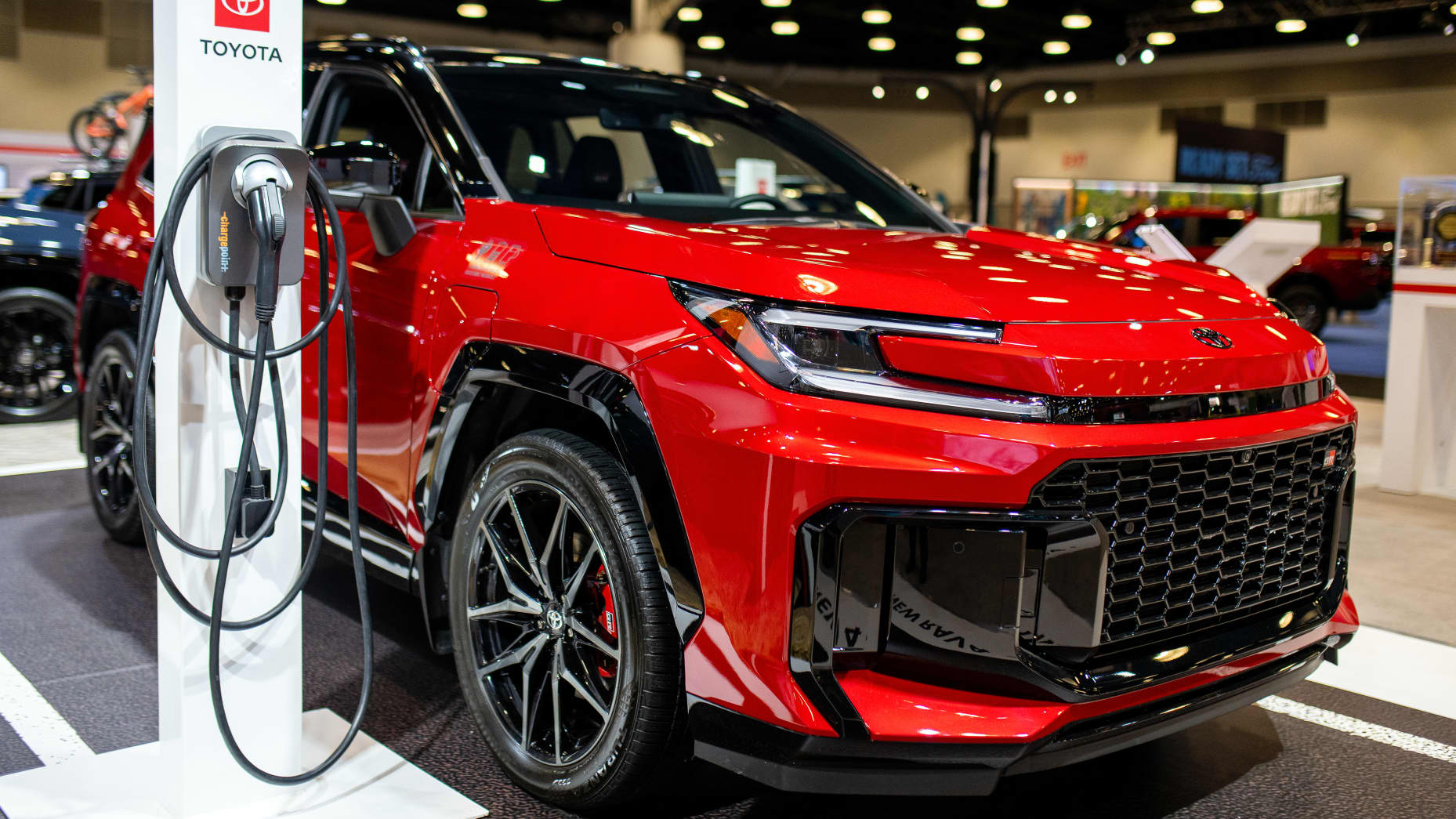
The estimate spans Toyota, group companies and suppliers, highlighting robotics potential without confirming spending.
MARKET INSIDER — Toyota estimates that modernizing factories across its business network could require ¥1 trillion, or approximately $6.4 billion, annually from 2028 as the automaker explores wider deployment of robotics and automated logistics.
The estimate covers Toyota, group companies and major suppliers—not Toyota Motor alone. The company has discussed a requirement for approximately 400,000 robots, including replacements and new installations, but has not confirmed whether the spending will proceed or how long it would continue. For investors, the opportunity lies in potential productivity gains and equipment demand; the key uncertainty is whether those benefits would justify the cost.
Key Highlights
- Toyota estimates annual automation spending across its network could reach ¥1 trillion from 2028, but has not committed to the program.
- The approximately 400,000 robots envisaged include both humanoid and non-humanoid machines, replacements and new installations.
- Robotics could support efficiency and new business opportunities, although deployment schedules and financial returns remain undefined.
A spending estimate, not an approved commitment
Toyota discussed the potential investment with investors earlier this month, according to the September 18 report.
Its scope includes industrial robots, automated logistics and future collaboration between workers and machines on factory floors.
Several distinctions are important when assessing the headline figures. The 400,000 robots are not an annual purchasing target or a commitment to install that many humanoids. The number also includes replacing existing equipment, meaning it does not represent an equivalent net increase in the robot fleet.
Likewise, the ¥1 trillion estimate should not automatically be added to forecasts for Toyota Motor’s annual capital expenditure. Some spending would fall to other group companies and suppliers, while the information disclosed does not establish how much would be incremental to existing modernization budgets.
The company has not specified a program duration, preventing a reliable calculation of total lifetime spending.
Why automakers are expanding automation
The industrial logic extends beyond enthusiasm for humanoid robots.
Automakers face pressure to reduce costs, modernize aging facilities and address shortages of workers for demanding or repetitive tasks. Automation can potentially improve production consistency, reduce physical strain and keep material moving between manufacturing stages.
However, purchasing a robot is only part of the expense. Factory operators must also integrate machinery with production systems, train employees, maintain equipment and manage disruptions during installation.
The relevant economic measure is therefore the cost per reliable unit of output—not simply the number of robots deployed.
Toyota’s established production philosophy emphasizes eliminating waste, improving processes and detecting abnormalities before defective products move further through the factory. Its description of the Toyota Production System places people and process improvement alongside automation, rather than treating machinery alone as the solution, according to Toyota Production System
That provides a useful test for the proposed modernization: whether new equipment improves the whole production process rather than automating an inefficient task.
Humanoids are only part of the opportunity
The inclusion of humanoid robots gives Toyota’s estimate a connection to the growing interest in AI-powered machines. But the disclosed scope is considerably broader.
Investors should distinguish demand for established industrial automation from the more uncertain commercialization of humanoid systems. Conventional equipment replacement and automated logistics could generate business even if humanoid deployment progresses more slowly than expected.
Toyota’s estimate does not disclose the mix between those categories, identify procurement winners or establish that every robot would use advanced AI.
It also does not provide a basis for estimating job losses. Replacing an older machine, automating a difficult task and eliminating an entire position are different outcomes.
The eventual labor impact would depend on production volumes, staffing needs, redeployment and the work required to operate and maintain the systems.
Could robotics change Toyota’s investment story?
Bernstein analysts said Toyota’s growing attention to robotics could encourage investors to recognize opportunities beyond automobile manufacturing, according to the source report.
There are two distinct possibilities.
The first is internal productivity: automation could help Toyota and its suppliers reduce costs, improve quality or make better use of existing factories.
The second is an external business opportunity, such as selling robotics-related equipment, software or services to other customers.
The spending estimate supports the first possibility more directly than the second. Large internal demand does not, by itself, establish a profitable standalone robotics business.
For shareholders, the financial sequence also matters. Cash expenditure can arrive well before productivity benefits. New equipment may initially weigh on free cash flow, while depreciation and maintenance expenses affect the eventual earnings contribution.
A stronger investment case would require evidence of installation costs, utilization, savings and payback periods—not simply a larger robot count.
Hyundai provides a comparison
Toyota is not alone in examining a more automated factory model.
Hyundai Motor Group plans to begin deploying Boston Dynamics’ Atlas humanoid robots at its Georgia manufacturing facility in 2028, initially for parts sequencing before expanding into more complex tasks. Reuters reporting on Hyundai’s plans
The comparison highlights growing interest among automakers in using factories as commercial testing grounds for robotics.
It does not make the companies’ plans directly comparable. Toyota’s figure spans a broad network and multiple machine types, while Hyundai’s humanoid deployment concerns a particular technology and an initial set of tasks.
Investors should avoid interpreting either announcement as proof that large-scale, profitable humanoid manufacturing has already arrived.
Implications for Asian manufacturing
If implemented, Toyota’s modernization could create opportunities for equipment makers, component suppliers, software providers and factory-system integrators.
The benefits would depend on procurement decisions and deployment locations, neither of which is specified in the reported estimate.
For suppliers across Asia, the potential opportunity comes with a financing challenge. Meeting more demanding automation requirements may improve competitiveness, but smaller manufacturers could face substantial upfront spending and a need for additional technical skills.
The implications for Vietnam and other emerging manufacturing hubs are therefore conditional. Greater automation can shift competitive advantage toward engineering capabilities, reliable infrastructure and efficient logistics, but it does not automatically trigger relocation or new investment in any particular country.
What investors should watch next
The first milestone is a confirmed budget, including a breakdown of spending by Toyota, other group companies and suppliers.
The second is deployment detail: which facilities and tasks are prioritized, how many machines are replacements, and how much of the program involves humanoids.
The third is financial evidence. Productivity improvements, quality gains and cash-flow returns would show whether the strategy creates value rather than simply enlarging the capital budget.
Toyota’s estimate points to potentially substantial demand for factory automation. It is not yet a purchase order, a guaranteed robotics revenue stream or a confirmed $6.4 billion annual spending commitment by Toyota Motor.
The investment opportunity will become clearer when the company translates the estimate into projects with measurable returns.
